September’s recipes: Cakes & cups

Round & About

Join Macmillan Coffee Morning and get baking these treats

Coffee, walnut and cardamom cake

(Prep: 40 mins – Cooking: 30 mins – Serves: 8)

Ingredients:

For the cake:
• 200g unsalted butter, softened
• 200g soft brown sugar
• 3 large eggs beaten
• 200g self-raising flour
• 100g walnuts, toasted and finely ground
• 2 tbsp ground coffee
• pinch salt
• 1 tbsp milk

Cardamom syrup:
• 100g caster sugar
• 100ml water
• 1/4 tsp ground white cardamom

Coffee buttercream:
• 185g unsalted butter, softened
• 300g icing sugar, sifted
• 1 tbsp instant coffee dissolved in 2 tsp boiling water
• Walnut pieces to decorate


Method:

1. Preheat oven to 160C Fan /180C/350F/GM4
2. Combine flour, ground walnuts, ground coffee and salt in a bowl.
3. In a large bowl or food mixer, cream butter and sugar until pale and fluffy.
4. On medium speed, add eggs a tablespoon at a time, mixing well between each addition. Add a teaspoon of milk if the cake batter looks like curdling.
5. On the lowest speed, add the flour mixture until just combined (10 seconds).
6. Evenly fill the tins and smooth the surface with palette knife or back of a spoon.
7. Bake in the centre of the oven for 30 minutes until a skewer comes out cleanly and the top is springy to touch.
8. Remove cakes from the oven, leave in the tins for a couple of minutes, turn out on to a wire rack to cool completely.
9. Wrap the cakes in cling film and rest overnight at room temperature before icing.

Prepare the cardamom syrup
1. Place the caster sugar and water in a small saucepan and over a low heat, dissolve the sugar completely. Then bring to the boil for a couple of minutes.
2. Remove from the heat, add the cardamom and set aside.
Make the buttercream
1. Beat the unsalted butter in bowl or food mixer until pale & light in texture.
2. Add the sifted icing sugar in 3 batches, beating well between each addition, until the buttercream has increased in volume and is very pale and fluffy.
3. Add the coffee mixture and beat again.

Combine everything
1. Place one cake half upper side down on a plate, brush with the syrup.
2. Sandwich the cakes together using half the buttercream.
3. Put on top, brush with syrup, decorate with buttercream and walnuts.

Vegan raspberry lemon mini cheesecakes

(Prep: 2-3 hours, including chilling time in freezer – Serves: Plenty!)

Ingredients:

• 3/4 cups almonds
• 1/2 cup dates, pitted
• 1/8 cup organic, naturally sweetened dried cranberries
• 1 pinch of salt
• 1-3 tbsp of water
• 2 cups raw cashews, previously soaked
• 1/2 cup coconut oil
• 1/4 cup water
• Juice and zest of 1 lemon
• 1/2 cup maple syrup
• Fresh raspberries, lemon zest and a few springs of mint for decoration

Method:

1. In a food processor, blend the almonds until they are ground.

2. Add in the dates, cranberries and a pinch of salt and continue to mix. (The mixture should be slightly sticky.) If the mixture looks too dry, add in a little bit of water, one tablespoon at a time and continue to mix.

3. Using cupcake cases (preferably made of silicone) spoon the mixture into each of the cases and press down, then put to one side.

4. Soak the cashews for 1 hour in hot water. Once soaked, strain them well.

5. Add the cashews, coconut oil, lemon juice, lemon zest, maple syrup and 1/4 cup of water into the food processor and mix on high for about 5 minutes until a very smooth mixture forms.

6. Pour the mixture evenly over the base of the cupcake cases.

7. Place straight into the freezer for about 1-2 hours before serving.

8. Top with fresh raspberries, lemon zest and mint leaves to serve.

Cherry and almond traybake

(Cooking: 30-35 mins – Serves: 24)

Ingredients:

For the filling:
• 300g Butter
• 300g Caster sugar
• 375g Self raising flour
• 1 Lemon, zest & juice
• 85g Ground almonds
• 4 Eggs, lightly beaten
• 25g Marzipan, chilled & grated
• 2 tsp Almond extract
• 1 tsp Baking powder
• 3 tbsp Whole milk
• 200g Glace cherries, quartered. Reserve 8 for decoration
• Flaked toasted almonds

Cardamom icing:
• Fondant icing sugar
• Juice of 1 lemon

Method:

1. Heat oven to 180C/160C fan/gas 4.

2. Grease and line a square traybake tin, about 28 x 28cm, with baking parchment.

3. Put all the cake ingredients (apart from the cherries) in a large mixing bowl or tabletop mixer and beat together until thoroughly combined.

4. Toss the cherries in a little flour, then fold them into the cake mixture using a spatula.

5. Spoon the mixture into the prepared tin and bake for 30-35 mins until the cake is golden brown, springy to the touch, and a skewer inserted into the centre comes out clean. Leave to cool completely in the tin.

6. To make the icing, sift the icing sugar into a bowl, then add the lemon juice and enough water to make a thick yet fluid icing. Spoon the remaining icing over the cooled cake – it should be liquid enough to level itself out; if not, use a palette knife to smooth it.

7. Cut into squares and garnish with glace cherry quarters and toasted flaked almonds.

M&S gruyere, bacon and leek buttermilk scones

(Prep: 10 mins – Cooking: 15 mins – Serves: 6)

Ingredients:

• Black pepper to taste
• 1 tsp salt
• 1 tsp butter
• 1 tbsp olive oil
• 100g Gruyère
• 150ml semi skimmed milk
• 40g softened butter
• 6 rashers smoked streaky bacon
• 6 sprigs thyme
• 2 medium leeks
• 1 packet M&S buttermilk scone mix

Method:

1. Half lengthways, wash and finely slice the medium leeks. Separate the leaves and stalks of the thyme and discard of the stalks. Cut into lardons the smoked streaky bacon. Grate the Gruyère.

2. Heat the olive oil and butter together in a heavy bottomed saucepan.

3. Add the leek, thyme and bacon, season well with black pepper and cook over a very low heat for 15 minutes, until the fat has rendered out of the bacon and the leeks are starting to caramelise.

4. Empty the sachet of scone mix into a bowl with the salt and rub in the butter until you have something that resembles breadcrumbs.

5. Stir in the Gruyère, leek and bacon.

6. Mix in the milk to make a soft dough.

7. Roll the dough to a depth of 2-2.5cm and cut out scones with a 7cm cutter.

8. Place onto a lined baking sheet, brush with milk and bake at 180°C for 15 minutes until golden brown.

9. Eat warm, split and spread with good salted butter.

Last supper

Round & About

Hanna Pulidori explores the bustling life of Pompeii people, frozen in time, thanks to the latest exhibition at The Ashmolean

Picture this – it’s late summer in the bay of Naples, the city is just waking up. On one side of the mosaic-lined streets are acres of orchards, on the other, the sun-dappled ocean shines. The smell of salt lingers as you settle down to dinner. How does a salad of cheese, fig and balsamic vinegar sound? Focaccia with prosciutto and poached eggs are on the menu, with great wine.

Some residents of Pompeii, AD 79, were living this timeless fantasy the day disaster struck. Last Supper In Pompeii is a humanising account of the society that once thrived in this mysterious city, explored through the culinary artefacts excavated in the south Italian culinary haven. Like us, the Romans partook in savoury escapism, evidence of which has been found in excavations of the town and neighbouring Herculaneum.

Among the items on display at the Ashmolean are utensils, arts, and edible goods that furnish our foodie fantasies, painting a picture of daily life before the eruption of Vesuvius. Thousand-year-old pomegranates and fossilised olives indicate that the sought-after Mediterranean diet has been in vogue far longer than dieticians would have you believe. The ancients did not, however, believe in calorie-counting as we do today. Presented from the homes of wealthy Pompeiians are frescos of mouth-watering afterlives saturated with great feasts and banquets. The exhibition makes it clear how interwoven the celebration of food was with ancient life and death. There are plenty of Etruscan tomb offerings to peruse; terracotta relics moulded in the form of treats and fancies the Lares (household gods) enjoyed most.

Explored also are the less-than-luxurious quarters, showing the complex organisation of the historical food chain. Housemasters took their meals in triclinia, expensive dining rooms influenced by Greek splendour, and rarely visited the kitchens their slaves occupied; these were small, often with latrines in the middle. Although both spaces existed in the same homes, they were worlds apart from each other. This exhibition provides the opportunity to witness an archaic life that bears a striking resemblance to the modern world. Dr Paul Roberts, Head of the Department of Antiquities, says: “Our fascination with the doomed people of Pompeii and their everyday lives has never waned. What better connection can we make with them as ordinary people than through their food and drink?”

Learn more

You can explore the relationship between our food-crazy society and the ancient gourmet of the Romans between now and January. For more information…

C’est la Vee

Round & About

Calm, cool, classy and award-winning comedian Sindhu Vee comes to Oxford’s North Wall Arts Centre this month with her latest show Sandhog.

It is said we chose our friends, but we are given our relatives, the exception being our spouse. Those ties are highly questionable at so many points once the bloom of new love is gone (sometime between 24 hours and 24 months after the wedding!).

Yet people stay married, and she is the generation fighting on two fronts being responsible for both children and aged parents! Stand by for some home truths on marriage, and the exhausting and complicated life of giving all generations the love you think they deserve. Peter Anderson caught up with Sindhu to find out about her, stand-up and her love for Oxford as she looks forward to an appearance at the North Wall Arts Centre.

Stand-up was not on Sindhu’s radar for a career choice, she worked in investment banking, had three children, a Danish husband, and a giant Labrador. Then it happened, as Sindhu explains “It hadn’t really entered my head. I have never seen stand up and then a friend persuaded me to go and listen to them at an “open-mike” night. I thought to myself, I think I could do that and so I did a course on stand-up comedy, and the rest is history.”

It seems though when it comes to inspirations there was a seed that was sown in her childhood in India “Looking back, when I younger and still living India in the 1970s, I was fixated on Carol Burnett, I loved the way she could be so silly. I checked recently with my mum and said Oh yes you were always watching that stupid lady”.

With her experience studying does Sindhu have a structured approach to writing her act. “There is certainly a structure in that when I get an idea, I will practice it at around five “open-mike” nights continually refining it. I don’t think I could allocate a time and certainly couldn’t work at a table in a café – I would just sit and eat cakes all the time!”
Sindhu is pleased to be appearing at the North Wall Arts Centre, Oxford was the first place in England she lived after she got a scholarship in India to study here. “Oxford has always been dear to my heart, since I first came to England and Oxford to study philosophy in 1992. I always felt it was the wider Oxford that welcomed me as well as my college and the university”

Sindhu Vee

Sandhog is at the North Wall Arts Centre on 19th September for tickets and more information…

‘No Reading, no Amazon’s!’

Round & About

Liz Nicholls asks Matt Thomson, frontman of homegrown heroes The Amazons about local life and music ahead of their hotly anticipated performance at Reading Festival…

Q. We’re loving the new album, Future Dust! Is this your best work so far? “I certainly think so. I think this record is a big step forward in us realising who we are as a band.”

Q. And what’s your favourite track to play live? “We’re having a lot of fun playing our new single Doubt It. We’ve started to jam a song called In My Time of Dying at the end. I heard it first through Led Zeppelin’s version on Physical Graffiti. Then I traced it back to Bob Dylan’s first record and then from there back to Jesus Make Up My Dying Bed, a traditional gospel tune first recorded by Blind Willie Johnson in the 1920s. It’s fun to reflect what we’ve been listening to directly into the live show.”

Q. Well done on continuing to fly the flag for Reading! Is Reading Festival still the iconic live gig for you, as when we last chatted? “I’ve said many times before: No Reading, No Amazons! It’s the biggest event for us this summer that’s for sure. Reading is a very quiet place.. but for three days a year the carnival comes to town and injects the place with colour and excitement. I cannot overstate how influential the festival has been, especially during our formative years.”

Q. How much have you been in Berkshire over the last year & any great nights out? Purple Turtle etc?! “We DJed at the Turtle after our Reading show last month, that was a lot of fun. We truthfully don’t get to come back a lot. You realise through touring the world is big and it’s there for taking. We’ve had our time at home and that’s OK.”

Q. Are there any other local bands you’d love to show some love to/ recommend our readers follow? “I’ve seen Valeras are doing great things at the moment, especially in Europe. I see the Keep Cats pop up all the time too. Plenty of bands coming through, it’ll be interesting to see how it looks in the next couple years…”

Q. Can you tell us more about your love for Howlin’ Wolf & other influences on this new album? “We were really introduced to Wolf and a lot of other blues artists through the bands we first loved, Rolling Stones, Led Zeppelin etc… We love rock ‘n’ roll and I think when you love something, you want to work out where it came from, what makes it tick, why we’re doing what we’re doing in 2019. We fell down a bit of a rabbit hole and discovered a lot of raw, rich, complex characters. The likes of Little Richard, Muddy Waters, Jerry Lee Lewis. You don’t really get those kind of characters any more and I’ve been interested in why that is.”

Q. August serves our food & drink special so… What are your fave snacks & tipples when on tour? I know everyone asks this but what’s on your rider?! Has it changed? “Our rider is in a state of constant flux. Our drummer Joe is big into his wine so top of the list is good local wine. We like a bit of bourbon and tequila to back that up. Nuts and fruit for snacks. We try to get the promoter to provide some local delicacies, especially in Europe and beyond so you usually get fun cheeses or strange sweets.”

Q. Where are your favourite pubs & restaurants in the county? “I used to work at The Pot Kiln in Yattendon, lovely pub. We’ve always enjoyed Milk in Reading town centre too. We’ve been regulars at the Oakford Social Club for the best part of seven-plus years.”

Q. Go on, tell us what dreams you have & future ambitions on the horizon? Any dream will do! “In terms of Reading, we’re always trying to dream up bigger and bigger shows. Events that can bring the town together. Our show at the Hexagon was a lot of fun and of course the place has a lot of memories attached for everyone. We’re definitely looking at something bigger for possibly next year. Beyond that we’ve just released Future Dust so it’s now about taking it around the world and seeing where we end up.”

Amazons

The Amazons will play the Radio One stage at Reading on the Sunday; www.readingfestival.com. For Amazons news, see their website and follow @theamazons

Ridgefest

Round & About

Raise a glass of Ridgeview English Sparkling Wine to Ridgefest 


Following its huge success in 2018, Ridgefest is back this year on 24th August – and it’s going to be bigger and better than ever before.  

Nestled among the vines of the Ridgeview Wine Estate, with a stunning backdrop of the South Downs, Ridgefest is the perfect summer day out, bursting with beautiful food, great live music and of course, award-winning English Sparkling Wine will be flowing. 

Ridgeview started in 1995 and more than 20 years later, production has increased to more than a quarter of a million bottles, sold worldwide. 

2019’s line-up promises to delight all the senses – there will be delicious offerings from an eclectic selection of street food vendors, live bands and acoustic sets, DJ sets and a silent disco. Added to this is Ridgeview Sparkling Wine as well as unique drinks offerings in the cocktail lounge and tours of the vineyard and winery. 

Ridgefest is held at a winery and is so much more than a traditional wine festival – like the ethos of Ridgeview itself, Ridgefest promises to be a fun, unique, fantastic festival for all.  

The festival in Ditchling Common, Sussex, welcomes around 600 guests, between noon and 10pm.

Tickets

Available to buy from the Ridgeview website

Reading Film Theatre

Round & About

Celebrate Reading Film Theatre’s 50th anniversary & design a new logo

Reading Film Theatre is celebrating its 50th year and wants your help to design a new logo to mark the occasion. 

Reading’s only independent cinema shows a range of art-house, foreign language and indie films as well as the occasional mainstream blockbuster. 

Having started as a joint project between the British Film Institute and the University of Reading, the registered charity runs with the help of 50 volunteers and in the words of its president, Sir Kenneth Branagh: “Independent cinema is vital to the cultural life of town and I am pleased to be President of the cinema which provides opportunities for people to see films that otherwise would not be shown in Reading.” 

Films are shown on Tuesday and Thursday evenings at the Palmer Building at the University of Reading where film goers can enjoy screenings with state-of-the-art equipment. 

The new season starts this month with films to amaze, amuse and delight. 

And there’s the chance for you to win a year’s Classic membership to the theatre in the competition to design a new logo ahead of next year’s anniversary. 

The design requirements: 

Hard copy A5 size or no smaller than 50mm x 50mm and 300dpi if digital 

Make clear the RFT is celebrating its 50th year 

Able to be combined with the film theatre’s existing logo to be placed next to it 

All entries should be original, unpublished and directly created for the competition 

The RFT will retain the right to use or adapt all designs submitted in any format 


Entries should be sent to Reading Film Theatre, Logo Design Competition, PO Box 217, Palmer Building, Whiteknights, Reading RG6 6AH or by email to rft@reading.ac.uk with 50th Anniversary Logo in the subject line. 

All entries should provide full contact details. By entering you agree to RFT contacting you about your entry and forthcoming events. 

Reading Film Theatre

For more details about the club and of the programme of films to be shown

Be Nice, Say Hi!

Round & About

Respecting the rights of all users is the idea behind a new campaign which has launched in the Surrey Hills 


Visitors to the Surrey Hills are encouraged to “Be Nice, Say Hi”, as the Surrey Hills Area of Outstanding Natural Beauty (AONB) adopts the joint campaign to help cyclists and horse riders to pass safely. 

Cycling UK and The British Horse Society (BHS) joined forces to launch a consideration and courtesy awareness message of Be Nice, Say Hi to help users to pass safely last summer, as they believed better advice was needed for people cycling to understand how to overtake horses safely.  

The Surrey Hills AONB is the first area in the south east to take up the initiative. Board director Rob Fairbanks said: “We are thrilled to be collaborating with Cycling UK and the British Horse Society to raise awareness of shared access in our landscape and respecting the rights of all users.” 

Lovers of the outdoors will soon notice the discreet message of Be Nice, Say Hi appearing on signposts across the region, however for more detailed information the charities have produced a downloadable leaflet and two short films. 

Duncan Dollimore, Cycling UK’s head of campaigns said: “Every time a cyclist encounters a horse, there are three brains involved: the cyclist’s, the rider’s and the horse’s. Many people aren’t familiar with horses, and there can be confusion on what they should do when overtaking on a bike. 

He urged cyclists to be more aware when passing horses and added Cycling UK was delighted to be the BHS promote the Be Nice, Say Hi message. 

Horses can react quickly when startled, so the two charities are encouraging cyclists to drop their pace and call out a greeting, giving the horse and rider time to react before overtaking wide and slow. By alerting the rider and horse to their presence, cyclists run less risk of the horse reacting, and reduce the risk of injury – not just to the rider and their horse, but also themselves.  

Mark Weston, director of access at The British Horse Society said they were thrilled to see the area adopting the message. 

He said:  As vulnerable road users, horse riders, carriage drivers and cyclists face considerable dangers on our roads and the need for safer off road riding opportunities has never been greater. 

The first sign was put up close to Mane Chance Sanctuary in Compton, Surrey. Founding trustee and actor Jenny Seagrove hopes to see the campaign take up elsewhere. 

She said:The welfare of horses is at the very heart of what we do at Mane Chance Sanctuary and I think the Be Nice, Say Hi campaign should be applauded for considering the needs of both horses and humans as they share our beautiful countryside.”    

Windsor Castle

Round & About

Windsor Castle voted one of the nation’s favourite landmarks 

If you’re still in need of things to do in the summer holidays then how about a visit to Windsor Castle? 

The oldest and largest occupied castle in the world has just been named as one of the nation’s favourite landmarks. 

The new study by photo printing specialists CEWE has revealed the top landmarks to visit with the list being topped by Stonehenge. 

Founded by William the Conqueror in the 11th century, Windsor Castle has been the home of 39 monarchs. Work is currently under way to transform the experience of visiting the castle with changes being made to include a café in the original medieval Undercroft, reinstating the Inner Hall and revealing the view of the Long walk to the public for the first time.  

Well worth a visit and if you’re travelling further afield this summer then how about visiting some of the other locations in the top 20? 

The top 20 UK landmarks to visit were voted as:

  1. Stonehenge, Wiltshire

  2. Buckingham Palace, London

  3. White cliffs of Dover

  4. Tower of London

  5. St Michael’s Mount, Cornwall

  6. Tower Bridge

  7. Lake Windermere, Cumbria

  8. The Jurassic Coast, Dorset

  9. Edinburgh Castle

  10. York Minster

  11. The Houses of Parliament

  12. Windsor Castle, Berkshire

  13. Loch Ness, Inverness-shire

  14. St Paul’s Cathedral

  15. The Needles, Isle of White

  16. London Eye

  17. Mount Snowdon, Gwynedd

  18. Lindisfarne, Northumberland

  19. Ben Nevis

  20. Bath’s Roman Baths, Somerset

Clare Moreton, digital marketing director at CEWE, said: “The Uk is spoilt for choice when it comes to beauty spots and this really comes across with our research, from the stunning York bars walls to Windsor Castle and further afield, there’s so much choice and beautiful scenery that the UK has to offer. The hard bit is choosing where to visit first.” 

Blenheim Palace Shakespeare

Round & About

Enjoy a Bard classic at Blenheim Palace pop-up theatre

The sumptuous surroundings of Blenheim Palace are playing host to Europe’s first-ever pop-up Shakespearean theatre over the summer. 

Four of The Bard’s most well-known plays will be performed in the 13-sided traditional Elizabethan Rose Theatre which features three tiers of covered seating for 560 and an open courtyard for 340 standing ‘groundlings’. 

A Midsummer Night’s Dream, Macbeth, Richard III and Romeo and Juliet transport allow audiences to an intimate atmosphere full of breath taking, spine-tingling and heart-stopping moments courtesy of two companies of actors over a nine-week season which runs until 7th September. 

A Midsummer Night’s Dream is one of Shakespeare’s funniest comedies. Four friends, all in love with the wrong person, set out into the woods and come across the fairy king and queen arguing. When the king, Oberon, decides to fix things using the juice of a magic flower, things start to go very wrong for everyone. 

In contrast, Macbeth mixes blood, tension, witches, ghosts and a kingdom in crisis in the tale of a toxic marriage, crushing ambition and murder. 

Richard III tells of a villain who murders his way to the crown. He woos the woman whose husband and father-in-law he has killed, has his two young nephews murdered in the Tower of London and is finally crowned Richard III, but along the way he makes some serious enemies. 

Warring families is also very much the theme of the most famous love story ever told – Romeo and Juliet. The son and daughter of two respective feuding noble families fall in love but know their love is forbidden and must marry in secret with fatal consequences. 

Pop-up theatre

The performances are daily at 2pm and 7.30pm. For details of which play is being performed when and to book tickets, visit

Good things

Round & About

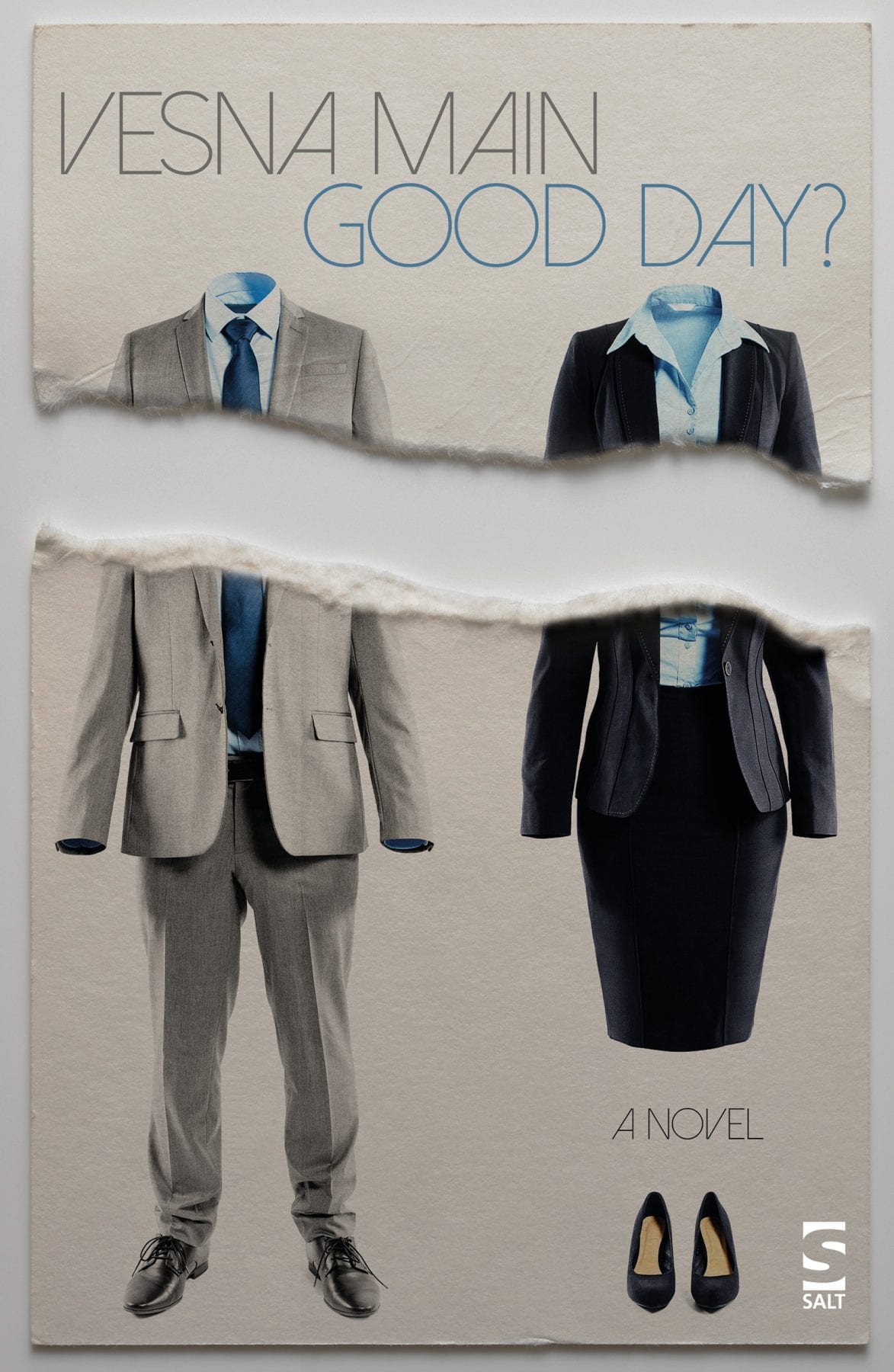
Acclaimed author Vesna Main, who lives in Putney, tells us about her new novel Good Day? and the ideas that helped it come to fruition

One January more than a decade ago, Woman’s Hour broadcast an interview with a woman whose husband had been visiting prostitutes for many years. The programme had an online discussion board and many other women poured out similar traumatic stories.

Most of them were in happy, sexually fulfilling relationships. More often than not, their partners were professionally successful, gregarious. There were many conflicting views – some hated the prostitutes seeing them as rivals but also believed as ‘sisters’ they should support them.

That discussion made me question many of my views. I used to think men who visited prostitutes were mostly single and that prostitution was no different from any other industry, with workers freely offering a service in exchange for remuneration. Reading academic research and interviews with prostitutes, it became clear to me that selling one’s body is very different from selling one’s skills and that most of the sex workers were forced to do so usually through social or personal circumstances.

From the material I gathered, a story emerged of two characters, Richard and Anna, a middle aged, middle-class, educated, articulate couple. Richard had been seeing prostitutes for many years and when he was discovered, Anna’s world fell apart. Her past felt false knowing he had had a secret life. Her dignity as a woman was undermined: her husband had chosen others over her. If she confided in a friend, she feared being judged as a woman who denied sex to her partner. She was at a loss at to what to do.

I wrote two versions of the novel, both in a more or less classic realist style, the style that I associate with the great novels of the 19th-century. I abandoned both versions.

After various false starts, I had the idea of writing a novel within a novel. In Good Day?, the main character is a woman writer and every day, as her husband, the reader, returns from work, they discuss her progress.

The story of Richard and Anna is the novel she is working on. In this way, the text had two equally important view points and the dialogue structure suited the questioning nature of the exchanges between the reader and the writer which, as the story progresses, become increasingly confrontational, with the two regularly siding with Richard or Anna, according to their gender role.
We asked Vesna about where she lives and how it inspires her…

Q. Do you have any favourite local places to write, or simply relax? “I tend to write at home. Putney is great for walks and walks are good for thinking. Anywhere I go, the world of the text I am working on is with me and any ideas that pop into my head, I jot down in a pocket notebook. I particularly love the path up or down the Thames near Wandsworth Park. The walled garden at the Bishop’s Palace, just across Putney bridge, is another favourite spot.”

Q. Do you already know what your next book is going to be about? “I wrote a novel last summer and it is in my drawer, left to ‘mature’ before I send it out. Its protagonist is a woman of 92, a former piano teacher. The story takes place over one day as she looks back on her life. Without disclosing what happens, let me just say that my main impulse in writing it was to create a woman at an advanced age who is still very much a sexual being, longing for love and physical affection. It is a positive, affirmative story.”

Q. Do you feel as though you live with the characters while you’re writing them? “In some ways, it is inevitable. I am not a writer who works out the story in advance. I start with an idea, or an image, and the characters and their lives emerge, or not, gradually as they gain confidence in me and tell me what they are about. I have to be patient and leave them time to come back to me. While waiting, I might write a short story or a novella. At the moment, I have two projects I have just started, or rather false started. But that’s how it works with me. I have to keep trying, beginning and abandoning the first 10,000 words until the story emerges. One of the two novels I am working on emerged from a sentence one of my grown-up daughters said, a casual, inconsequential remark that sparked my imagination. The other grew from something I saw through the window of my study, which faces a large block of flats with balconies. One warm day, a man took his laptop onto his balcony and proceeded to work there. At some point we seemed to look at each other, or at least, that’s what it appeared to me. I don’t think he saw me because my side of the house was in the shade but that’s irrelevant. A vague trajectory of a story emerged, very blurred, rather like an image that appears on photographic paper bathing in a tray of film developer.

Q. Do you have any favourite book shops locally that you enjoy visiting?
“The second-hand bookshop by Putney Bridge is excellent and the owner is very knowledgeable.”

Q. How friendly do you feel the Putney community is?
“The best thing about Putney residents is their diversity, in terms of age, class and ethnicity. The area is also home to many Europeans and, as a Francophile, I love hearing French and take every opportunity to speak it.”

Good Day?

is out now