


Star Q&A: Wine wizard Oz
Round & About
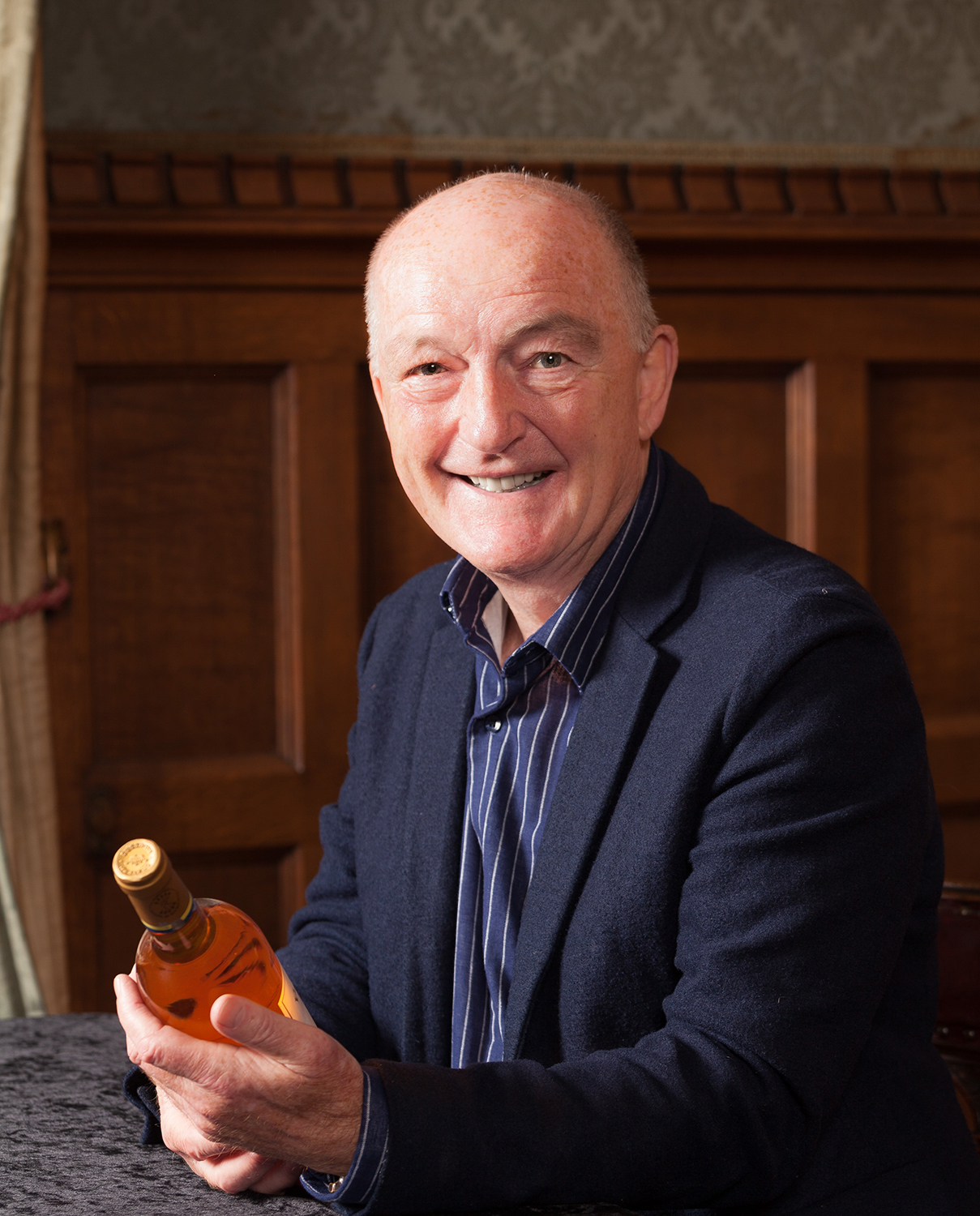
Jonathan Lovett catches up with wine expert and TV celebrity Oz Clarke ahead of the publication of his latest book, Oz Clarke English Wine in which he waxes lyrical about the newest new world wine country
What floated your cork to write this book?
I think the time had come. I’ve been writing about English wine and supporting it ever since I was an actor and singer years ago. Year by year I’ve noted what was going on and, to be honest, there wasn’t much in this country until Nyetimber came on the scene in the late 1990s. This wonderful English sparkling wine was a complete revelation which tasted better than most Champagnes! Every year since then I’ve seen new players arrive and the 2018 was our biggest ever vintage, which was talked about all over the media, so I realised then I had to write this. There was no high street book for anyone interested in English wine so it just had to happen.
And the book is also about the English countryside?
Absolutely. I’m a country boy from Kent and when I was growing up I was also in Cambridgeshire for a couple of years so my memories of early life are all about the countryside. When people ask me, “Where would you like to be right now?” they expect me to say, “San Francisco or Johannesburg etc” but instead I say, “Oh, take me to the white cliffs of Dover with the wind blowing in my hair and the sun in my face and I know in half-an-hour’s walking I’ll come to a beautiful pub where I can enjoy a pint of their local beer!”
What English wine would you recommend that won’t break the bank?
Firstly, if we’re looking at English wine, the best English sparkling wines are quite expensive, and deservedly so. But if you want to drink English wine for less money then try the still wines as we make a delicious range. There are vineyards such as Denbies in Surrey, Chapel Down in Kent or Three Choirs in Gloucestershire and you can get these simply outstanding white blends with names like Flint Dry for just a tenner. It’s the same price you’ll be paying for a supermarket New Zealand Sauvignon Blanc and just as good.
Do you miss the acting at all? I hear you were quite successful…
I miss theatres and whenever I go round the country I often go to the local theatre and ask stage door, “Would you mind if I just go and stand on the stage for a few minutes?” as there’s something magical about an empty theatre. And sometimes I stand on the stage and sing, perhaps a bit of Sweeney Todd. I played that wonderful role opposite Sheila Hancock at Drury Lane and my first night was just about my best ever night on stage.
What made you switch from the stage to Sancerre?
Well, I did 10 years pretty much solid without a holiday and I was playing Juan Peron in Evita opposite Stephanie Lawrence. It was a big, successful show then Stephanie left and I should have also gone at the same time but they asked me to do another six months. During those six months I just lost the joy for what I was doing and I started losing my confidence. I started coming into the theatre, fearsome, and I thought, “This is absolute nonsense” and, “I’ve got to leave.” So I went away and sat in my little garret in Islington and wrote a book called Sniff, Gurgle and Spit and realised I could make a job as a wine writer!
BBC’S Food and Drink followed which propelled you into the stratosphere. Why was it so successful?
It was the first food programme to take a magazine approach to what was happening that week. We went out on a Tuesday evening and up to Tuesday morning we could still change what was going on so it was very up-to-date. Then there was the relationship between myself and Jilly (Goolden). Our fantastic producer, Peter Bazalgette, teamed us together and we got on so well. We both set out to democratise wine and wanted to share a happy world of eating and drinking that class-ridden England just wasn’t getting.
Finally, your real name is Robert…where did the Oz nickname come from?
Well, when I was a lad I played lots of cricket for the Cathedral Choir School in Kent. One day we played one of the local schools and they thought, “Ha! These fellows wandering around in their cassocks – what a load of weeds!” So these boys were bowling at our heads but my dad always taught me to watch the ball and whack it to the boundary and I kept doing that and scored 32 runs off eight balls! They compared my pugnacious approach to an Aussie cricketer so I became…Oz!
• Oz Clarke English Wine: From Still to Sparkling. The Newest New World Wine Country is out from September 3rd published by Pavilion Books.
• We have five copies of Oz’s book to give away
August recipes: Fabulous fish
Round & About
Sea for Yourself is encouraging us to cook with fresh fish caught in UK seas, so ‘see for yourself’ how healthy and easy it can be
Fish is one of the healthiest foods you can eat and by buying and cooking delicious seafood caught in English waters, shoppers are not only supporting one of the country’s most important industries, but can also take advantage of the science-backed health benefits that support all types of lockdown lifestyles – Omega-3 fats boost brain function and maintain heart health, vitamins reduce fatigue and improve skin and hair.
Adding just two portions of fish to your diet can have a big impact on daily life. Fish is also packed with protein which helps to maintain healthy muscles and muscle mass, helping you to stay fit.
Sea for Yourself is a campaign launched by Seafish, the public body that supports the £10bn UK seafood industry, in partnership with the Department for the Environment, Food and Rural Affairs to encourage people to cook with UK caught fish species. Try these tasty, nutritious recipes.
Mouthwatering Fishcake
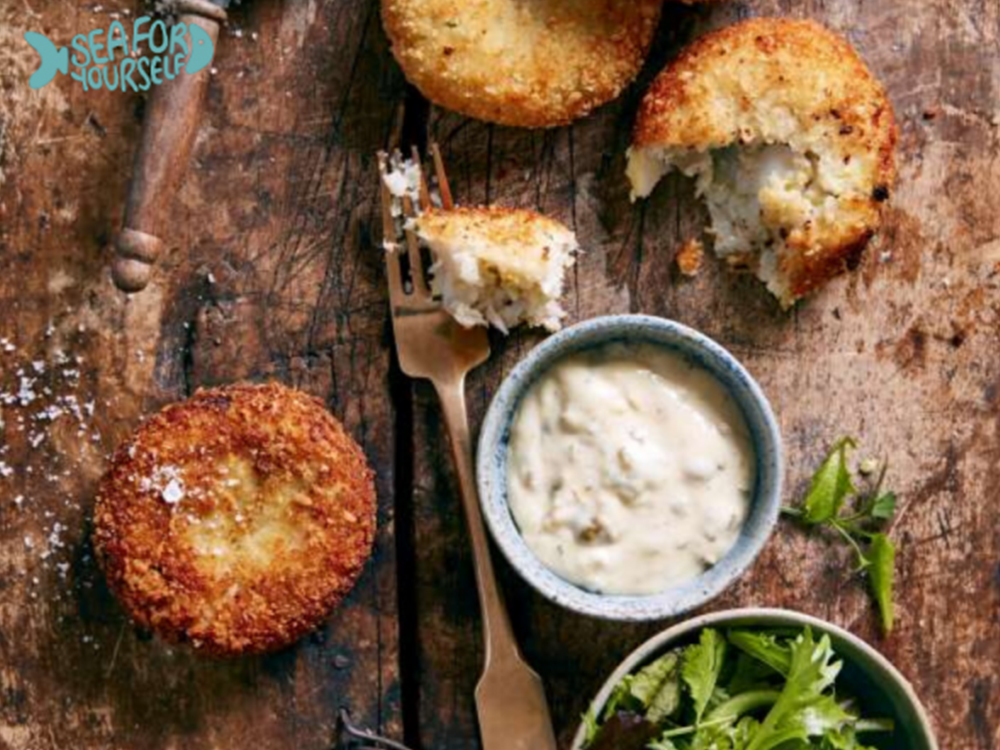
Ingredients:
• 1 pack smoked mackerel or equivalent cooked white fish
• Same weight mashed potato (approx 300g)
• Small handful chopped spring onions and parsley (optional)
• 2 eggs
• 100g plain flour
• 100g breadcrumbs
• Salt and pepper
• sunflower oil or any light mild oil for shallow frying (optional)
PREP: 10-12 minutes
COOKING: 26-30 minutes
SERVES: 4
Method:
1. Mash mashed potato with cooked white fish or smoked mackerel fillets.
2. Add onion/herbs and seasoning for flavour.
3. Shape or use cutters to get the desired effect.
4. Whisk the eggs and lay out in a bowl alongside a bowl of flour and a bowl of breadcrumbs.
5. Gently flour, egg and breadcrumb each fishcake.
6. Tidy up the shape if need be. Bake for 20 minutes or shallow fry for 10, five on each side.
7. Serve with healthy veg/mayo/tomato sauce.
Spicy garlic and tomato haddock
Ingredients:
• 750g salad tomatoes
• 1 tin chopped tomatoes
• 600g haddock
• Handful of Kalamata Greek olive
• Bunch of fresh parsley
• 4 cloves of garlic
• 2 anchovy fillets (optional)
• 2 tbsp olive oil
• 1 tbsp red pepper flakes
• Salt & pepper

PREP: 5-10 minutes
COOKING: 10 minutes
SERVES: 5
Method:
1. Add 2 tbsp of olive oil to a large frying pan on a low heat. Add the sliced garlic, red pepper flakes & anchovies (optional).
2. Slice the tomatoes into quarters and pit the olives. Add to the frying pan with a splash (100ml) of water and season with salt and pepper.
3. Once the tomatoes have formed a sauce, add the chopped tomatoes and 200ml of water.
4. Place the haddock (pre-sliced into 5 portions) on top of the sauce to poach. Cover with a lid for 6 minutes.
5. After 6 minutes, the haddock should be cooked and ready to go. Serve with rice or side of your choice and top with chopped fresh parsley and red pepper flakes.
Star Q&A: Christine Walkden
Round & About
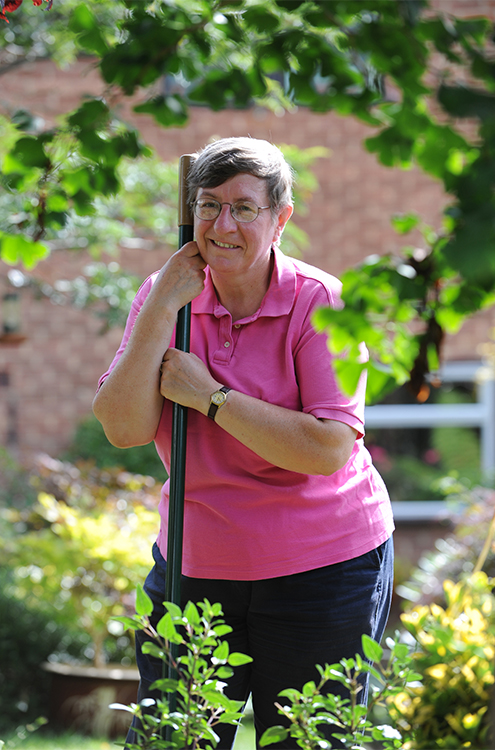
Jonathan Lovett chats to one of the nation’s favourite gardeners, The One Show’s Christine Walkden, who is also a proud life member of The National Allotment Society
Q. This year’s National Allotments Week runs from August 10th to 16th – what’s wonderful about allotments?
A. There’s the fact you can grow your own fruit and veg, but an allotment doesn’t just help with cultivating plants, it helps with cultivating people. On an allotment you are constantly cultivating friends and relationships and there’s a great sense of camaraderie. So much of modern society, particularly lately, is about isolation but on an allotment you get together as a community and it doesn’t matter if you are rich or poor, or whether you have three heads or four…you’re just a gardener.
Q. When did you have your first allotment?
A. I was just 10 and by the time I was 14 I had five of them! I didn’t have any family interested in gardening, but I always felt very much at home on one. I started growing mustard cress which I forced my dad to eat and I gardened a little strip outside our terrace house, then I took over next door’s…and next door’s…before a Mrs Hargreaves suggested I take on her late husband’s allotment. I guess it was a bit strange for a young girl to be doing this, but it didn’t seem strange to me.
Q. A lot of people have taken to gardening during the lockdown. What essential tip do you have for the novice?
A. If you don’t succeed first time then try again. It amazes me that we have to learn to ride a bike or pass our driving test but, for some reason, with gardening people think it’s just going to happen. People don’t persevere and I don’t know why but if something in the garden doesn’t happen the first time then some folk just think, “Stuff it!” I had to persevere. When I started out in this business it was very male-dominated. As a teenage girl in the early ‘70s it wasn’t that easy – but I got there.
Q. How have you coped during lockdown?
A. I haven’t enjoyed it and it I can’t say it’s been a good experience. My work is about people and sharing but I haven’t been able to see anybody so I have found it very difficult. It’s also been quite scary that your life can come to an absolute standstill by external forces. My garden has been gardened to death over the past few months!
Q. You’ve appeared on many TV shows, including your own, and are the resident expert on The One Show. What’s it like meeting the A-listers?
A. I frequently have to pinch myself and find myself saying, “How the hell did a gardener end up working with people like Julie Andrews, Ian McKellen, Vera Lynn and David Frost?” One of my favourite celebs is Helen Mirren who is very keen on gardening and always very willing to open-up about what she does and is happy talking to you. It’s an odd couple – myself and Dame Helen Mirren!
Q. And am I right in saying you once appeared on Shooting Stars opposite Vic Reeves and Bob Mortimer?!
A. Yes! I was on the 2008 Christmas special. I didn’t really know anything about the programme before I went on and I found it a very surreal experience. But a producer I know told me beforehand “Just give as good as they’re giving you” so I played them at their own game. Afterwards Bob said it took them a minute or two to realise what I was doing! It was as weird as one would expect but I survived!
Q. And was there a moment when you thought – I really would love to be a gardener?
A. I remember our headmistress coming into our class one day. She asked if any kids wanted to take plants home and I put my hand up and took three. When I got home my dad said, “What the hell are you doing with them?!” I replied, “I want to look after them during the holiday,” but he said, “You can’t because we’re going away on holiday!” So I put the plants in a bath full of water in the shed and went away for a fortnight. When I came back I expected them to be dead but I opened the door and they were full in flower! To this day I’ve never been able to repeat that…but it has led to a career!
To get involved with National Allotments Week visit The National Allotment Society
Hook, line & sinker
Round & About
Fishing is a reel-ly big pull for millions of people and what can be better than sitting by the river in the sunshine – you never know what you’ll catch!
If I asked you what the UK’s biggest participation sport was, how many of you would shout back ‘fishing’? There are around three million anglers who regularly take up their rods and tackle and cast their lines.
It is in fact the sixth biggest sport overall, behind armchair supporting of football and rugby and its popularity has grown among children and younger people with bragging rights to friends evidenced with pictures posted on Twitter and Instagram.

Children will often make a weekend of it, frequently with dad in tow, and camp overnight using set-ups of two or three rods.
It’s one of the very few sports open to all, whatever your age, cultural or social background – we can all enjoy spending time by the riverbank waiting for that pull on the line.
And who’d have thought such a simple action could bring such joy – whether you’re going fishing with your dad for the first time or are a more experienced angler now taking your grandchild for his fishing debut, there’s nothing like getting a bite.
So what is the fascination?
There’s not the contact between participants you get with football or cricket; angling pits participants against the river, lake, canal or the sea.
Angling is difficult to understand or follow for spectators because the degree of success is rarely visible, there’s no ball over the line or in the hole to celebrate but the sense of satisfaction when a fish is dangling from the line is more than reward for the patient wait.
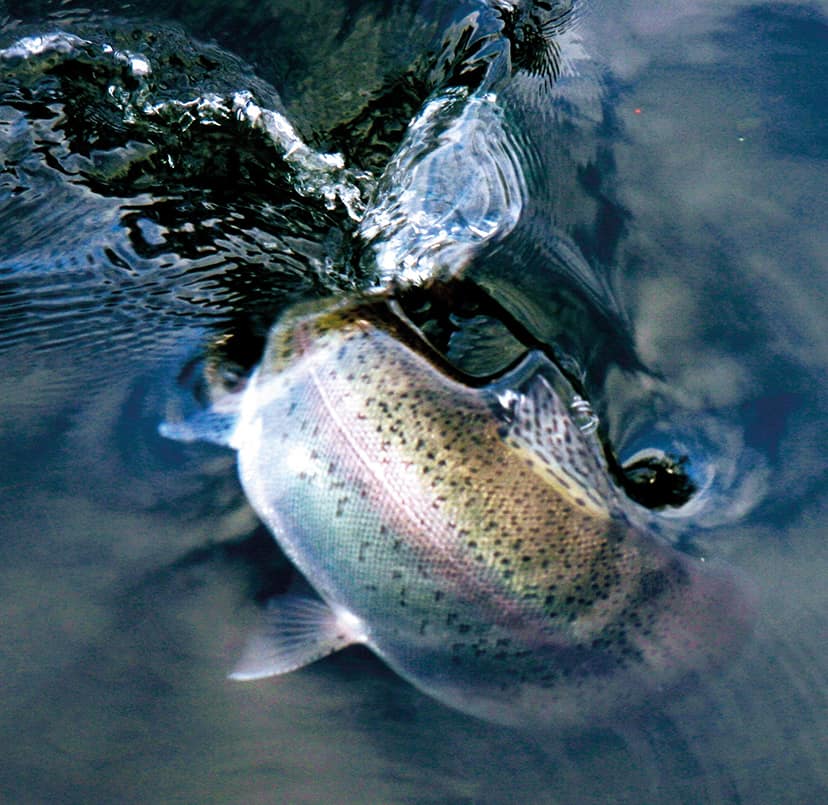
The major advantage for angling is its broad base, with few boundaries. There are no age, gender, race, social class or physical ability barriers, and an angling session can last for as long, or as short, as you want. Anglers can fish competitively or merely catch whatever fish happen to come along. Some choose to go with family or friends, while others choose to fish alone – however you choose to do it it’s the perfect pastime for social distancing.
Fun fishy facts
Many fish – such as carp, chub and minnow – appear to have no teeth but in fact have teeth in their throats, called pharyngeal teeth.
Catfish, a non-native species in UK, has a whopping 27,000 taste buds compared to just 7,000 in humans.
The eel is the only UK freshwater fish that can swim backwards.
The GREAT outdoors!
Round & About
We’ve never appreciated being outside more than we do now and with more gradually opening up to us, let’s get out and enjoy it
It’s the time of year when we’re normally thinking about going on holiday and spending as much time as possible outside – and with more of us likely to opt for staycations and short breaks closer to home this year, where do you start?
Fingers crossed, campsites are preparing to reopen this month with social distancing measures and a limited number of places, some will reopen second fields while others will introduce measures such as a system including timed use of showers.
If you’re a camping virgin, The Camping and Caravanning Club is a great place to start with all you need and some helpful advice:
• Stay in the open air – there are many physical and well-being benefits of camping and caravanning thanks to spending time in the fresh air
• Stay local – there will be a campsite near you, there’s no need to travel far for a change of scene and the local economies will benefit too
• Stay comfortable – there will be social distancing measures in place when they’re able to re-open campsites
The Club’s Director General Sabina Voysey said: “We believe the great outdoors will never feel greater and we can’t wait for the day when we’re able to welcome people back to our campsites. By sharing our handy guides, top tips and online content we hope we can introduce even more people to the joys of camping and caravanning.”
TV presenter Julia Bradbury is president of The Camping and Caravanning Club and created The Outdoor Guide (TOG) website to share her love of all things outdoors.
She said: “Green spaces are incredibly important to me. And they don’t have to be big, wide open landscapes. Yes, I love the Peak District and the Lake District, and Dartmoor and I love exploring the wilds of Scotland, but green spaces, parks, gardens, even simple window boxes. These ‘little bits of green’ or smaller green environs are equally important.
“Growing something, for example, in a window box is a way to connect with nature. And that is something that we have evolved to do. And it’s an important part of our makeup. We know for example, that time spent in green spaces, whether that is parks or bigger landscapes, either of those, time spent in green spaces is good for us.”
For many time spent in outdoor spaces means enjoying a walk and while Julia won’t commit to a favourite she explained that was the reasoning behind TOG: “People have been asking me for years and years about my favourite walks or where I like to stay or the pub that I was at, or where I was when I had that pie and pint, or that little woodshop that I called into, or the blacksmith/carpenter I talked to…
“So we’ve put all of that information up on the website and there are hundreds and hundreds of really good walks up on there. It’s not fair for me to say a favourite walk because I just like being out there.
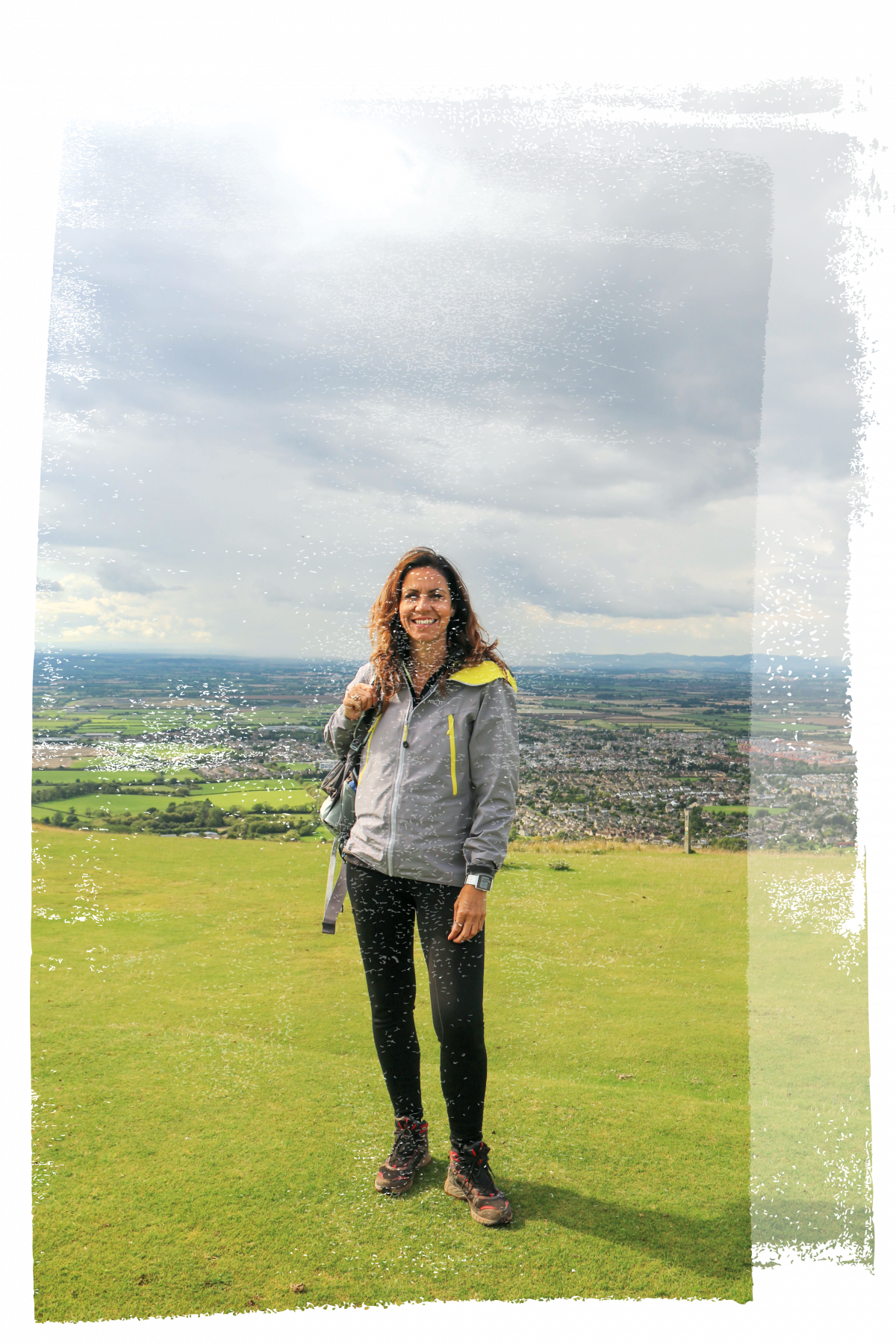

“And it depends where you live. Some people will never get to the other side of the country. They’ll explore what they’ve got on their doorstep and that’s absolutely fine as well.
“Of course, the Peak District would always have a special place in my heart as will the Lake District because that’s where I made my first TV walks – The Wainwright walks – filming in the footsteps of Alfred Wainwright, so those two places are special.”
Julia believes it’s just important for people to get out and enjoy it, especially now. She added: “A University of Exeter study of nearly 20,000 people in England last year revealed people who spend at least 120 minutes a week in nature are significantly more likely to report good health and higher psychological well being, than those who don’t visit nature at all.
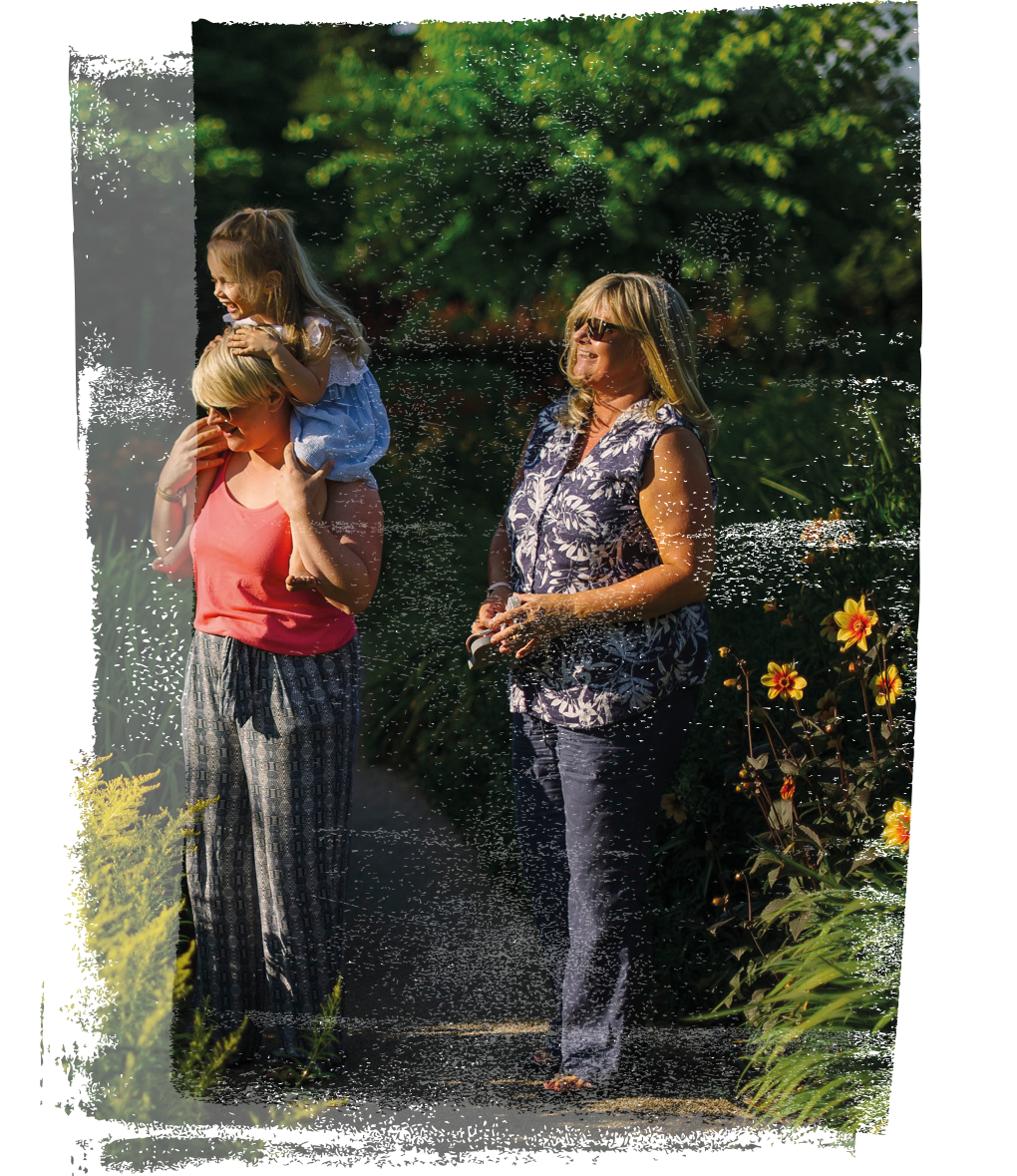
“One hundred and twenty minutes a week is nothing but the benefits to all are enormous, quite simply nature and green spaces help to keep us healthy. Governments that don’t recognise this are being incredibly foolish – it’s almost like having a second health service… This study found the majority of nature visits took place within just two miles of people’s homes.”
There’s lots more information on Julia’s website The Outdoor Guide, www.theoutdoorguide.com
UK tourism industry site Visit Britain is developing a quality mark for tourism businesses, including campsites, in response to Covid-19. It aims to reassure visitors businesses are complying with government guidelines.
The National Trust is reopening some of its properties but with many restrictions still in place. Visitors can now walk in some of its open spaces locally – White Horse Hill at Uffington; Buscot and Coleshill Estate in Wiltshire; the Chilterns countryside; Ashdown, Lambourn; Bibury, Gloucestershire and Stonehenge landscape. Car parks have reopened at these sites, some with limited space on a first come first served basis.
Some sites have been able to reopen further with gardens, parklands, estates and car parks welcoming visitors. Booking is essential at all properties although the houses themselves will not be open. Those you can now visit locally include: Cliveden and Basildon Park in Berkshire; Stowe, Waddesdon and Hughendon, all in Buckinghamshire; Buscot Park and Greys Court in Oxfordshire.
Visit the National Trust website for details
www.nationaltrust.org.uk/features/how-to-book-your-visit-and-what-to-expect
A National Trust spokesperson said: “We knew that once we started a gradual opening of our gardens and parklands, tickets for our places would be very popular; particularly with such fine weather.
“We’ve made careful decisions about which gardens and parklands can open, and we have limited their capacity to ensure everyone can adhere to social distancing to maintain the safety of our visitors, staff and volunteers, which remains our top priority.”
Historic Blenheim Palace in Woodstock has also reopened its formal gardens and walks for visitors to enjoy. Again booking for dates and times is essential as numbers are limited. The Palace has introduced a number of safety measures such as installing hand washing facilities and sanitisers, operating a cashless system and screens at kiosks. Visit www.blenheimpalace.com/ for all you need to know.
Walk around the beautiful gardens of Stonor Park near Henley which has welcomed visitors again and enjoy the offerings from street food vendors too. Pre-booked tickets are a must with timed entry only. The street food will also need to be booked in advance. For more information and to book visit www.stonor.com
You can also enjoy a walk around Windsor Great Park, observing the now customary restrictions and Savill Garden has reopened to friends and members as well with a further phased opening planned to welcome more people to appreciate the splendour of the gardens.
Make the most of the English outdoors and celebrate it as The Camping and Caravanning Club says on its website ‘the good times will never feel better’ and ‘the outside will never feel greater’.
• Share with us where you like to go. Which places are you longing to get back to? Get in touch with us via Facebook, Twitter or Instagram and share your pictures

Eat better in lockdown
Round & About
Food and drink have been one of the few pleasures we have still been able to enjoy during this lockdown and although the odd treat is fine, many of us are finding ourselves eating and drinking more, and have gained a few unwanted inches.
Commercial weight loss programs don’t work long term, with most achieving limited and/or temporary weight loss. So here are a few practical tips to eat better in lockdown.
1. Build your food environment.
The evidence is the rise in obesity is linked with our obesogenic environment. Be aware of the foods around you, and what you put on your shopping list, if you buy those Doritos chances are they will get eaten!
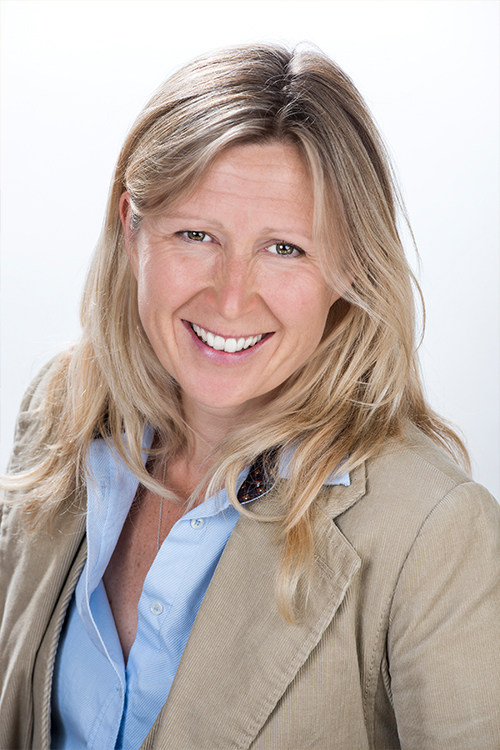
Abi Barclay-Watt, nutritionist
2. Kitchen opening hours.
If you easily succumb to snack cravings, try and stick to 3 meals a day. If you do need a snack have something nutritious on hand. Have a big fruit salad or veg sticks and nuts easily available. Meals can then be social focal points and it will mean less clearing up too!
3. Eating speed.
It has been shown that slower eaters release less of the hunger hormone than faster eaters. So, eat mindfully with your senses and chew well.
4. Portion size.
An obvious one, try and only cook what you need. Try and fill at least a third of your plate with veg.
5. Distraction activity
Are you really hungry, or just bored or thirsty? Try drinking some water first and wait before you grab that snack. Find another activity you enjoy to fill that craving, go for a walk, get lost in a good book etc.
6. Be kind to yourself.
There is nothing wrong in indulging occasionally and it is important to acknowledge resisting what your appetite wants can be a challenge. Try applying the 80:20 rule – eat healthily 80% of the time, it can make you aware of how much better you feel when you eat well but allow yourself the food you enjoy.
Virtual classical concerts
Round & About
With the cancellation of live music events there are still plenty of ways to get your musical fix, from organisations far and wide who are using online platforms to share their work.
Local music charity Grayshott Concerts has been putting on shows at St Luke’s, Grayshott, for fifteen years. Starring world-class performers from the world of classical music including Sir Karl Jenkins, Howard Shelley, Nicola Benedetti and more, they already had a packed programme lined up for 2020.
Founder Peter Harrison has some suggestions for his favourites:
Grayshott Concerts’ patron Karl Jenkins has joined forces with the 10,000-strong Stay at Home Choir to undertake an ambitious ten-week project bringing together voices from lockdown to perform highlights of The Armed Man: A Mass for Peace, to mark its 20th anniversary.
The orchestra-in-residence, the London Mozart Players has created a whole series of videos under the banner At Home with LMP featuring Mozart Mondays, Chamber Tuesdays, Thursday Thoughts, Family Fridays and Saturday Sessions. They’ve even created some personalised messages just for Grayshott fans.
www.grayshottconcerts.co.uk / www.londonmozartplayers.com/athome/
Choir-in-residence Excelsis Choir have taken their rehearsals online and are now Zooming regularly. A number of virtual choirs have also sprung up – music therapy charity Nordoff Robins welcomes singers of all backgrounds and abilities for a weekly sing-a-long on Tuesdays at 4pm. www.nordoff-robbins.org.uk/online-choir/
The London Symphony Orchestra has a digital programme including twice-weekly full-length concerts, playlists and activities to keep younger music fans busy. They also have a YouTube channel packed with more than 500 videos. www.lso.co.uk
The BBC has created ‘Culture in Quarantine’ to bring arts and culture into your home, both from the archives and fresh content from newly-formed groups like the BBC Lockdown Orchestra https://www.bbc.co.uk/arts
Several past performers are doing sterling work on their own social media channels, including the singing schoolboy Cai Thomas, from Farnham. Making the most of Facebook and Twitter, Grayshott Concerts has also established its own new fortnightly e-news which currently goes out to over 1,600 subscribers.
Hailed as “an excellent way to keep connected” and “really enjoyable and insightful” by readers, the mailers combine current news from the classical music world along with retrospectives of past concerts in anticipation of the time when we will once again be able to bring world-class music to Grayshott and the surrounding area.
Explore education
Round & About
With many of us having more time on our hands, there’s never been a better time to learn something new
Always wanted to learn a new language or are you looking to boost your career with further skills? Whatever your age or circumstances there’s a course for you.
Are you a parent who wants to get back into learning? Didn’t get the grades first time round and want a fresh start? Need to boost your CV with qualifications in your chosen career or simply want to learn something for fun – whatever your reasons there are a variety of options available.
The Open University has helped thousands get the qualifications they need from their own home but if you’re not sure you want to commit on a long-term basis why not try OpenLearn, the free learning platform.
Courses consist of bite-size learning experiences designed to fit into busy lives. There are more than 900 short courses to choose from, ranging from one to 100 hours of study. Many are adapted from OU modules and allow you to earn a ‘statement of participation’, although not a credit towards a qualification.
OpenLearn aims to break down barriers to education such as access, cost and lack of confidence.
To find out more about the range of courses available visit https://www.open.edu/openlearn/
Activate Learning is an educational group with colleges in Oxfordshire, Berkshire and Surrey that can help you make the right choice to suit your needs depending on what’s right for you and your ambitions.
Develop your artistic talents, turn your hobby into a business or advance your career with Activate Learning’s part-time courses for adults whether that’s one of the 400+ leisure courses, professional courses to help further your career or gaining access to further education.
LEARN AT HOME WITH OXFORD UNIVERSITY
Adult learners of all ages, and from more than 160 countries worldwide, gather together on Oxford University’s short online courses.
In fact, demand in recent months has been so strong that the University is offering a summer term of online courses for the first time ever.
Summer courses begin in the weeks commencing June 15th and 22nd. Choose from creative writing, psychology, philosophy, social entrepreneurship, archaeology, politics and more, at www.conted.ox.ac.uk/online
Modelled on face-to-face teaching, online courses take place in a virtual learning environment and class sizes are kept small to maximise interaction between students and the tutor.
Additionally, the Continuing Education Department have launched a ‘Curious Minds’ campaign, aimed at keeping brains active during these challenging times. It’s a large collection of free online learning resources, chosen by academic staff of the Department.
‘Curious Minds’ – www.conted.ox.ac.uk/curious-minds – brings the world straight into your home: museum collections, recorded lectures, language learning, music and more. It’s all about staying connected with learning!
The Department for Continuing Education at Oxford University offers more than 1,000 part-time courses each year for adult learners across the globe, including undergraduate and postgraduate programmes.
Star Q&A: Julia’s outdoor jewels
Round & About
To say TV presenter Julia Bradbury loves the outdoors would be an understatement, so much so that she set up The Outdoor Guide website packed with wonderful walks, picturesque pubs to stay in and everything you need to get out and enjoy yourself
Q. Let’s start with exactly what it does mean to you to be outdoors and its particular importance while we’ve been in lockdown?
A. I think a lot of people have reconnected with nature and with green spaces during lockdown. People talk about being able to hear the birds sing and they are noticing things like flowers in bloom, more bees in the gardens, along hedgerows and in their parks, cleaner air and lack of noise pollution. There is no doubt that the plus against all the negativity of the Coronavirus is that it has made people more aware of nature. I hope the message is coming across loud and clear that we need nature to protect us from viruses like COVID-19; it’s because of the manmade breakdown of nature that this disease has crossed over. The more forests, oceans and wildlife habitats we destroy the more endangered humans become.
Q. Did you always have a love of the outdoors as a child, any special memories?
A. I was incredibly lucky. I had a dad who adored the great outdoors. I went to school in Sheffield, I grew up in Rutland and Sheffield and after school and at weekends my dad Michael, a Derbyshire man, would take me walking around Buxton and the Peak District, which is where he used to go exploring with his brother when he was a little lad. They were fantastic bonding experiences for him and I, but also, I think it planted this seed deep in my psyche, deep in my heart and deep in my brain, to appreciate and love the outdoors.
Q. Do your children share your love for the great outdoors?
A. Yes, and in fact, their favourite day from last year was a cold, wet October windy day when they got dressed up from head to toe in their outdoor guide waterproofs. We all zipped up so the only thing that was exposed was our faces and we went out into the sheet rain. We had a full-on wet leaf fight and rolled down the hill, jumped in puddles, and we got soaked. They often talk about that day and they just want to go out and roll in the leaves again.
Q. You’ve recently done a Q&A on The Outdoor Guide with psychologist Jonathan Hoban about mental health, what did you take from that?
A. We started doing our lockdown sessions which are up on TOG for people to access who have been struggling with mental health issues throughout this period. We touched on topics like keeping routine and how important that is for lockdown, how it’s okay to feel angry and how it’s alright to feel emotional. I actually had a day a few weeks ago, in the midst of the lockdown period when I just lost it. I couldn’t stop crying; all because I couldn’t get an iron to work. It wasn’t about that of course – it was the whole situation, all the questions and uncertainties that we are all facing. It’s OK not to be OK all the time! It’s very beneficial to have these weekly discussions with Jonathan, hopefully for lots of people.
To find out more visit The Outdoor Guide website at https://theoutdoorguide.co.uk/