With the new school term upon us our education guide this month is full of features focussing on life inside and outside the classroom including our short story writing competition. Children, get your thinking caps on and put pen to paper or finger to keyboard and send us 500 words for your chance to win and have your story published in January
TELL US A STORY
Calling all children aged seven to 13! Write us a short story for the chance to be one of our competition winners
You don’t need to be a child to love Roald Dahl’s fantastic stories or those of latter-day children’s favourite David Walliams… but have you got what it takes to be the next Roald or David or JK Rowling yourself?
Well, we are challenging you to have a go at writing your own story in 500 words. Your story can be about anyone or anything, past, present or future, it can make us laugh, cry or leave us thinking; let your imagination run riot and entertain us!

PLANTING THE SEEDS
The Woodland Trust’s free trees for school scheme aims to get children ‘doing their bit’ for the planet
Mixing maths with mud and tree planting with poetry has proved to be a great way to get children excited about the natural environment.
The Woodland Trust’s free trees for schools scheme combines learning with the opportunity to green up school grounds and online
curriculum-linked resources for teachers offer support lesson plans.
Research on behalf of the Woodland Trust found that primary age children who planted trees felt as if they were “doing their bit” to help the environment and remember it for years after.

The Woodland Trust’s schools and community engagement manager Karen Letten said: “We want to see trees becoming a key component of a teacher’s toolkit.
“Planting trees and creating woodland is a great way to connect children with nature. It engages them with the environment, educates them on the care and maintenance of trees and the benefits they bring and provides a stimulating topic that can be linked to many subjects in the school curriculum.
“Mixing maths with mud and planting with poetry is highly recommended!”
The trust’s dedicated educational website Tree Tools for Schools has a wealth of teaching resources and ideas, all fronted by Keith, a giant oak leaf.
There’s an interactive planning tool so children can plot their new woodland, games, quizzes and printable worksheets, all aimed at making lesson planning a doddle. There’s also a section on after care including a simulation showing how the trees will grow over 10 years and the management they will need each season.
Teachers can search the website by key stage or subject, making it easy to teach children about the multiple benefits trees provide for people, wildlife and the environment.
Since the Woodland Trust launched its free trees for schools initiative in 2004, more than five million saplings have been sent out.
There’s a variety of packs to choose from ranging in size from 15 saplings to 420, all containing a mix of native broadleaved trees that are UK sourced and grown to reduce the risk of disease.
A large scale Natural Connections study carried out in 2016 found children who experienced outdoor learning were more engaged, happier and healthier while teachers said outdoor learning had a positive impact on their teaching practice and increased their job satisfaction.
 For more information and to get your free trees, visit www.treetoolsforschools.org.uk
OPENING DOORS
Offering a transformational opportunity to your child at Prior’s Field, Godalming
The opportunity to educate a child, to the best of their abilities, is the ambition of every parent. In the current economic climate, the Independent school sector has never been more aware of the challenge of affordability. The demand for fee assistance and means-tested bursaries has risen considerably and widening access and social mobility was a founding remit of Independent schools’ charitable status and why they were formerly known as public schools.
We live by Admiration, Hope and Love
Our school motto quoted above encapsulates our ethos. Philanthropy was very much at the heart of the vision of Julia Huxley, a pioneer of progressive academic education for women, who founded our school in 1902. Julia had a distinctive family pedigree (the granddaughter of Dr Thomas Arnold, Headmaster of Rugby; niece of Mathew Arnold, the poet and mother to Aldous Huxley, author of ‘A Brave New World’).
They mean what they say about nurturing talent (Good Schools Guide)
Our scholarships and bursary programme signposts the value we place on nurturing individuals to become the best possible version of themselves. The type and number of bursaries and scholarships we offer will vary dependent on the talent each year, be it creative, sporting or academic. Means tested bursaries are available at all main entry points and we work with many feeder schools in the maintained sector to encourage applications from a broad cohort. There are always far more girls seeking bursary help than we can accommodate but we aim to award where we see potential and eagerness to learn and know the opportunity will be truly transformational.
Transformational fully funded Sixth Form awards
Through the school’s own charity, a limited number of Foundation Awards are offered to pupils wishing to enter Sixth Form who have been significantly disadvantaged by life circumstances. Fully-funded Sixth Form places allow girls to continue their education with the support of our boarding community. It is an enormous privilege to watch the transformational impact of a bursary. Bursaries are a springboard from which we hope to see girls engage fully, inspiring others and giving something back to the school.
Come and Visit
As one our bursary girls said as she left last year: “Being at Prior’s Field for the Sixth Form changed my life and I want to help other girls to have the same fantastic opportunity”. Come and find out more at our next Open Day on Saturday 5th October from 10am – 1pm.
Call 01483 813402 to book your place or find out more at www.priorsfieldschool.com.

READY, STEADY, GO…
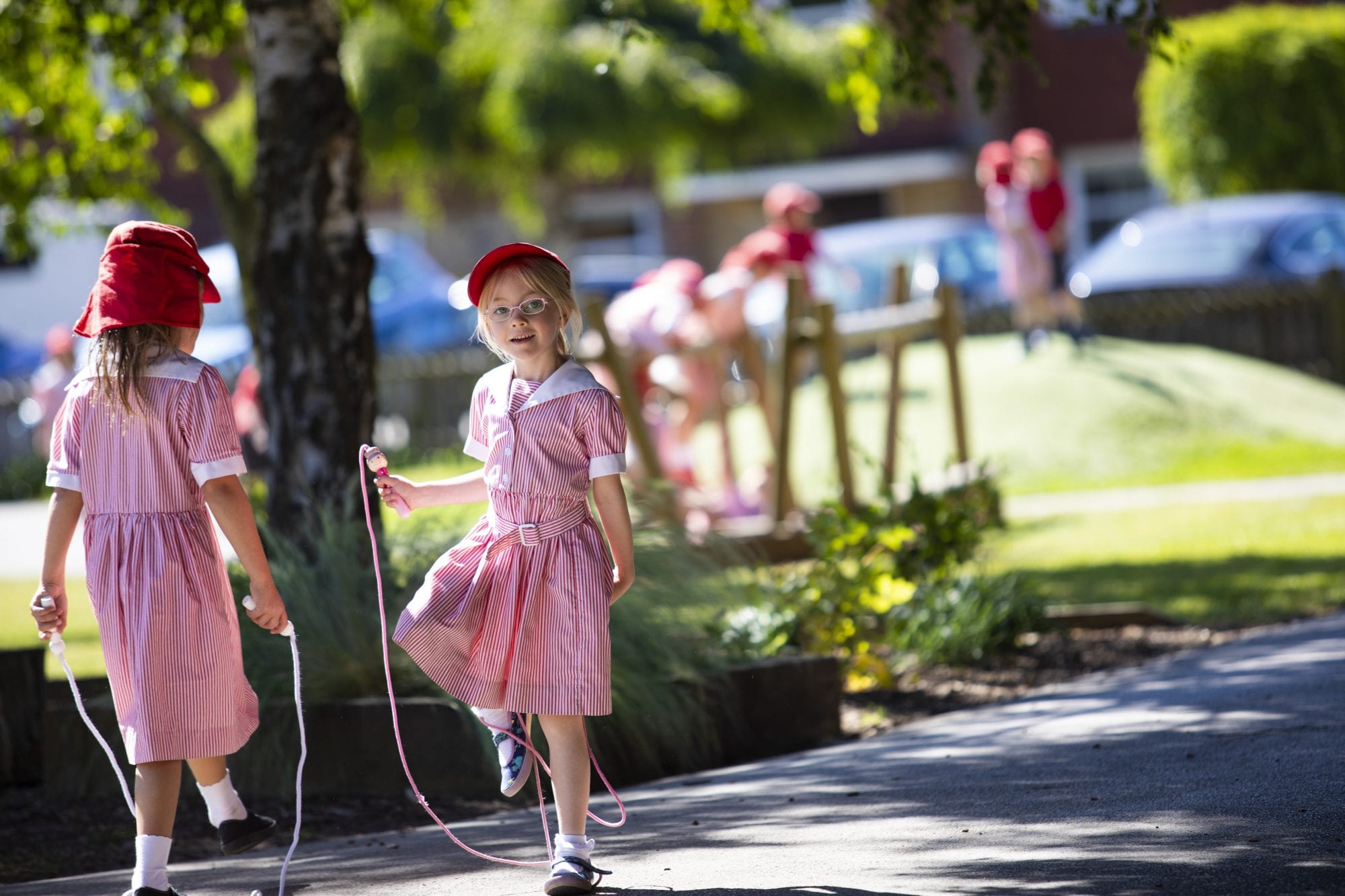
Head of Pre-Prep at Westbourne House School Caroline Oglethorpe has some advice on how to give your child sports confidence
As parents, we often worry about our children when they don’t seem to be progressing quite as fast as their peers. Sometimes, when raising children in exactly the same way, it can seem baffling that one of our offspring seems naturally sporty and is riding a bike at three and a half, when the other can’t seem to do it even aged seven. Or perhaps you have a child that seems to hang back while others are playing football.
You know they want to join in but they just don’t have the confidence.
It is good to remember that development in sports is similar to how one might learn to read. Everyone learns at a slightly different pace and this is partly to do with each child’s own physical development, and also where the child is on their sports learning curve.
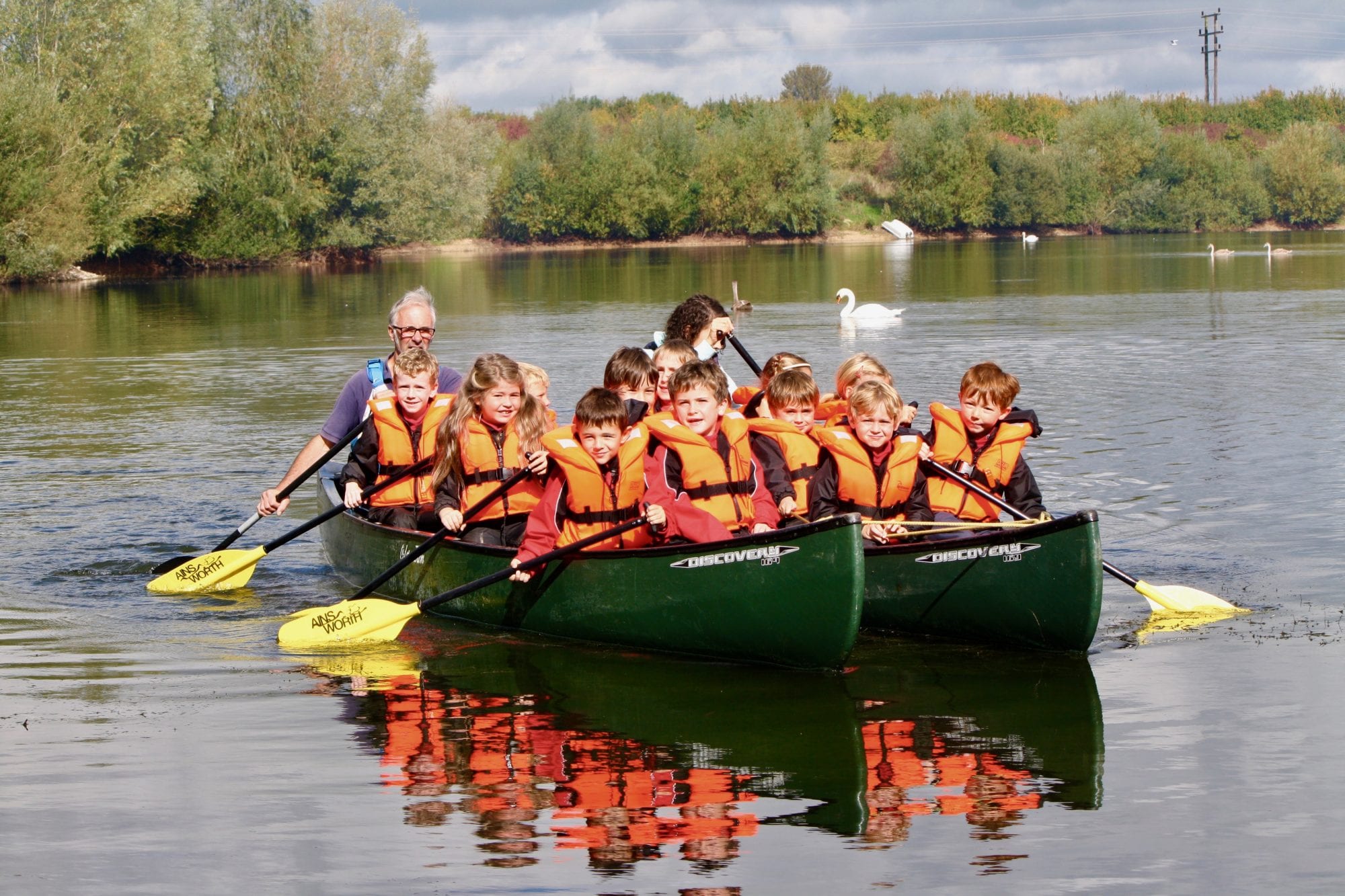
We support our children at Westbourne House by creating many different opportunities each week to practise and by modelling the skills ourselves in playtimes and lessons. And keeping it fun is hugely important. Ultimately, it is about encouraging children to develop a lifelong love of being active. To this end, we also introduce them to a wide range of sports including kayaking, orienteering, swimming, climbing, dance and ball sports.
You can give your child a huge helping hand by having fun practising sports skills together and you may wish to try the game ideas below from our Head of Sport. The sports confidence your child will gain will enable them to do their best and join in happily when the time comes.
1. Blow up a balloon or two and play a game of keep the balloon up in the air.
2. With any round ball, play ‘happy feet’. You start with a foot on top of the ball, and then hop to replace it with the other foot.
3. Show your child how to make a cup with two hands, as if you were collecting water from a tap. This is the correct way to catch. Start close together and when the ball is caught, take a small step backwards.
4. Make a target out of an open box or saucepan on the floor. How many times you can get balls or paired socks into the target?
Westbourne House has an open morning on Saturday 28th September. Book your place at www.westbournehourse.org/visit
TREE-MENDOUS FUN
You can learn as much outside the classroom as you can inside at Under The Canopy Forest School
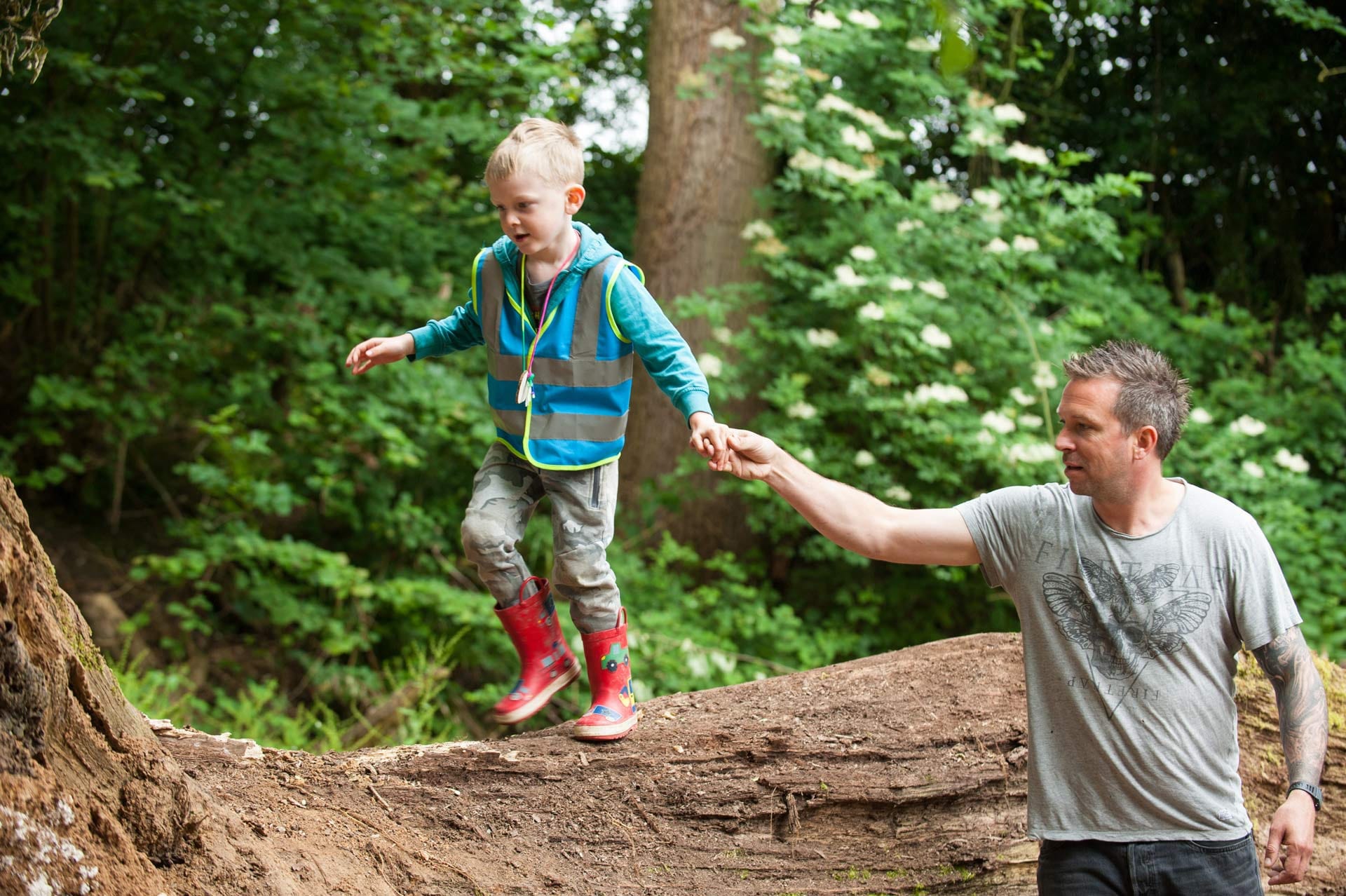
Learning isn’t just about what goes on in the classroom, Under The Canopy Forest School allows children to learn outside the classroom among nature.
It aims to encourage time spent away from technology and to increase learning and creativity for all. The Forest School approach is more child-led and aims to improve social skills, self-confidence, the development of language, communication and motor skills and to create a better knowledge of the environment.
Children are given freedom to direct their own learning and get involved in a certain amount of “risky play”. Among the activities children can get involved in are building and cooking on a fire, building dens and shelters, hunting for minbeasts, climbing trees and creating a bug hotel, hedgehog shelter and nature art.
The Forest School takes place in a woodland environment near Gerrards Cross and encompasses a woodland, dell and meadow with an array of flora, fauna and wildlife.
In addition to the Forest School, there are family sessions, stay and play for children and their carers, a holiday club, twilight forest school under the canopy, as well as the opportunity to have a child’s party, bespoke events and courses for schools and nurseries as well as events for adults.
To find out more about all the activities on offer visit www.underthecanopy.org.uk
OPENING DOORS
An independent education can be for everyone with fee assistance

Independent schools believe having a broad social mix of pupils more appropriately reflects our society and is one of the reasons why many have made funding available for families on lower incomes.
Across all Independent Schools Council (ISC) schools, one third of pupils receive some form of fee assistance.
If you are thinking about an independent school for your child but deterred by the cost, a bursary could well be the answer.
But why should you consider an independent school for your child in the first place?
They tend to have smaller class sizes, excellent exam results and a good record of entry to leading universities.
Many give over a significant amount of time to cultural activities and offer a wide variety of sporting opportunities and some will specialise in these areas.
The pupil to teacher ratio also means independent schools can offer a good level of pastoral care and for that of those with special educational needs.
Look at various schools’ websites and visit as soon as possible to find the one that is right for your child’s needs.
Perhaps your child would benefit from boarding – this is a great option if you live further away. Your child will have the chance to enjoy a wider range of activities. Some schools offer weekly boarding whereby your child will go home at the weekend.
“Will my child fit in?” is a common question when it comes to choosing an independent school, but the inclusive environments full of children from diverse backgrounds means the answer to that is yes!
Look at the fee assistance schemes on offer. Bursaries are means tested and offer a great way for children from hard-working families to be able to afford the fees.
Parents or guardians must complete a declaration to establish if the student meets the criteria, the school will then look at what is realistic for each family to afford and sets a fee accordingly.
Some schools will contribute to extras such as uniforms, books and trips.
Almost 45,000 pupils are on means-tested assistance at ISC schools of which there are 1,385 across the country to choose from.
Some schools also offer scholarships for pupils who are strong academically, musically or excel in sport or art.
For more information about fee assistance visit www.isc.co.uk
STUDENT MENTORING
Jo Carroll has the answers when it comes to revision – how long for, when to start and how to improve recall
Then I worked in Sixth Form I saw some revision that lacked focus and planning: students staring at textbooks, mind maps produced for one topic and the rest neglected or endless highlighting until books were full of neon.
I worked with these students to organise their study and give structure and purpose to revision. Each student worked in a unique way and needed tailored support, from this grew my business: Study Mentors – a bespoke study support service. As every student is individual, so are their ways of learning, organising and scheduling study and this is where Study Mentors can make the difference.
I work with students who are preparing for GCSEs, A levels, Common Entrance or those searching for a study system that works for public exams. I explore three strands of study:
• Organisation: are students ready to study with organised subject files and a clear knowledge of all subject topics and the examination process;
• Study Methods: do students know what to do when they start and, if not, we explore and experiment with study and revision techniques;
• Timetables: students reflect on which days and times they work best, think about dedicating parts of their day to study and together we plan specific tasks for specific times using timetables.
I check in regularly with students to promote the mentoring and involve parents in all communications so they can provide support too.
Contact Jo: jo@thestudymentors.co.uk or call 07906 610202.
THE BEST FOR YOUR CHILD
CJA Educational Consultancy helps parents find the right school for their child and situation
Over the past 10 years competition for places from nursery to sixth form has become something many parents face in London. Depending on whether you live in the correct catchment and there is a good local school, or decide to choose an independent school, there are different entry routes.
Nursery entrance depends on where you live and availability. Some schools have feeder nurseries and may require an entrance assessment for Reception. Many independent schools set entrance requirements from age 7. Maintained schools often focus on English, maths and/or verbal and non-verbal reasoning.
It is always worth considering schools on the outskirts of London, perhaps less well known and it’s worth considering if boarding is an option?
CJA Educational Consultancy can support parents all the way through education, completing projective reports and researching relevant options depending on where a client lives or plans to live.CJA Educational Consultancy’s top tips:
• Register your child for schools well in advance
• Visit nurseries and schools more than once
• Read Ofsted and ISI reports
• Listen to advice given by your current school
• Ask other parents with older children

For more information visit www.cjaeducationalconsultancy.com
HAPPY INSIDE AND OUT
Caversham’s Thameside Primary School honoured with Inside Out award
Happy children learn better – that’s the straightforward belief of innovative educational charity Inside Out.
The programme is designed to improve the wellbeing of primary school children, inspiring them to be happy inside and out and the charity has just handed out its first award to recognise one school’s exceptional commitment to the happiness and wellbeing of its pupils.
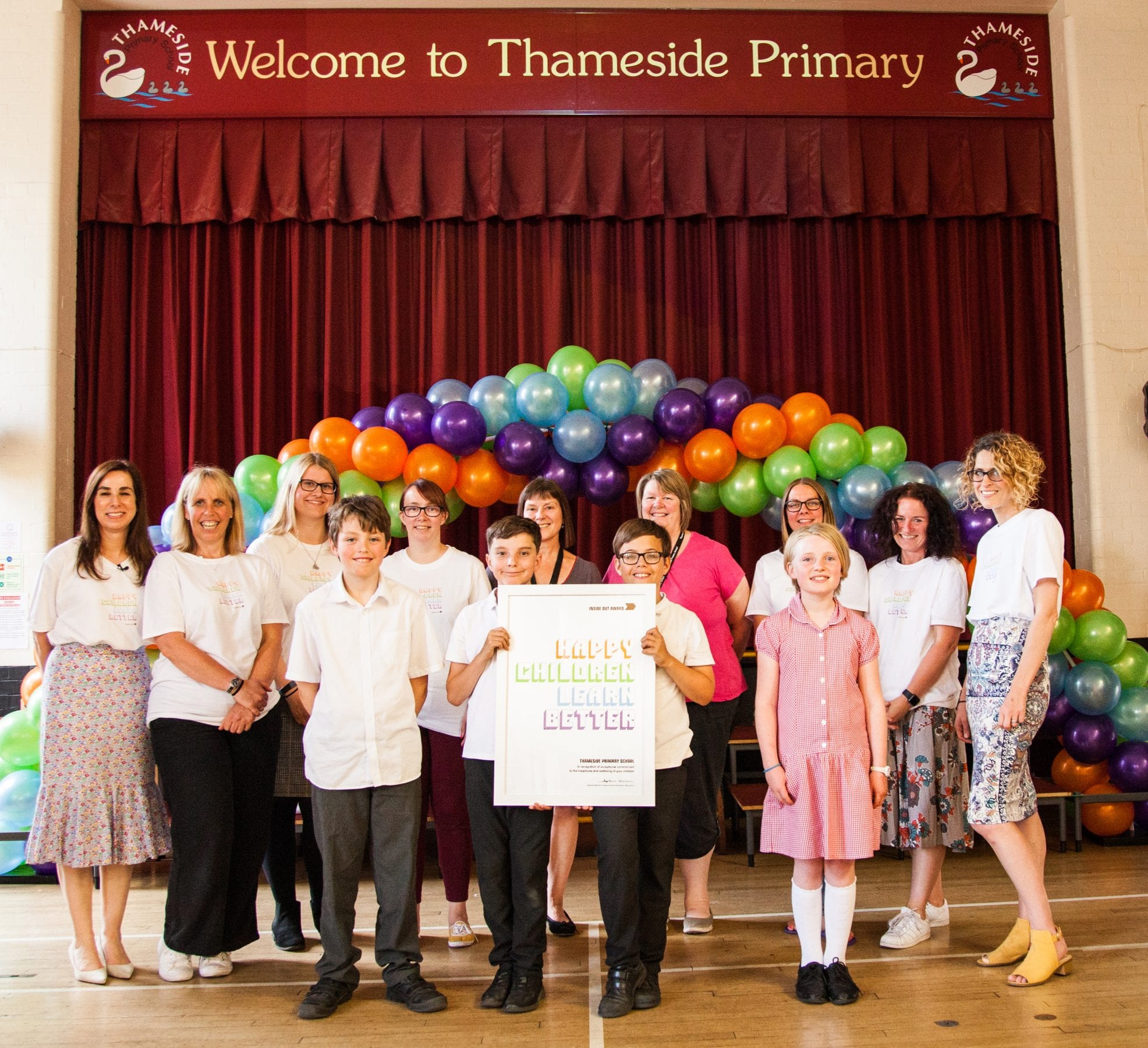
Thameside Primary School in Caversham has put this at the heart of its school life and has deservedly been honoured with the award.
Thameside Primary School headteacher Sophie Greenaway said they were incredibly proud to have been given the accolade. She said: “We have seen tangible benefits on the wellbeing, health and learning of our children. The award means a lot of to the whole school community. I am so pleased that Inside Out is now at the heart of our school curriculum.”
The charity is responding to the growing children’s mental health crisis by helping other schools in the Reading and Oxford area to make these practices part of everyday school life.
MAKING YOUR CHOICE
Choosing the best school for your child will involve talking to friends, searching online, hunting out reviews, checking fees…
Brigid Meadows, Headteacher at Our Lady’s Abingdon Junior School (OLA)suggests the most important people to hear from are the parents of the children already in the school. This is what ours are saying:
“OLA is a wonderful, nurturing school, full of happy children. It’s been delightful to see our shy daughter thrive and develop a love for learning.” – Nursery Parent
“OLA’s greatest asset is not just the education provided (which is fabulous) but the community that has been created around the school.” – Reception Parent
“Oxfordshire offers many excellent junior schools, but OLA stood out for its supportive and family atmosphere, its stress-free approach to learning, and the broad smiles of its pupils.” – Year 3 Parent
The next opportunity for you to find out more about our school for yourself is our open morning on Saturday, 12th October, 10am to 12.30pm.
If you are interested in your son or daughter attending OLA Junior Shool but are concerned about managing financially, OLA offers bursaries to help. These are awarded to pupils likely to gain most from an OLA education and who will contribute fully to the school. There is a range of possibilities to suit a variety of circumstances.
Details and an application form are available on our website www.olab.org.uk/Bursaries
CAREERS NOT COURSES
Newbury College helps you discover the options available to 16 year olds

Some young people may choose to stay at school, but did you know they could earn UCAS points in vocational courses, in the same way as an A Level? One in four students studying a BTEC Level 3 qualification goes on to university, with others gaining employment in their chosen career, but there are other options
Apprenticeships provide an ideal step into a career as well as an opportunity to upskill in an existing career combining work and study. A modern-day apprenticeship can provide up to Master’s Degree qualification without the need to study full-time at university and with significantly less debt.
The government and the employer pay for training costs, and local learning means there are no relocation or accommodation costs. Apprenticeships are available in a wide range of professions, from traditional areas such as engineering, mechanics and health care to accountancy, business administration, and leadership and management. .
The Newbury College website contains information on the progression routes and earning potential of many popular career choices. This is part of the College’s focus on ‘careers not courses’, an initiative which paves the way to the new T Level qualifications, by providing students with employer-led curriculum and meaningful industry placements.
Search www.newbury-college.ac.uk to discover how they are changing education.
GET CREATIVE AT SAE
Kickstart your creative future with a 2-year degree or 1-year diploma
SAE is one of the world’s leading creative media institutions, building on a proud tradition of exceptional post-secondary education spanning 50+ campuses in 25+ countries.
SAE Oxford delivers industry-focused 2-year creative media degrees and 1-year diplomas in Game Art and Animation, Audio Production, Digital Film Production, and subject to demand from January 2020 Games Programming, Music Business and Web Development.
Studying for a 2-year degree at SAE Oxford on the well-located Littlemore campus saves students money, time and also gives them more teaching time than other 3-year courses. Small classes mean students benefit from one-to-one support and flourish under professionals’ guidance. Industry experts give talks to students in the SAE Extra masterclasses sharing tips and tricks.
Many graduates have gone on to great success in the world of gaming, audio and film with some gaining national and international recognition.
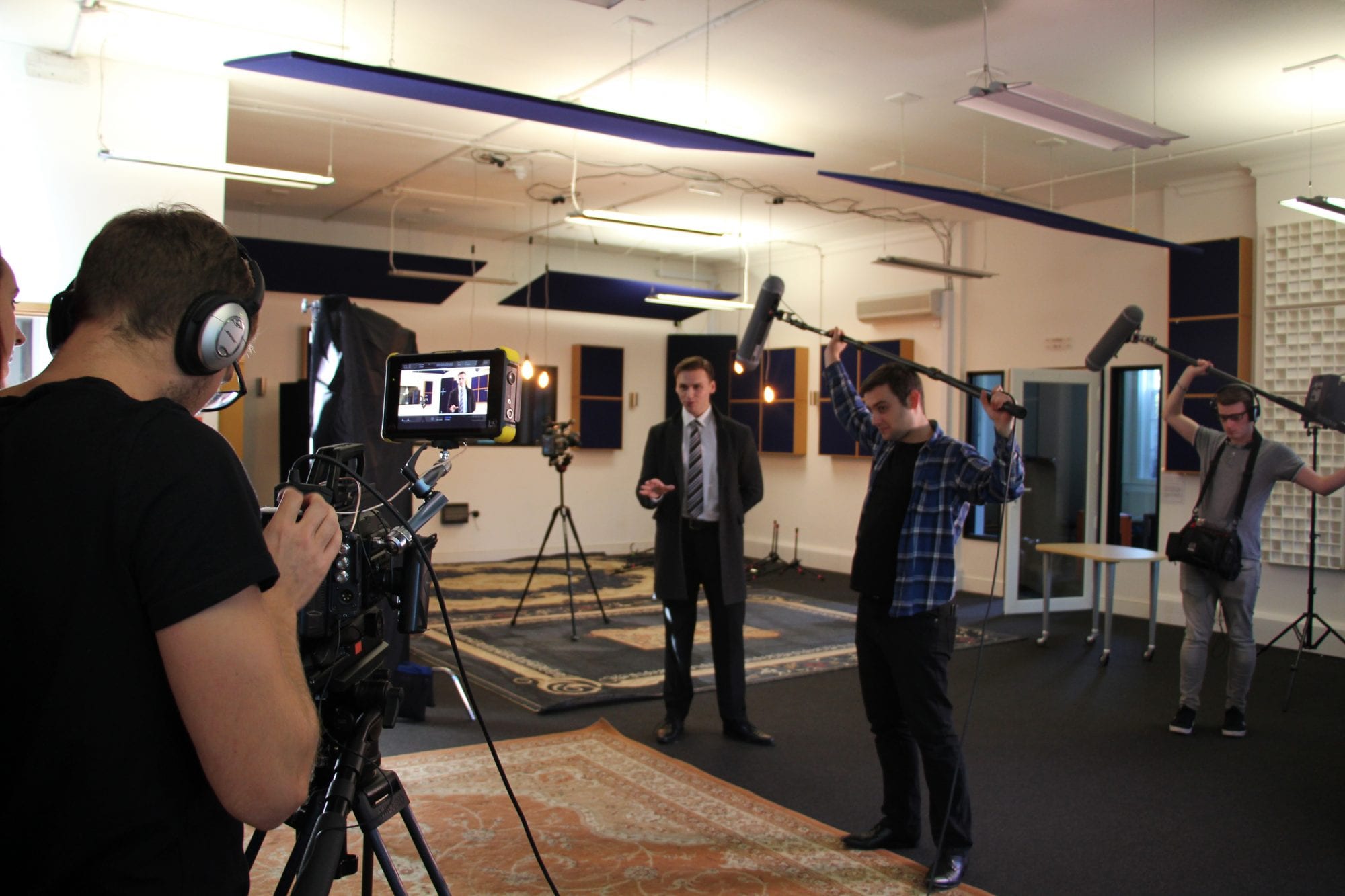
To find out if SAE could be the right move for you, apply today at www.sae.edu/gbr