Bear Grylls Kids Survival Guide

Liz Nicholls

Bear Grylls’ Survival Academy has created The Go Wild guide – developed with snack brand Nature Valley – with eight free ways to keep active kids satisfied this summer in their own home or the local park.

1. Try foraging for food

Fall in love with nature by foraging for herbs in your own garden, terrace, or kitchen, or look outside to try and find some wild plants growing! To get set up for foraging, you’ll need a basket and some gloves before heading out to your local park, field, wood, or nature reserve.

Any of these could be growing nearby:

• Purslane – also known as hogweed, purslane is a leafy green plant which can be used as an herb and salad vegetable. Will be in season mid-summer!

• Raspberries – wild raspberries can grow in hedgerows from mid-August and may be smaller than shop bought but are just as tasty!

• Blackberries – similar to raspberries but darker purpley-black in colour, these will also be ripe and ready for picking from midsummer

• Wild Garlic – although this may not be growing in the summer, it’s a good one to know as will be ready to pick and in season next Spring!

2. Get to know the skies

(Great for small children) – the clouds are full of all sorts of hidden animals; you just need to look carefully for them! To try your hand at zookeeper, pick a nice spot in the garden or the local park with a picnic and try spotting as many animal-shaped clouds as you can. Essential to take a notebook and pen or pencil so that you can draw them too.

If you’re waiting to learn a bit more about the clouds, they can also be used to try and predict the weather!

Simply look to the skies to identify these five formations:

• Cumulus: Detached clumps of cloud composed of water droplets that form low and indicate fair weather. Have flat bases and heaped tops and look a dazzling white in the sunshine.

• Altocumulus: Appears as rolls of cloud, or layered patches in the mid-level region. Commonly found between warm and cold fronts, so can precede bad weather.

• Cirrus: Detached, wispy clouds, formed of ice crystals. Wavy appearance is caused by wind movement. Can indicate a change in the weather. Also known as mares’ tails.

• Cirrocumulus: High patches of cloudlets made up of ice crystals that never cast self-shadows. Usually seen after rain, indicating improving weather.

• Cumulonimbus: Known as thunderclouds, these have low dark bases and extend many miles up into the atmosphere. Produce brief, heavy downpours, and sometimes lead to hail and lightning.

And you can also do this at night! Test your navigation skills by looking to the skies!

In the northern hemisphere, look for a distinctive winter constellation – Orion. He is easy to spot as there are 3 prominent stars more or less equal distance apart in a line and that is Orion’s belt. Under his belt there is 3 start that represent his sword. When the stars of Orion’s sword are vertical in the night sky, and you are facing him, you are facing South.

In the southern hemisphere, scan the skies for one of the brightest constellations – the Southern Cross (or ‘Crux’). This video illustrates how easy it is to find South…

3. Learn how to read and create maps

Prevent yourself from ever getting lost by mastering the art of Cartography and learning how to draw and make maps. This may help you map out your local nature spot or create a fun game where you can hide messages in the park for friends to find later on.

Today, most maps are printed on computers, but you can try making one the traditional way, by grabbing a compass and some paper and pens and getting outside. Start by carefully mapping and naming landmarks you see such as ponds, interesting or weird looking trees, and places where certain animals live. You can make a general map with physical landmarks or try out a thematic map with a specific theme to suit your friends.

4. Tell the time from the sun

Make a DIY sundial and compass to see where you are and the time!

Equipment:

A long stick to use as the central shadow marker
Some rocks to mark North, East, South, and West
A watch, as a timer!
Sunshine!

Instructions:

1. Place your stick in the ground and mark the end of the shadow with one rock

2. Wait 30 minutes and then mark the end of the shadow with the second rock

3. The first rock will be your West point, and the second East. Now mark North and South

4. There you go – you have a compass!

5. Make the ultimate den

A simple and fun thing to do in your back garden, on a picnic, when camping – or even in your bedroom – here’s a simple guide from the den making masters at BGSA on how to make the best den

Equipment:

A sheet
Two trees or structures at home that are safe to attach the sheet to
Some rope
Decorations of your choice

Instructions:

1. Select a suitable area between any two trees or points for your den

2. If outside, check for any loose branches then run the rope between the trees

3. Drape the sheet over the rope, and then weigh down each corner with a rock, log, or something heavy to hold it

4. Inside your structure, add blankets, leaves, or anything else to make the den cosy and fun inside!

6. Go incognito!

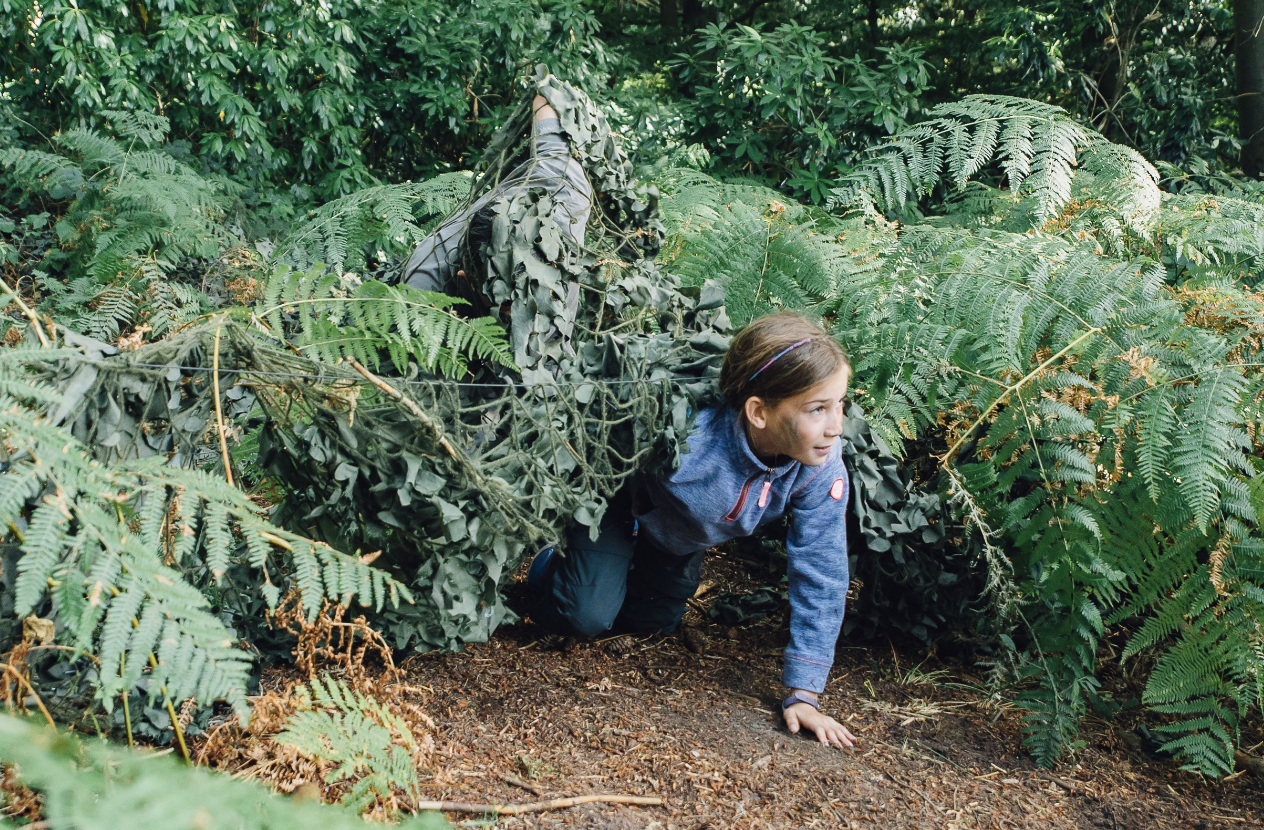
Try and make yourself invisible by learning the five s’s of effective camouflage.

When we’re in the wilderness and our survival relies on us remaining hidden and hard to find, there are five key aspects you need to ensure you’re addressing as you make your way to safety. Helpfully, they all begin with the letter S!

1. SHAPE

Find ways to break up your shape with foliage from your immediate surroundings so that the outline of a human figure is no longer obvious.

2. SHINE

Look carefully at your clothes and equipment to conceal any shine. This could be anything from your watch to the lace ringlets on your boots – use mud to cover everything you can (including your face and exposed skin) but don’t go overboard with the mud either as this in itself could also draw attention.

3. SMELL

Your smell will often betray you long before you’re seen or heard. To minimise exposure, eat all your food raw – if you can! – as the smell of cooked food (and your fire) will carry.

4. SHADOW

Where possible, do as much of your movement at night, where your shadow or silhouette will not expose you.

5. SOUND

All your movements should be slow and purposeful so as not to attract any unwanted attention. If you are moving with someone else, use hand signals instead of your voice to communicate

As long as you are mindful of the above five elements, you’re well on your way to making it to safety and having an incredible story to tell on the other side!

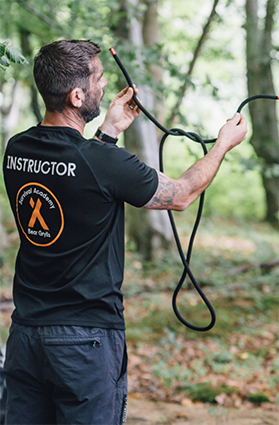
7. Learn the essential knots

Knot tying is an essential part of outdoor adventures, whether you’re building camp, tying your laces, or flying a kite!

Practise these three knots at home until you can master them:

A person holding a bow and arrow Description automatically generated

• Overhand Knot – this is the easiest one of all and is what our hands would automatically do if we were handed a piece of rope or string and told to put a knot in it. A key thing to know about this one, if you tie it around something, it can be undone easily. So, this one is primarily used as a ‘stopper knot’ – useful for stopping the end of a rope slipping through a hold or to stop the ends of a rope fraying.

• Bowline Knot – a BGSA favourite and used by adventurers worldwide, the bowline is made by a loop at the end of a rope which won’t slip or tighten.Also known as the ‘king of knots’, the Bowline is perfect for constructing a hammock at home, making dens, or setting up rope swings.

• Clove Hitch – this one’s a quick and memorable knot that can be used to attach a rope to a pole or a carabiner. Fun fact about the clove hitch, it’s one of the most commonly used knots by the Scouts!

8. Finally, test your knowledge with wild camping

Now that you’ve mastered these survival skills and a summer of challenges, finish off the holidays with a wild camping trip! Even if it’s just outside in your garden, it’s time to put what you’ve learnt into practice and get some experience as a true adventurer.

More info...

To further encourage get people out more, this year will see the return of Nature Valley’s partnership with the Gone Wild Festival with Bear Grylls in Powderham Castle, Devon from 25th to 28th August 2022. Gone Wild Festival with Bear Grylls is an action-packed family friendly festival for adults and children aged 6-18-years.

Wild Watlington

Liz Nicholls

Nicola Shafer tells us how her love of the natural world led her to the publication of her new book

We are lucky to have beautiful natural local habitats. From our precious chalk grasslands to our rare chalk streams, from the beech woods filled with bluebells and wild garlic, to our ancient hedgerows rich with native species, to old oak trees and meadows, to the gardens and green spaces in the town.

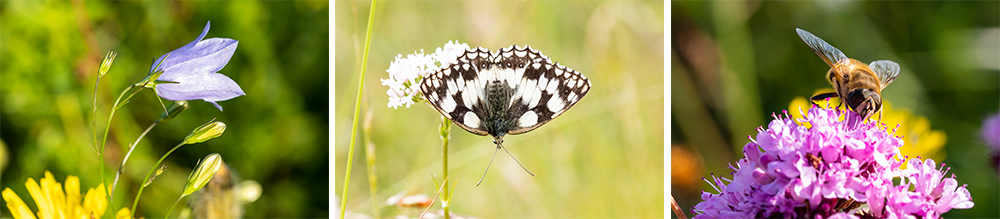
My love of wildlife started as a child, encouraged by my parents and grandparents and a small flowerpress. However it is only since I got involved with the Green Plan, a collaboration between Watlington Climate Action Group and other local groups interested in conservation that I realised how much I didn’t know about ecology. I joined Watlington Environment Group and started to learn the names of flowers, the types of insects, the song of our birds and the importance of our chalk stream. Last year, I acquired a macro lens with which to take better photographs of our local wildflowers, and a whole new world of beauty opened up in front of my eyes. Previously on walks I might notice the flowers in passing but now, stopping to take a closer look the variety, colour, and structure of these wildflowers astounds me. Looking closer you often see that a single flower can be home to various small insects, and a food source or a resting place for a bee or a butterfly.

Thank you to Watlington Library for displaying Eleanor’s artwork from the book in July, and to The Granary Café for hosting an exhibition last month.

Wild Watlington, The Creatures of Watlington Parish is a tour of just some of what can be found on our doorstep. Written as a story book, it is full of information that will be appreciated by young and old alike, as we find out about the habitats that make up our landscape, and the creatures that share it. The book was illustrated by young artist Eleanor Short, who is a Year 8 student at Icknield Community College. Thank you to Watlington Library for displaying Eleanor’s artwork from the book in July, and to The Granary Café for hosting an exhibition last month.

In the last year, with the aid of apps, my grandmother’s guide to wild flowers, and patient friends with more knowledge than me, I’ve been able to learn a fair proportion of the flowers I find on the local hills and verges. In times gone past, we were intimately acquainted with the plants around us – what was edible, what was not, what could be used for a medical treatment, what could be used for warding off evil spirits, and what smelt good when added to bedding. Now most of us don’t even know the names! As a society we have lost so much of this knowledge, but it is worth the effort to reclaim it. Looking closer and recognising the flowers and plants around us bring a greater understanding and connection to our natural world and with it a greater desire to protect and restore it.

Around Watlington my favourite places for wildlife spotting are:

1. The Chilterns way through Greenfield and College Woods is beautiful and I often see deer there

2. Incredible wild flowers can be seen on the chalk grass of the Aston Rowant Nature Reserves

3. The Chalk Pits at the bottom of Watlington Hill is a quiet retreat to listen to birdsong

4. The Paddock behind Watlington Library is beautifully planted with pollinator friendly plants, a great place to spot different types of bees and butterflies

5. Watlington’s historical chalk streams and spring fed ponds such as the Willow Pond and Horse Pond host amphibians, invertebrates, ducks, and occasionally a water vole.

Get your copy

The book is on sale at So Sustainable on Watlington High Street, priced at £5, and limited edition prints are available at wildwatlington.uk

Respect your elders! Five recipes

Liz Nicholls

August is the zenith of elderflower season, with this floral yet tropical flavoured plant gracing many a hedgerow in this gorgeous part of the world.

The plant is known for its white flowers which sprawl out of the stem and will begin to flourish from May lasting through to August, when it then begins to develop purple elderberries.

The fresh, floral, and slightly tropical taste makes the flower a great base for many recipes. The taste is often compared to a more floral version of pear or lychee.

Most commonly, elderflower is found in cordial drinks, but the versatile ingredient has far more to offer…

How to spot elderflower

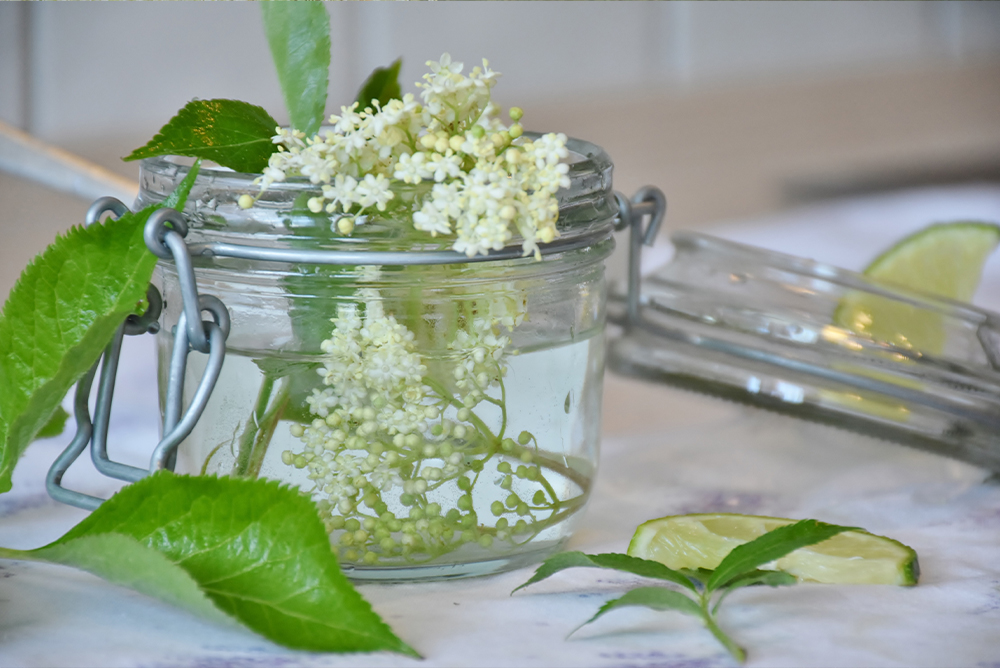
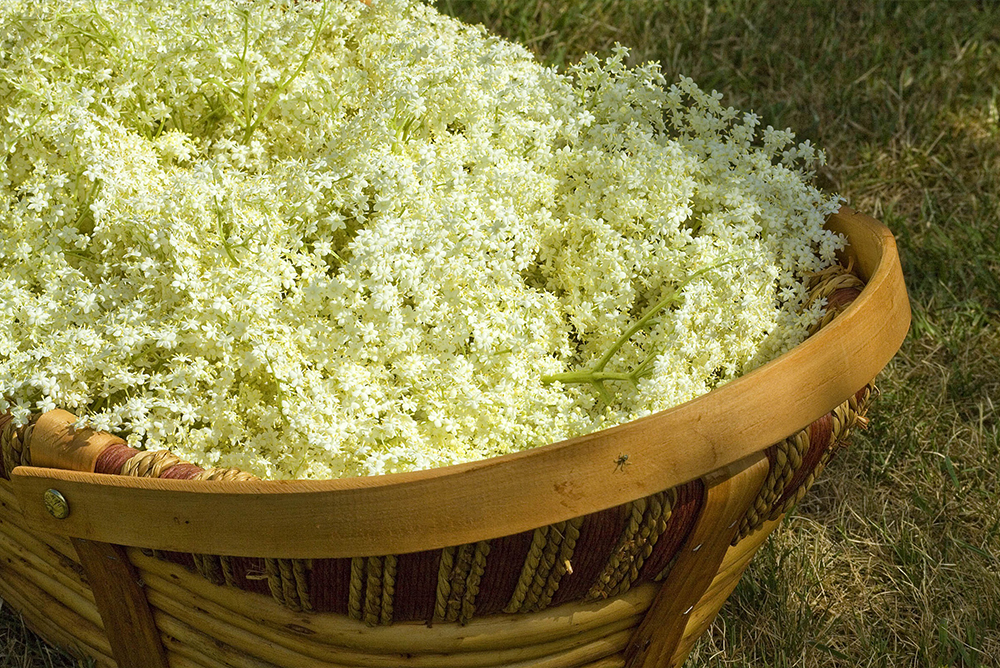
Elderflower’s most recognisable element is its sprawling white flowers which look like a burst of small creamy petals. The tree itself will be small in size, often just a shrub. It is plentiful throughout the UK and often grows in woods, hedges or even in parks or on big streets. However, before you even spot the flower, you may be able to smell it! Elderflower has a distinctive aroma which many liken to ‘the smell of summer’ – it should smell floral and creamy. If the flowers have a brown colour or smell musty, it’s best to leave that plant. Lastly, be sure you’re not confusing elderflower with other similar looking plants like Pyracantha or Cow Parsley. If possible, take a photo of elderflower with you so you can compare. Remember that elderflowers grow from woody, leafy branches, have 5 rounded petals and yellow anthers.

How to prepare your elderflower

If you can, try to pick your elderflower in fair weather. The blooms will be packed with pollen and it’s this which gives the plant its signature taste. Poor weather can mean that the pollen has been washed or blown away, resulting in a less flavourful return. It’s also worth avoiding any elderflowers from beside road or railway lines as these can be tainted with fumes, instead try to wander farther afield for your crop. This is important as when you come to prepare your flowers, you shouldn’t wash them, as this will remove the aforementioned pollen.

Instead, pick off any bugs then trim the blossoms into a container ensuring you gather any pollen that falls away. Discard the stems. It’s best to use elderflower right away, but if you do need to store it, place your flowers in a paper bag and keep in a cool, dry place.

Recipe ideas

Champagne

Elderflower Champagne is the perfect, elegant use for these flowers. To make a batch of your own you’ll need sugar, lemons, and some white wine vinegar.

A simple recipe can be found from River Cottage requiring only basic equipment and some appropriate bottles of choice, just make sure these have a cork or stopper to create that fizz!

This recipe requires a little patience as you’ll need to wait at least a week before your batch is ready. If you plan on storing your champagne, you may need to pop the lid occasionally to release excess pressure from building up.

Once ready, the drink makes a perfect garden party tipple, ideal for sharing with friends!

Fritters

This recipe is much simpler than it sounds. All you need is flour, baking powder, icing sugar and sparkling water. Simply mix the first three ingredients together then add your sparkling water. Aim for a thick texture that is still a little runny. Once ready, dip in your elderflower heads then add to a pan of hot, but not smoking, oil. The fritters should turn golden brown and be ready to remove in under a minute. Once ready, remove and leave to dry on kitchen paper, then dust in icing sugar or serve with a drizzle of honey. For a more adventurous taste, swap out the sparkling water for beer or ginger beer for a different twist.

Sorbet

Sorbet is a simple and versatile way to use your elderflowers. Bring two parts water and one parts sugar to a boil, add in your ingredients, simmer, cool for at least an hour, leave to infuse, strain, then pour into containers to freeze.

The best thing about creating sorbet is that you can experiment with flavours. Some great options to add to your elderflower include lemon, gin, strawberry, or rhubarb. A perfect cooling dessert for summer that’s easy to make, store and enjoy. Top with fresh fruit, biscuits, or add to sparkling wine for a simple, yet elegant, cocktail.

Tea

One effortless way to use your elderflower is to make tea. All you need for this is your elderflower cuttings, a cup and something to strain the liquid. Once you’ve trimmed your elderflowers, hang them upside down in a light, airy place to allow the flowers to dry out. Once done, keep your elderflower in a tin and store for when you want to make a cup. To make the tea, all you need to do is add elderflowers to boiling water and allow it to infuse. After a few minutes, strain the liquid into a cup of your choice. Alternatively, if you have a tea strainer, simply put your elderflowers cuttings inside and cover with hot water.

Cake

Last but not least, elderflower has always been a firm favourite with bakers, giving cakes a sweet but subtle twist. Royal fans may remember that Harry and Meghan opted for a lemon and elderflower cake at their wedding, adorned with fresh flowers. There’s a wealth of options if you’re looking to use elderflower in baking from adding into the mix, creating an elderflower syrup, or mixing it into a buttercream filling or topping. When it comes to the perfect flavour pairings, lemon is often the most popular choice, but pistachio, raspberries, or blueberries also make great combinations. For the perfect summer showstopper, try drizzling your cake with icing and topping with edible flowers.

“Elderflower can be a wonderfully diverse ingredient, while its flavour is distinctive, it’s sweet and floral nature means it pairs well with a wealth of other flavours,” says Kate Cartwright of Burleigh Pottery.

“Luckily in the UK, elder trees are abundant, meaning it’s highly likely you’ll be able to forage some elderflower for yourself. Just look out for the bursts of white flowers which should be blooming anytime now. When done responsibly, foraging is a great way to take advantage of the wonderful wild plants and ingredients we have in our country. Using local ingredients allows us to be more sustainable and cooking with wildflowers such as elderflower embraces and celebrates the ingredients we have all around us.”

A final word

It’s important to be responsible when foraging and there are some basic principles you should follow:

• Don’t take more than you need.

• Be careful not to trample or damage plants.

• Leave lots behind.

• Be sure you have identified the plant before consuming.

• Seek permission on private land.

• Elderflower mildly toxic when raw. Cooking destroys the toxic chemicals.

Gilt trip!

Liz Nicholls

Liz Nicholls chats to Nat & Ko, whose emporium Gilt & Grain in Southmoor is adding style & pizzazz to homes big and small.

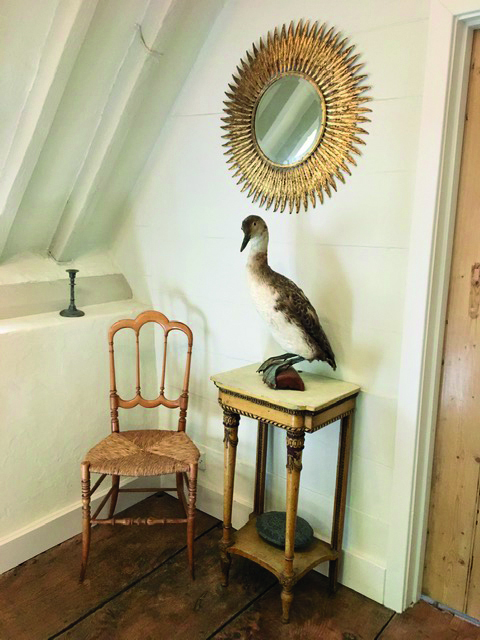
Forget the pub… for more than 2,000 interiors fans, the Friday evening new stock email from Gilt & Grain is the real start of the weekend.

The weekly mail drop of fresh treasures has a sales rate most businesses can only dream of, with more than 60% of items snapped up this way. If you see something you like, you’d better buy it quickly as the beautiful, eclectic items go like hot cakes, as I learned to my cost recently.

I am now primed for buying, which is how I became proud owner of an enormous Tudor-meets Bridgerton upholstered headboard last weekend.

“Customers often refer to the Friday evening email as one of the highlights of their week due to the eclectic list of items,” Ko tells me. “When it arrives they know it is the beginning of their weekend!”

If you see something you like, you’d better buy it quickly as the beautiful, ecletic items go like hot cakes

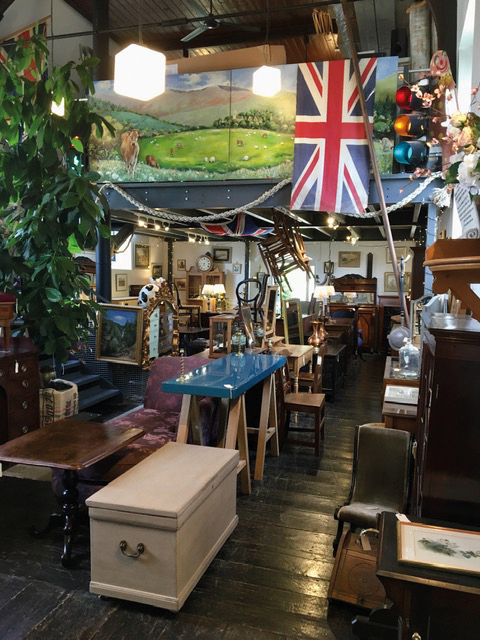
Gilt & Grain has a gorgeously curated bricks-and-mortar shop in a lovingly restored 19th century chapel featuring a steel mezzanine. But one of the reasons Gilt & Grain has such a loyal fanbase is the couple’s decision to have a strong online presence by operating a website that is updated daily with multiple photographs and dimensions of each item of furniture.

After turning 40, after 24 years as a self-employed carpenter mainly working on period houses, Nat decided to start selling antiques and paintings on Ebay. After 18 months, a run-down shop became available in Oxford which he thought would be good for storage.

And after 20 years in retail Ko, who was at the time manager for TOAST on the High Street, was looking for a new challenge. The East Oxford treasure trove won a loyal customer base (me included) for a few years before the Old Chapel called…

The couple still live in Oxfordshire, and their two-year-old cocker spaniel Millie can often be found lending a paw in the shop.

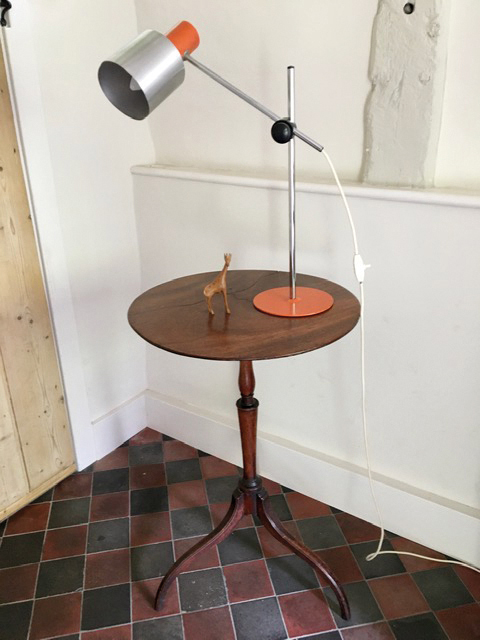
“Our own interior aesthetic is eclectic,” adds Nat. “Our home is full of what I love whether mid-century or Georgian period furniture. I’ve always believed good design from any period, if carefully selected, can always look good together. We take very little notice of trends so this means interior designers often pick up rather good buys from us! Bamboo and rattan furniture is still selling very swiftly as is furniture with bobbin-turned legs. Due to Instagram, trends are now so swift that they come and go without us even noticing!”

Buying antique and used furniture is sustainable: a lot of the furniture Gilt & Grain sells is at least 200 years old and still perfectly usable, practical and very attractive.

“In recession people look around to save money and antiques are still very affordable,” adds Ko. “For example we recently sold a beautiful Regency sideboard for £185 with the original receipt from a LAPADA member dealer which the previous deceased owner originally purchased in the late 1980s for £1,895. We also often sell used modern good quality or designer pieces as greatly reduced sums.”

Find out more

Thanks to their good eye and high turnover, the shop attracts people from all walks of life, including some high-profile celebrities… And you might hear Ko practising the cello with Millie. Or else join the club of subscribers. Fight you for the best bits!

Visit giltandgrain.com

Young at heart

Liz Nicholls

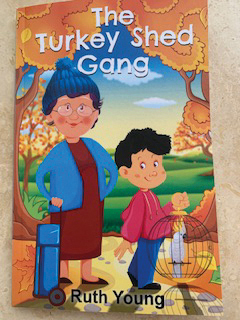
Ruth Young’s new children’s book is called The Turkey Shed Gang. She tells us about her love for teaching, as well as why Cranleigh is the best place in the world

Ruth loves walking in the Surrey Hills which surround Cranleigh. She often goes up nearby Pitch Hill to see the far-reaching views over the beautiful countryside down towards the sea. “It’s very rural and yet just an hour from Londo,” she says, “which makes it a great place to live. And you can be down at the coast in under an hour.”

Ruth is a teacher and taught in local schools until she retired. Now she teaches children at home who may need help with their learning. She is a teaching of reading specialist and particularly loves teaching children with dyslexia. She says: “Learning to read is the most important skill to learn. It opens up the ability to access all the curriculum. That’s why if a child needs specific help they must get it. She loves helping these children and seeing their excitement when they achieve their goals. There’s nothing better!”

Ruth has spoken on BBC Surrey three times about teaching and learning and written articles in a national parenting magazine.

The Turkey Shed Gang is a story about Joe, his Granny Sal and a parrot called Mr Percival. They go on the run to escape the police… It’s for children aged 7 and up who can read independently or anyone who may need a little extra help. She hopes it encourages children to keep turning the pages. The children she’s heard from who have read it have said it does just that!

The Turkey Shed Gang

It’s available on Amazon or from Ruth’s website ruthyoung.co.uk

Marlow Best Kept Village

Liz Nicholls

Congratulations to Marlow, Best Kept Village!

Marlow has been awarded a certificate of merit in Buckinghamshire’s annual Best Kept Village Competition — “fully deserved” according to the competition’s administrator.

The judges’ comments included: “Excellent floral displays – strong community effort – in Jubilee colours”, “Areas around shops and pubs were to a very high standard” and“Good evidence of community effort in the town”.

“Excellent floral displays – strong community effort – in Jubilee colours”, “Areas around shops and pubs were to a very high standard” and“Good evidence of community effort in the town”.

Mayor Richard Scott said: “We’re delighted with the merit for Best Kept Village — the competition is fierce. I’m particularly impressed with the judges’ comments about community effort and would like to thank residents, businesses and Council workers for keeping our town clean and beautiful.”

Founded in 1957, the Best Kept Village Competition’s objective is to encourage entrants to work together as a community, involving all age groups, to make villages and towns more attractive places, not only for residents but also for visitors. The winner was Stony Stratford, with Wendover the runner-up.

Star Q&A: Lesley Joseph

Liz Nicholls

Lesley Joseph chats to us about meeting the Pope, Birds Of A Feather, her pal Maureen Lipman and the joy of starring in Sister Act at the Apollo until 28th August

Q. Hello Lesley. Is this show as much fun as it looks? “Oh my God yes! It’s such a feelgood show. The audience have been on their feet going beserk; it’s hard not to get emotional. Everyone on stage is so glad to be there, after the two years we’ve had, and who doesn’t enjoy singing, rapping nuns!? Alan Menken, who has written the songs, is a genius and Sister Act is a story everyone knows, thanks to the film.”

Q. You have so much energy: what’s your secret? “Well my mother died just shy of 104 – she still did yoga and tennis in her nineties – so I hope I’ve got her genes. I walk everywhere. I keep my brain active. And I love what I do – it’s a privilege to be in a show like this.”

Q. Did you expect Birds Of A Feather to be such a hit? “No I didn’t have a clue. It’s a great show and was one of the first, along with The Liver Birds, to celebrate women of a certain age. My father, when we filmed the first one in front of a live audience, asked the writers, ‘do you think this will go anywhere?’, and they said ‘we’ll still be here in ten years’. Well, we kept going 33 years, with a break in the middle, and it’s still well loved, because it was so well written.”

Q. Do people expect you to be Dorien? “In the early days they expected me Dorien-esque, all in leopard print. But we’re so different. I was always very careful to make sure Dorien wasn’t a silly caricature. And I’m nothing like her – if you could see me now in my training clothes, no make-up, hair awry, you’d believe me!”

Q. What was it like meeting the Pope? “Yes, for Pilgrimage [on the BBC] we walked from the Swiss Alps to Rome, and had an audience with the Pope, unexpectedly. I said ‘I’m Lesley Joseph, I’m 72, I’m an actress, and I’ve just walked 100 miles and feel rejuvenated’. He burst out laughing and said ‘you don’t look 72’. We hugged and I came out with ‘oh bless you!’ Haha! One of the highlights of my career.”

Q. Do you enjoy watching your pal Maureen Lipman in Coronation Street? “She’s brilliant in everything she does but no, I don’t watch much television. I am staying with her at the moment, up here in Manchester. We go back 50 years, were at drama school together. So we’re these two ancient flatmates together again!”

Q. Do you have a favourite author? “I love Hilary Mantel; I can read her books again and again. I love reading about Thomas Cromwell.”

Q. If you could make one wish for the world, what would it be? “Peace. I just wish people could live in harmony, believe in what they want, without greed, envy or corruption.”

Book your tickets for Sister Act, which also stars Beverley Knight & Jennifer Saunders, at London’s Eventim Apollo at eventimapollo.com

Tell us your local news here

Star Q&A: Kim Wilde

Liz Nicholls

Kim Wilde chats to Liz Nicholls about performing at Heritage Live, alongside Boy George, Lulu, Gabrielle & more, including Ardingly on Saturday, 16th July and Englefield House on Saturday, 23rd July.

Q. Hello Kim – where are you chatting from right now? “From home. I’ve got a beautiful garden – it should be after the inordinate time I’ve spent on it! Everything that could be out is out looking amazing. Because of my experience and because of my love of flowers I’ve got lots more flowers to look forward to later in the summer. I don’t have a favourite flower but I have a real soft spot for roses – we called our daughter Rose.”

Q. We’re looking forward to seeing you at Heritage Live. How does it feel to be out on tour again? “Great! I think top of the list of things people really missed over the pandemic was live music; getting together with a crowd of like-minded souls and singing their heart out. Music has a great way of bringing people together in a beautiful way. It does a much better job than most other things in achieving that. I’ve already been doing quite a few gigs and the atmosphere has been noticeably ecstatic. Not just because they’re coming to see me – haha – but we’re all so excited to be back together. These are great days to be a live musician.”

Q. Your dad Marty is on tour right now – do you still enjoy going on stage with him? “Yes! I’ve been hitching a lift in the back of his car, jumping on stage for a few numbers, I just love it! I’ll continue to do that if I’m not working. It’s fantastic being on stage with my dad – his voice is still amazing and his ability to perform is astonishing for his years [83]. I think keeping going, doing what you love keeps you young. He’s no gym bunny, my dad, but he does a lot of golf, a lot of walking, always has done. He doesn’t smoke any more, and he drinks very moderately. I think it’s in the genes.”

Q. Yes – your whole family, including your children, all have musical genes? “It has definitely descended through the generations. Not just in my family but my brother’s family and sister’s family, so it seems to be in the blood.”

Q. Do you have a rider? “I do but I’m very easy to look after before a gig. I don’t really eat much – maybe a few sweeties but I don’t ask anyone to take out different colours for me and I don’t drink alcohol.”

Q. Is it nice to hang out with your old mate Boy George, who is also starring? “It’s great. We’ve done a lot of things together over the years – all kinds of TV and concerts and benefits – we have a real shared history. We recorded a song together which went on my greatest hits album called Shine On. So yeah I can’t wait to see him again. He’s a wonderful person to be around.”

Q. What is it about 1980s music that is so popular – even with younger people now? “It’s very eclectic, you know? Everything was in the 1980s – it wasn’t just sharp haircuts, shoulder pads and synthesisers – there was a lot of prog rock, rock soul, disco, R&B. All kinds of different grooves all happening in parallel. There was something for everybody and it all came under that beautiful umbrella that we call pop.”

Q. What new artists do you like? “I’m listening a lot to Lizzo, really enjoying what she does and how she’s doing it. Thomas Paul, too; I did a bit of work with him over lockdown on his first album Black Country Disco which is awesome! I went to his album launch for Life In Plastic the other night at the Vauxhall Tavern which was fantastic.”

Q. What’s your first memory of music? “I was born in 1960 and the first memories I can trace back are ’67 & ’68 when I was seven and eight. The Beatles – listening to Penny Lane in the back of the car, while my dad was driving us up to Liverpool to see my nan. I remember Cilla Black Anyone Who Had A Heart and Richard Harris MacArthur Park and Gene Pitney 24 Hours from Tulsa. All these beautiful epic songs.”

Q. Thanks Kim we can’t wait to see you. “Thank you! And may I just say that anyone who misses these shows can come to my Pop Won’t Stop Greatest Hits Tour in September when I’ll be up and down the country. There’s a lot of sadness and there are terrible things in the world right now, but there’s a lot of beauty too, so don’t think it’s wrong to focus on that.”

Visit heritagelive.net & kimwilde.com

Tell us your local news here

Star Q&A: Katherine Jenkins

Liz Nicholls

Liz Nicholls chats to mezzo soprano Katherine Jenkins OBE ahead of her performance at Henley Festival, 6th-10th July.

Q. Hello Katherine! You’ve performed for popes, presidents and princes as well as that wonderful Jubilee performance for The Queen. Which of these, if any, has made you the most nervous? “I was nervous the very first time I performed for The Queen, at the Festival of Remembrance in Albert Hall, especially because you have the afternoon performance then The Queen comes for the evening performance which made me more and more more nervous! And as I’ve become more of a fan over the years I’ve actually become more nervous. You never get blasé about singing for her. Anyone backstage at these events who says ‘oh I’m not that bothered’ I just don’t believe them! The Queen always makes me want to do my best. Because of the admiration I have for her I think that it makes me want to pull out my best performance because that’s what she deserves.”

Q. You’ve met The Queen several times – how have you found her? “I’ve just always found her to be really warm and really good at knowing what to ask you, very interested in what you’re up to. When you see her at formal events but she’s quite witty and funny. I’m a real fan. I’ve grown up in a household who are real fans of hers. And I think as I get older the more I meet her the more I’m impressed by her and admire her – I think she’s an amazing woman. With the celebration at Windsor the whole audience were so thrilled to see her and be in her presence. It was incredibly emotional in terms of seeing that love for her. I remember once being at Buckingham Palace for an event to help musicians at Christmas, being in a line-up next to Brian May and she said oh yes you’re the one who keeps making all that noise on my roof! She’s very quick – she’s made some very funny comments over the years.”

Q. Are you looking forward to Henley Festival and are there any other acts you want to catch? “I listen to all kinds of music. I very much like Craig David [who stars on 7th July], I think Tom Jones is on on the Friday [8th July]. He’s a friend of mine. The thig is about Henley is I’ve been there as a performer and I’ve been there as an audience member. And it’s so much fun as an event that I don’t think I can allow myself to go prior to me performing, if I want to sing well on the Sunday. I want to be in good voice. I do go every year but this is my third time performing. I went last year for Sophie Ellis Bextor. I’ve seen Tom Odell. Whether you’re in the audience, or a performer, there just isn’t an event like it. It’s such a cool occasion, including the fact that the audience are better dressed than you are – it’s a very quintessential British event and I’m excited. I have friends who live in the area, I love the beautiful countryside around there.”

Q. You are an inspirational charity patron & ambassador – is helping others something that was instilled in you by your parents? “Definitely. One of my early memories at primary school was my mum fundraising for a minibus. She never sat still, whether it was for the school or church, there was always some kind of fundraising. I think when you see that at a young age you do inherit that. I’m so grateful that she did give us that sense of responsibility. If you have any kind of success in any field you should pay the good stuff forward. There’s a lot of different charities that are near to my heart but I try to choose ones I can make a difference in.”

Q. What’s your first memory of music? “My mum teaching me I’m a Little Teapot and standing there singing that for anyone who came into our house, putting on a show. When I think of my childhood, I feel like there’s a soundtrack, a lot of church music, male voice choirs, all those opportunities that come with growing up in south Wales. I look back and wonder: would I be in this position today if I hadn’t had that around me?”

Q. Are there any up-and-coming music stars you love? “I work with quite a lot of singers that are coming out of the Royal Academy of Music. Quite a lot of young singers have reached out to me for advice, about the business, how to get a job, and I’m so happy to help out. It’s a very small industry and. Mum and I didn’t believe it was going to happen for me because we didn’t know anyone in this industry, the entertainment sphere at all. So if I can help with connections and advice than I’m so happy to do that. But I can’t choose one to sing the praises of because that would be too hard!”

Q. What’s your favourite book? All the books I’m reading at the moment are parenting books. I have a daughter who’s nearly seven and I’m constantly reading to get ahead of the next stage.”

Q. If you could make one wish for the world what would it be? “Kindness – that’s the root of everything. That we can be kind to each other, to the planet – remember that we’re custodians of it, pass it on. Let’s be kind to ourselves and each other.”

Tell us your local news here

Wine & dine at The Alice

Liz Nicholls

It’s bottoms-up time down the rabbit hole! To celebrate English Wine Week (18th – 26th June) and to champion English producers, The Alice – Oxford’s all-day dining restaurant and bar set within The Randolph Hotel by Graduate Hotels® – is hosting a series of intimate Wine and Dine events and a special Wine Flight tasting menu in collaboration with Balfour Winery and Coates & Seely.

Taking place on Tuesday 21st June at 7pm, The Alice will be collaborating with Coates & Seely, a quintessential English Sparkling Winery to co-host a fun, blind tasting of French vs English Sparkling Wines. Hosted in The Alice’s beautiful private dining room, each wine will be paired with a curated four-course dinner by executive chef Chris Emery, including canapés to start.

Tristram Coates from Coates & Seely (representing England) and Gemma from Palmer & Co (representing France), will guide guests through the four-course dinner as they blind taste a range of sparkling wines. There will also be plenty of time to learn more about English Wines as they share stories and history of Sparkling Winemaking, before the sparkling wines are revealed at the end of the meal for the moment of truth.

Guests will be treated to a selection of seasonal canapés, followed by four-courses including tempting dishes of Roast Quail with melted onions & morels and a Strawberry, Champagne Syllabub & Verbena Tart.

For more information and to book, please visit the link here. Tickets are £95pp. A vegetarian menu is also available.

Wine & Dine Series at The Alice: Best of Balfour Wine Pairing Dinner

Taking place on Thursday 23rd June at 7pm, The Alice will be collaborating with award-winning Balfour Winery to host an exclusive Wine & Dine four-course dinner curated by Executive Chef Chris Emery, showcasing the best of seasonal British produce and English wine.

Hosted in The Alice’s whimsical private dining room, Janina Doyle, Brand Ambassador of Balfour Winery, will guide guests through the menu as they enjoy each course paired with a sparkling, white or red wine. There will also be plenty of time to learn more about English Wines as she shares the story of the wine harvest and history of Balfour Wine.

Guests will be welcomed with a selection of canapés, followed by a special four-course menu, each course paired with a Balfour wine. Guests can expect dishes including Sole Agnolotti, Sorrel Butter Sauce & Exmoor Caviar paired with Springfield Chardonnay 2018 and Romney Marsh Lamb, Melted Onions, Girolles & Peas paired with Luke’s Pinot Noir 2020.

For more information, including detail on the celebrated Balfour Winery and to book, please visit the link here. Tickets are priced at £75pp. A vegetarian menu is also available.

Introducing The Alice’s Wine Flight Trio

To celebrate English Wine Week, The Alice is also showcasing a limited selection of English wines from Balfour Winery, set on the beautiful Hush Heath Estate. Surrounded by ancient woodlands and wildflower meadows, Balfour was one of the first to be awarded the WineGB Sustainability Certification.

Available throughout the month of June in the main restaurant, guests who dine at The Alice will be able to enjoy an exclusive wine flight trio from Balfour Winery, priced at £12, including Balfour Skye’s Chardonnay, Nannette’s Rose and Luke’s Pinot Noir.

For more information and to book, please visit The Alice’s website here.