Marlow’s Sporting Spirit 

Round & About

A new exhibition celebrates local games, clubs and community

From rowing on the Thames to cricket on village greens, to athletics and local club rivalries, Marlow Museum’s new exhibition brings to life the ways sport has shaped community spirit, local identity, and even the landscape. Curated by a dedicated team, the display draws on an extensive archive of photographs, memorabilia, uniforms, and first-hand stories that collectively weave a rich tapestry of local sporting history. 

Visitors can explore interactive stands and display cases highlighting key moments: vintage rowing shells, historic team photographs, club badges, and equipment passed down through generations. Compelling audio-visual elements allow guests to hear former athletes, local coaches, and supporters share their memories. Younger visitors will particularly enjoy the Junior Sports Challenge zone, where they can try on replica kits, tackle quizzes, and immerse themselves in Marlow’s sporting past. 

What makes this exhibition truly special is its strong local connection. Many items have been loaned by residents, each with personal anecdotes that provide context and personality, creating a genuine sense of community pride. “Sport isn’t just about games,” explains the museum team. “It’s about teamwork, identity, and bringing people together – and Marlow has a wonderful history of that.” 

By celebrating this sporting legacy, Marlow Museum is doing more than entertaining visitors – it is preserving local memory. In Bucks, clubs for rowing, cricket, and athletics have long acted as community hubs, fostering friendships, rivalries, and shared experiences across generations. This exhibition offers both a nostalgic trip for long-time locals and an educational introduction for newcomers or younger generations. 

The exhibition runs until Sunday 15th February, giving plenty of time to explore before the school holidays. Marlow Museum is located at Court Garden, Pound Lane, SL7 2AE. Opening times vary seasonally, so check marlowmuseum.org for details. Admission is free, though donations are welcomed, and the exhibition is suitable for all ages. 

Whether you’re a sporting enthusiast, a local history buff, or simply looking for a family-friendly day out, this showcase of Marlow’s athletic heritage offers a fascinating insight into how play, competition, and teamwork have shaped the town – and the community that continues to thrive around it. 

The Best English Sparkling Wines

Round & About

 Round & About’s resident wine columnist tells us how Britannia Rules the Wines and recommends the best English sparkling wines

Britannia Rules The Wines 

 English sparkling wine is world-renowned, with some being spoken of as being superior to Champagne.  That Champagne Taittinger has created a winery in Kent says it all.  Other counties including Sussex, Hampshire, and Surrey have all become hotspots of cool wines, many of which are not only on our doorsteps, but will welcome you on theirs.  To celebrate this, here are my top English sparkling wines to toast the festive season and the New Year with. 

First up, the Simpsons Flint Fields Blanc de Noir 2020 (Simpsons £45).  This is the best English vintage sparkling I’ve ever had.  100% Pinot Noir, the bouquet is a heavenly combination of fruits of the forest, flowers and vanilla.  In the mouth, it’s rounded and soft, yet precise and intense.  Berries in cream, pears, and gentle spices populate the palate, and the long, complex finish completes this majestic wine. 

Denbies are one of the pioneers of English wine, and their sparkling wines continue to reach new heights.  Take the Greenfields (Denbies £25).  Mature and mellow, there’s a baked apple tone to the nose, and flavours of juicy red berries, brioche, honey, and lime give a satisfying mouthful.  There’s real texture here, too.  The long bottle ageing imparts a peachiness that adds to the enjoyment, but the signature freshness makes it just the thing for savoury hors d’oeuvres. 

Chapel Down Classic NV (Waitrose on offer £22) was the first English fizz I ever tasted, and it’s remained a favourite.  Stylistically, it has changed quite a bit.  Older vines and warmer climes have softened its edges, imparted greater concentration to the fruit, and made for a fuller, richer wine.  Orchard fruits and red berry scents rise from the glass, while in the mouth, there’s a wonderful tension between green and yellow citrus and brioche, honey, and cream.  A stylish aperitif, it’s lovely with fish, poultry, and seafood.  

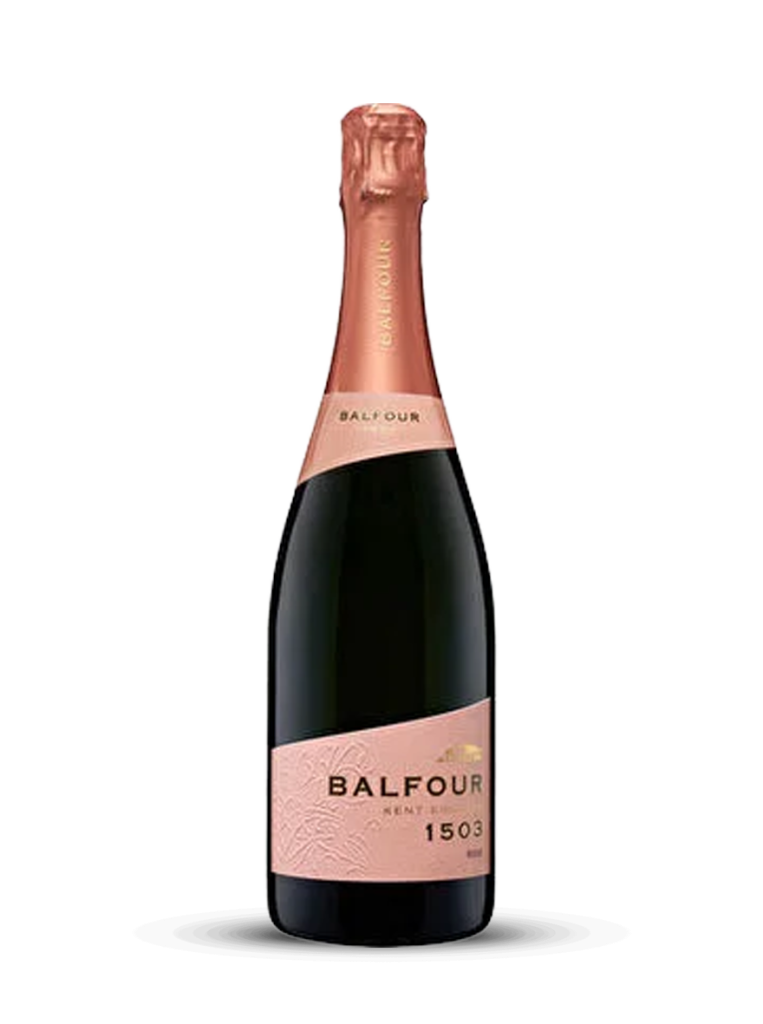
For many years, producing a serious English rosé seemed like an impossible dream.  Getting noble black grapes to ripen was just too much of a challenge.  Today, it’s a reality as the Balfour 1503 Rosé shows.  Mid-pink, with a delicate strawberry and floral nose, tangy tones of pink grapefruit and raspberry are softened by plum, yeast, and dusty chalk flavours to the finish.  Serve chilled with pink fish. 

Hampshire has become a hotbed of wine production, and the Candover Brook is regarded as one of the UK’s best.  TheWine GB Gold Medal-winning Candover Brook Rosé (Candover Brook £43) is a stunner.  With its ample cranberry and dried strawberry fruits, citrus, minerals, and a touch of minerally bitterness, it has a very classical feel to it, but there’s something in the joyously lively finish that marks it out as new and exciting.

I’ll stay in the county that gave us cricket (and Benny Hill, well, nowhere is perfect) with the Hambledon Classic Cuvee (Waitrose £32.50).  Regarded as the birthplace of English sparkling wine, the estate was established in 1952.  It’s now owned by Berry Brothers & Rudd and Symington Family Estates, they of port fame.  Restrained and precise, this pale, finely delineated wine is one to sip and consider.  White flowers, hawthorn, and citrus open proceedings, followed by richer tones of dried apple, quince, apricot and hazelnuts.  I’d recommend serving this on its own or with cream cheese blinis, as it should be allowed to shine. 

You can’t talk about English sparkling wine and not mention Nyetimber (Waitrose, on offer £28, down from £42).  From its first release in 1996, Nyetimber redefined people’s expectations as to how good English fizz could be.  Founders Sally and Stuart Moss were convinced they could produce wines that would rival champagne, and a clutch of international awards has proved them right.  ‘Poised, elegant, approachable’ sums up my feelings on this wine.  White gold, its bouquet is floral with pear, grape and white currant offset by toast and chalk dust.  Flavours of green and yellow berries flood over the palate, and while tart red berries make it feel fresh and zingy, the sheer weight of fruit makes it plump and joyous. 

I’ll finish with the Domaine Evremond Classic Cuvée Edition I (Majestic £50).  Produced in Kent by Taittinger, I’ve tasted this first offering twice this year and I’ve been blown away on both occasions.  Green gold with tiny pearlescent bubbles, the fresh and fruity nose of red pears, lemon, chalky minerals and yeast is wonderfully classical.  On the palate, it’s poised, elegant and serious.  Layers of green and yellow fruits are augmented by chalky minerals, a hint of salinity and white pepper.  It reminded me of how Taittinger tasted 20 years ago, and while it’s sublime now, it will develop in the bottle over the next 3-5 years. 

 I’ll be back with some hot wines for cold nights.  
Cheers!  
Giles 

Enid Blyton’s Enduring Magic 

Round & About

This month, we’re celebrating the beloved author of some of the most iconic children’s stories ever written & giving you the chance to win books.

Whether it’s lashings of ginger beer, midnight feasts in secret dormitories or a secret door in an enchanted tree, few authors have captured the wonder of childhood quite like Enid Blyton. For millions of readers, her stories weren’t just books, they were invitations to adventure. 

It’s fitting, then, that this most prolific of storytellers made her home right here in Buckinghamshire. In 1938, Blyton settled in Beaconsfield, in a handsome red-brick house called Green Hedges. It was there, surrounded by gardens and the gentle hum of English village life, that she wrote some of her best-loved stories; from the Famous Five and Secret Seven adventures to Malory TowersSt Clare’s and The Magic Faraway Tree

Her daily routine was famously disciplined. She would sit at her typewriter in the morning and let the words pour out, claiming that her characters “told her what to write”. By the end of her career, she had produced more than 600 books and 4,000 short stories, a staggering achievement that continues to inspire awe (and perhaps a little envy) among writers today. 

Though best known for her adventures and boarding school tales, Enid began her career as a teacher, and her time in the classroom shaped much of her writing. She believed that stories were the best way to teach; that children learned empathy, courage, and curiosity by imagining themselves in another’s shoes. 

Her language was simple, her plots clear, and her sense of fun contagious. For generations of readers; particularly those who might otherwise have struggled with reading, her books offered an accessible, joyful route into literacy. Teachers found that even reluctant readers devoured her adventures, hungry for “just one more chapter.” 

It’s no surprise, then, that Enid Blyton’s influence continues in schools today. Her works still line classroom shelves, albeit often in updated editions that reflect modern values. In an age when children’s attention is constantly competed for by screens and social media, her stories still remind us that the greatest adventures begin in the imagination. 

Of course, Enid Blyton’s legacy isn’t without debate. Some of her language and characterisations, written in the mid-20th century, have not aged well. Over the years, critics have accused her of outdated social attitudes and oversimplified moral worlds. Yet her defenders argue that her stories endure not because they are flawless, but because they celebrate something timeless: the thrill of discovery, the importance of friendship, and the belief that goodness will prevail. 

Publishers have worked carefully to modernise certain phrases and remove stereotypes, ensuring that Enid’s works can continue to be read, and loved, by new generations. The result is a bridge between past and present: stories that keep their original sparkle while meeting the standards of today’s readers and parents. 

What makes Blyton’s writing so enduring is that she never forgot what it felt like to be a child. She knew the joy of secret clubs, the magic of whispered plans, and the delicious shiver of a mystery to be solved. Her characters, brave, loyal, endlessly curious, have become part of the nation’s shared imagination. 

In her lifetime, she received tens of thousands of fan letters each week, and her books have since sold more than 600 million copies worldwide, translated into 90 languages. Even today, Netflix and stage adaptations continue to reimagine her worlds for new audiences. 

Although Green Hedges was demolished in the 1970s, its memory lingers in Beaconsfield, marked by a blue plaque on Blyton Close; a small tribute to a giant of storytelling. Visitors still come to the area to trace her footsteps, drawn by the same spirit of adventure that fuelled her work. 

As we step into a new year, and children head back to school after the holidays, perhaps there’s no better time to rediscover Blyton’s magic. Her stories remind us, teachers, parents, and readers alike, that learning begins with curiosity, and that imagination is one of the greatest gifts we can pass on. 

After all, as any child who has ever packed a picnic basket and cycled off down a country lane will tell you, adventure is always waiting, if only you know where to look. 

Her books have sold more than 600 million copies and been translated into more than 90 languages, making her one of the most-read authors in history. 

Sir Steve Redgrave star Q&A 

Round & About

Sir Steve Redgrave reflects on life in Marlow, school, sport, wellbeing and what truly matters in life

Q. Hello Sir Steve! Please tell us what you love about this part of the world. “Being born and bred in Marlow for several generations the river has always played a major part in my life. My father in his youth used to paint Marlow Bridge. Together we used to go fishing, which is really surprising as we both hated it!”   

Q. Did you enjoy school? “My first school was St Peters Street; my memory is not good enough to recall too much, but I do remember being taking out a few yards down the slipway opposite the weir to the water’s edge. Perhaps it was written in the stars that the only memory I have from infant school was the river. My next move was to Holy Trinity. That was my first introduction into sports that I remember and the start of getting the love for competing. After two years I moved to Burford School in Marlow Bottom; we lived next door. That was fun, especially as my year group were the oldest for two years, but there was a policy of non-competitive sport. I don’t know if this gave me more hunger to compete when moving on. Some of our parents however felt this wasn’t right and so organised football matches with other communities. One being the American base at High Wycombe. I then moved to Great Marlow School. This is where I was introduced to rowing and I have very fond memories of the school.”   

Q. When you look back at your five Olympic golds, what moment stands out most vividly to you now? “I think the first in LA. As a young athlete winning Olympic gold medal is the ultimate dream within my sport. And this moment came true in 1984.” 
 
Q. Many young athletes cite you as an inspiration. Who was your hero growing up? And now? “Mark Spitz was somebody I looked up to when I was 10. He was competing at the Munich Games in 1972 winning seven gold medals all in world record times. I thought ‘wouldn’t it be amazing to win one!’ It was still four years until my sport found me. I admire anyone that gets the best out of their abilities. This doesn’t have to be winning.”   

Q. How do you feel about the Thames – what would you do to help protect the water? “Our waterways have been going through crisis for a few generations. Underdevelopment from the waterways has culminated in our water companies dumping raw sewage into our seas, lakes and rivers. This is just not acceptable. If raw sewage was dumped in our high streets something would be done about it immediately. We need to act quickly to put this wrong right. It will take a decade or more to complete and that is why we need to start now to make sure our environment and beautiful country stays at a level for us all to enjoy.”   

Q. Has your understanding of success changed over time? And what does wellbeing mean to you now? “Most people’s understanding is to win. I think the reality is achieving your best abilities from the talent you have been given. Wellbeing is a difficult one. Life can throw up so many different equations wellbeing can be physical or mental but the reality is it’s a combination of both. Wellbeing to me is seeing the next generation living with the challenges of life. now being a grandfather seeing little ones with such joy, that rubs off on you.”   

Q. How would you like your legacy to be thought of by future generations? “I feel this is more for others to decide. I suppose on my headstone saying something like ‘he did it right’. This is much wider than competing at the highest level. Touching people’s lives to inspire them to get the most our of theirs.”   

Q. What would you say to anyone who is averse to exercise – is it ever too late to start? “It’s never too late to start, but what do you mean by exercise? I feel it’s important that we stay active so it can be as simple as a short walk every day. No-one needs to do exercise to the extreme unless their ambition leads them that way.  Movement and fresh air are much more important than the word exercise.”   

Q. What’s the best piece of advice you’ve ever had? “From my first international coach ‘miles make champions’” 
 
Q. What’s one thing people would be surprised to learn about you? “I competed in the British bobsleigh team and in a number of world cup races, but became British champion in the four-man bob in 1989, just missing out on selection for the Calgary Winter Olympics”   

Q. Is there a film you can watch again and again? “I’m not a big film watcher, but I do flick through the channels.  I’ve seen the middle and ends of lots of films. Someday I will need to see how they start!”   

Q. What’s your favourite book? “I’m not a big reader so books aren’t really part of my lifestyle.” 

Q. What music instantly puts you in a good mood? “Most of my music enjoyment comes from the 1970s and ’80s. I can listen to most genres, but what gives me the most enjoyment is playing Beat The Intro with my family, which drives them mad and makes me want to do it more!”   

Q. What do you think communities can do to help children and teenagers embrace sport and healthy activity? “Making sport fun at a young age. Francis Smith, Head of the English department at Great Marlow School, made it fun for all the people he invited to row. Through this experience it changed all our lives for the better.  If you can make sport or activity fun then you are more likely to stay with it and achieve so much more within sport and life.”  

Q. You’ve been a great advocate of mental health as well as physical. How do you take good care of your mental health? “I try to play golf twice a week. It’s great catching up with friends whilst participating in a social activity, but I’m not sure the game itself helps your wellbeing…  it’s so frustrating, but I wouldn’t change it.”  

Q. What advice would you have for any youngsters out there who are struggling or feeling a bit lost ? “Seek support. Particularly as males, we tend to bottle it all up and hope it will pass, but rarely it does. There are so many good people out there that can help you.”   

Q. What invention would radically improve the quality of your life? “The banning of mobile phones and emails. Wasn’t life so much simpler before these digital communications.”   

Q. If you had a magic wand, what would you wish for? “A world without disagreements or war.” 

Winter Education Guide January 2026

Round & About

Read more articles in our Winter 2026 Education Guide


All-through education

Is all-through education – staying in the same school from start to finish – right for you and your child?

There are so many choices to make when you’re deciding on the right school for your child. When you find “the one” why not stay from age three to 18? 

There are many advantages of an all-through education: not least continuity and familiarity and it can help to make the transition through school much easier, especially at those tricky stages of 11+ and 13+. 

So, is it the right choice for you or would your child benefit from varying their education and trying different environments and circumstances? 

The pros 

Staying at one school provides stability and continuity. Children can feel secure knowing the routines and expectations of the school and understanding the school culture and its ways. Moving school can be a very stressful experience, if your child is settled and doing well a consistent environment can only help them flourish further. 

Building relationships is important at any age; the friends many children make in primary years stay with them as they grow. Strong long-term relationships can also develop with teachers and staff if constant which can also help boost personal and academic success. Academic progression will also benefit from a curriculum which aligns with learning from early years through to secondary, eradicating the risk of knowledge gaps as they progress through school. 

Teachers can identify children’s strengths and weaknesses because they get to know the child, picking up on any particular talents and helping to nurture that maths genius or future sporting star. 

Children spend so much time at school they need to feel as if they belong. An all-through education can help foster this feeling of community with families often becoming part of that community too. Families may also find it easier to send siblings to the same school too. 

The teenage years can be a particularly anxious time for many, with so much to deal with, physically and emotionally as well as academically. Reducing the amount of stress at this time – by avoiding the upheaval of settling into a new school, making new friends, getting to know new teachers and routines – can help reduce this anxiety. 

Staying at the same school can also reward not just that child with a stronger sense of belonging but also can allow them to mentor younger ones encouraging a strong sense of responsibly and potentially “giving back” to the school and other younger pupils what they have learnt and benefitted from. 

The cons 

All-through education can have its challenges and negative aspects too such as limited fresh starts for pupils. If a child is struggling academically, staying in the same environment may lead to them feeling stuck in their education and in their development overall. It may also affect the interaction they have with peers from other schools and environments with fewer opportunities to meet others due to limited interaction. It can be difficult for pupils to escape negative social roles, becoming entrenched in cliques. 

There can be a risk of complacency staying at the same school with children just “coasting” through, whereas moving to a different school can increase motivation and enhance competitiveness among pupils. 

A change of environment / school may also be beneficial in that facilities or teaching may vary across age groups. A school which excels in early years education may not offer the right facilities and opportunities in secondary years – moving to a different school may well offer different opportunities. 

Schools will have different cultures and their ethos will vary. Staying in the same place may mean students miss out on a variety of teaching styles which may suit them better and offer more opportunities. A school, ideal at the age of five may not meet a child’s interests and ideas as they grow, for example those with a particular interest in the arts or sport may not be best served by the original choice thus limiting their development potential. 

When choosing the school and education options for your child, an open mind is essential and be prepared to change those minds one way or another if necessary. 

Bed & board

Round & About

Boarding school once meant saying goodbye until the end of term but different options are now available to suit your family’s needs

Living at school can be daunting especially if it’s your child’s first time away but far from the once rather cold ‘institutionalised’ experience, they now offer a much more holistic approach. 

Many run taster weekends and allow new pupils to start before existing ones return while buddies and mentors will help new faces settle in. But which option suits your family best – full, weekly or flexi boarding? 

As the name suggests with full boarding, pupils are at school from the start of term to half-term and so on. All will also have at least one exeat every half term where all pupils (with a few exceptions) will go home. Most schools also encourage family visits and outings for dinner or tea. 

While the number of full boarding schools is declining there are still a few offering the all-round experience. 

Weekly boarding is a popular option combining the best of both worlds and is ideal for pupils living too far away to be day pupils or whose parents work long hours or shifts. Pupils enjoy being with friends in the week and can focus on their education and then really ‘let their hair down’ and relax and have fun with parents and siblings at the weekend, making it real quality time for all. 

Flexi boarding is a relatively recent addition to the offering with ad hoc stays as and when necessary, on rather a hotel-like arrangement which can cause headaches for all involved. However, unlike a hotel, most will not allow spontaneous ‘bookings’ and ask that parents book these ad hoc stays at the beginning of term. This can be a bonus if parents know they have work trips away coming up. Definitions of flexi vary between schools, so check the offering suits you and your needs. 

While it can be complicated for schools to manage, flexi boarding could be the answer for after school activities one or two nights a week, (I remember being in a school production of Oliver which over ran so much on the first night we didn’t finish until midnight), or if you want to ‘test drive’ boarding. Schools that offer flexi boarding will likely have some spare beds and many will always try to help out at short notice if there’s a family emergency. 

Boarding means you’ll never be ‘bored’ at school. 

Go wild for 12 days

Round & About

Image: Deer / Jon Hawkins

Get closer to nature this Christmas by doing one wild thing daily for 12 days.

On the first day of Christmas, my true love gave to me – Berkshire, Buckinghamshire & Oxfordshire Wildlife Trust’s 12 Days Wild festive challenge.

From 25th December to 5th January, 12 Days Wild encourages everyone of all ages to do one activity inspired by or connected with nature every day.

Whether it’s serving up a festive feast for your garden wildlife, taking a Boxing Day walk somewhere in nature to blow away the cobwebs, or making a New Year’s resolution to do something eco-friendly in 2026, there are so many ways that all of us can connect to wildlife during this holiday season.

Liz Shearer, Community Engagement Director at BBOWT says: “To mark 12 Days Wild this year I’ll be pledging to take a few moments every day to notice nature around me. Whether it be a stroll in my local park or simply watching birds through the window, I often find that stopping and connecting with wildlife on my doorstep is a simple but powerful way to recharge my batteries. 12 Days Wild is a great opportunity to create some space for yourself, which at this time of year can feel like a real gift.”

Simply sign up here – for free – and you’ll receive daily emails packed with fun ideas and inspiration to help you notice nature’s magic this winter and learn more about the wildlife around you. Watch out for exotic waxwings and the adorable December moth!

You could:

Take a Boxing Day walk

Listen to birdsong and learn your robins from your wrens

Start a 2026 wildlife diary or scrapbook

See what nighttime wildlife has visited your garden by looking for tracks and signs

Share a photo of something you’ve seen using #12DaysWild

Winter can be a lonely time, but getting outdoors in nature can lift the spirit like nothing else. Even in the darkness there is wonder to be found: is that a male or a female tawny owl calling? Or might you hear a robin singing in the first light of Christmas morning?

TV doctor and GP, Dr Amir Khan, who is Vice President of The Wildlife Trusts, says: “Christmas isn’t always a happy season for everyone, and even the most enthusiastic can find it challenging or overwhelming. We all need time for peace and reflection, and nature offers us the chance to notice the small things, to slow down, to be present.”

Sign up to 12 Days Wild here: www.wildlifetrusts.org/12dayswild

Aladdin shines with festive magic

Round & About

Rosie Herring finds much to enjoy in the family-friendly pantomime at The Anvil delivers laughs, music and classic panto fun 

Aladdin at The Anvil delivers magic, music and mirth in a truly family-friendly panto experience that had audiences booing, cheering and laughing from start to finish. This year’s production, running at The Anvil in Basingstoke throughout the festive season, strikes the perfect balance of classic storytelling and modern theatrical dazzle.  

From the moment the curtain rises, it’s clear this is a show made to delight. A lively script packed with local references and laugh-out-loud gags keeps the crowd engaged, while the musical numbers — a mix of familiar singalong favourites and upbeat modern hits — ensure even the shyest audience members are tapping their feet.  

Leading the cast with verve and vivacity is James Mackenzie as the wickedly entertaining Abanazar. Known to many from Raven and Molly & Mack, Mackenzie’s take on the pantomime villain blends mischief and theatrical menace, prompting thrilling “boos” from both children and adults alike.  

Comedy gold comes courtesy of Chris Pizzey as Wishee Washee. A returning favourite at The Anvil, Pizzey’s energetic slapstick and impeccable timing had the audience in stitches throughout. Sharing the stage with him is the ever-outrageous Nic Gibney as Widow Twankey, whose costume changes and larger-than-life persona drew cheers and laughter in equal measure.  

The youthful charm of Kian Zomorodian as Aladdin and the spirited presence of Natasha Cayabyab as Jasmine give the production heart, while Lotte Bennett (Spirit of the Ring) and Jessica Ncube (Genie of the Lamp) add sparkle and whimsy. Dan O’Brien rounds out the ensemble as the Emperor, anchoring the story with regal flair.  

With dazzling special effects, colourful costumes and plenty of audience participation, Aladdin at The Anvil is a joyous celebration of pantomime tradition — perfect for families and anyone who loves a bit of festive fun. It runs until 4th January; book at anvilarts.org.uk/events/aladdin 

Naughty & nice at burlesque panto

Round & About

Oxfordshire’s Cream Tease troupe brings burlesque, cabaret, and camp chaos to the Unicorn Theatre

Get ready for a night of wicked wit, dazzling decadence, and unapologetic naughtiness with Snow White and the Seven Deadly Sins, the new burlesque pantomime from Oxfordshire’s very own troupe, Cream Tease. 

Since 2018, Cream Tease have been lighting up Abingdon’s historic Unicorn Theatre with their signature blend of burlesque, cabaret, comedy and community spirit, celebrating empowerment, body positivity, and local talent. Led by the irrepressible Miss Cherry Buns and hosted by the charismatic Derry Pope: The Divine Cabaret, the troupe have built a loyal following for their glitter-drenched nights combining glamour, satire, and plenty of tongue-in-cheek humour. 

Burlesque (from the Italian burla meaning “joke” or “mockery”) has always been about parody and play and Cream Tease keep that tradition alive, fusing classic striptease and musical theatre with bold, modern storytelling. After a trip to the West End inspired their first burlesque pantomime, Fingerella in 2023, (a sell-out hit) the troupe vowed never to do another panto… until now. 

This year, they’re back – and naughtier than ever – with Snow White and the Seven Deadly Sins, a camp explosion of saucy humour, glittering burlesque routines, musical mischief and dirty double entendres.

Follow @creamteaseofoxford for more info and buy tickets on Skiddle.com 

Celebrating sixty years of creativity

Round & About

Nicho Bull tells us about the Diamond Jubilee marking 60 years of Arts Society Chiltern & Chalfont’s founding

Sixty years ago, a small group of six women in the Chalfonts area of Buckinghamshire came together with a shared passion for the decorative and fine arts. Led by Patricia Fay, they formed what was then known as The Chiltern Antiques Group. Their aim was simple yet ambitious: to create a space for learning, appreciation, and community through expert-led lectures and a growing library of arts-related books. 

Their enthusiasm proved infectious. As membership grew, nearby groups began to form, eventually uniting as the Chiltern Association of Decorative and Fine Arts Societies (CADFAS). Momentum soon spread beyond Buckinghamshire, and before long, a national movement was born. 

A formal national organisation — The National Association of Decorative and Fine Arts Societies (NADFAS) — established its headquarters in London. From here, a dedicated team supported local societies, interviewing and approving lecturers for a central directory and publishing a high-quality quarterly arts magazine distributed to all members. In 2017, in recognition of the organisation’s evolving identity and broader cultural mission, members voted for a name change: The Arts Society

Celebrating a Legacy 

One of Buckinghamshire’s early societies, Chalfont, merged last year with the region’s original group, Chiltern, creating The Arts Society Chiltern & Chalfont. It was this newly unified society that hosted a special Diamond Jubilee Celebration Lunch at Gerrards Cross Golf Club in June. 

The event welcomed distinguished guests including Hilary Kay, President of The Arts Society and familiar face from BBC Antiques Roadshow, along with Earl Howe, Vice-President of the Society. The celebration brought together founding figures, long-standing members, and past Chairs in a warm and reflective gathering. 

Speeches were delivered by the only surviving founding member, Cherry Aston, and by Rachel Fay, daughter of founder Patricia Fay. Their recollections offered a vivid picture of the Society’s early pioneering spirit. Contributions from other longstanding members further highlighted the commitment and camaraderie that shaped the Society’s first six decades. 

Photos from the day show Hilary Kay addressing attendees and, in another moment, in conversation with Rachel Fay — with former Chair Chris Stanners pictured in the background.