Flood-resilient gardens, Chelsea to Howbery 

Round & About

Pictures by Craig Herron & Andrea Jones 

Environmental expert and co-designer Dr Ed Barsley tells us about the Flood Resilient Garden at the Chelsea Flower Show & at Howbery Park 

The Flood Resilient Garden, which was first on display at the Chelsea Flower Show, is now ready to inspire visitors in its forever home at Howbery Business Park in Crowmarsh.  
Entrance is free of charge (weekdays only) with the aim of helping visitors find ideas on how to use garden design to help protect homes from flooding. It also showcases plants that can recover after flooding, helping gardens bounce back and saving homeowners money on replacing their greenery and blooms. 

Given that one in four homes are at risk of flooding in the UK, these sorts of tips are definitely needed. In designing the Flood Resilient Garden, we have tried to show that outdoor spaces can be beautiful as well as having a function in controlling rainwater. The principles on show at Howbery, where the garden occupies a fairly large space, can be adapted to fit smaller, privately owned gardens. 

A condition of entering the RHS Chelsea Flower Show is to plan a forever home for the garden. Flood Re, the sponsors of the Flood Resilient Garden, were keen to pick a permanent site in a region that is prone to flooding, so South Oxfordshire fitted that criteria. Howbery Park’s spacious grounds seemed ideal, especially as its owners, HR Wallingford, help develop resilient approaches to flooding.  

I worked with garden designer, journalist and author Naomi Slade in planning the garden for the RHS Chelsea Flower Show. We considered its forever home from the off, for instance incorporating willows into the design, which can be found elsewhere in the Howbery grounds. They also like moist conditions.  

However, the space in Oxfordshire is larger than that at Chelsea, and is flanked by the Manor Café and an office, so we needed to scale up the garden and tailor it to suit its permanent site and setting. To do this, I worked on landscaping and garden design with Belderbos Landscapes, which built the Chelsea and Howbery garden. The aim was to create a space for the local community and wildlife to enjoy for many years to come, as well a place for visitors to learn about making their own gardens flood resilient. 

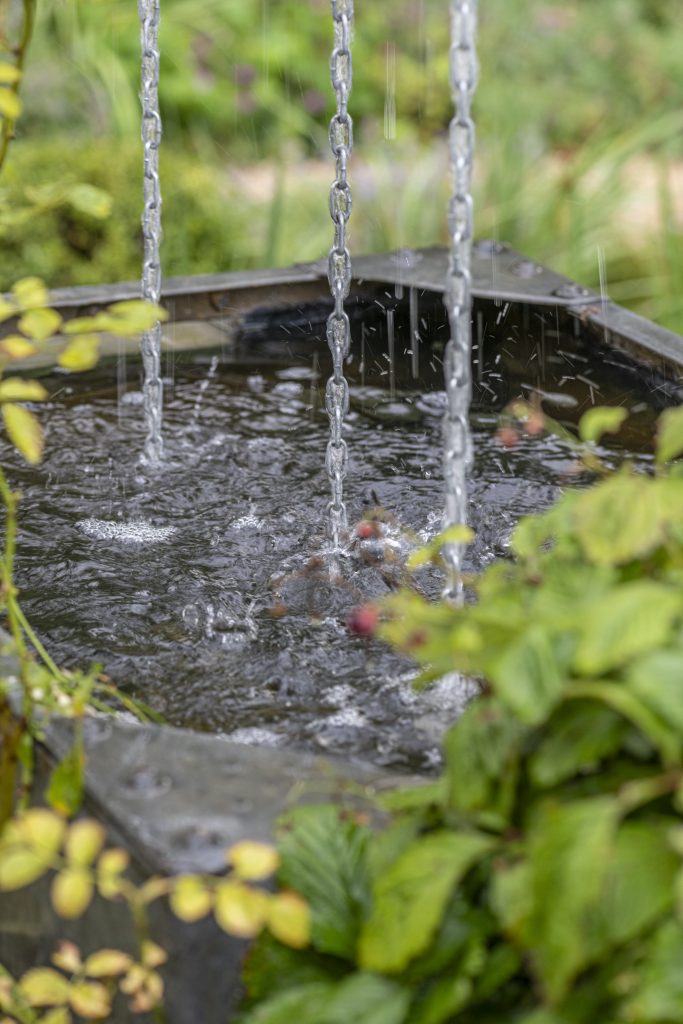
In order to help reduce flood risk, the garden slows and stores rainwater, using hard elements such as galvanised tanks and dense planting. The pergola has an integrated gutter that channels rainwater from the rooftops down and into the garden via rainchains and a series of large reclaimed galvanised tanks. These help slow the flow of rainwater rushing into the garden and store it for later use. 

You can find out more about the garden and flood proofing for your own outdoor space at floodre.co.uk/flood-resilient-garden and at howberypark.com/flood-resilient-garden 

Oxford International Song Festival’s triumphant return

Round & About

Oxford will once again become a vibrant hub of musical storytelling, 10th to 24th October, thanks to Oxford International Song Festival  

Celebrating the art of song in all its forms, no fewer than 67 events invite audiences to enjoy everything from timeless ballads & fairytales to contemporary works and national traditions. 

At the heart of the festival is storytelling, not only through voice but also through dance, chamber music, and engaging talks. The line-up promises a feast for the senses and the imagination, with concerts throughout the day and late into the evening, set in some of the city’s most atmospheric venues including the Holywell Music Room (Europe’s oldest purpose-built concert hall) as well as the chapels of New College and Merton College. 

The festival opens with a recital on 10th October by baritone Benjamin Appl who also serves as Artist in Residence over the opening weekend. A stellar international roster of singers including Helen Charlston, Stéphane Degout, Marie-Laure Garnier, and Roderick Williams will perform alongside pianists such as James Baillieu and Cédric Tiberghien, along with Artistic Director Sholto Kynoch. 

Highlights include a special appearance by Sir John Tomlinson, making his festival debut with a performance of John Casken’s acclaimed The Shackled King. Contemporary works feature too, including the world premiere of Book of Queens by Associate Composer Emily Hazrati, and a new production inspired by Baba Yaga, devised and performed by mezzo-soprano Rowan Hellier with choreography by Andreas Heise. This production also includes the world premiere of Nice Weather for Witches by Elena Langer, and connects with the Crick Crack Club. 

A particularly poignant event explores Irish song traditions, where Lotte Betts-Dean and Deirdre Brenner perform The Magdalene Songs, a cycle confronting the harrowing history of the Magdalene Laundries. 

From 17th to 20th October, the festival turns its focus to the songs of Franz Schubert, marking 200 years since the composer’s final years. Pianist Graham Johnson continues his authoritative survey, while baritone Roderick Williams performs his own arrangement of Die schöne Müllerin with the Carducci String Quartet. Rising soprano Nikola Hillebrand makes her festival debut with pianist Julius Drake, and the dynamic ensemble Erlkings will offer a new take on Winterreise

Spanish and Latin American music also take centre stage, featuring tenor Santiago Sanchéz and a recital of Catalan song, plus a late-night tango concert with bandoneon virtuoso Victor Villena. The festival embraces young talent as well, showcasing eight exceptional early-career duos who have completed Oxford Song’s rigorous training programme. Other notable appearances include the Choir of Merton College performing Duruflé’s Requiem, and a Halloween concert at New College Chapel.   

Tickets are accessible and affordable, with discounts and a “pay what you can” concert. Visit oxfordsong.org or call 01865 591276.

Will power in Oxfordshire 

Round & About

Three Oxfordshire hospices have joined forces to increase vital Gifts in Wills donations 

Sobell House, Helen & Douglas House, and Katharine House say that legacy fundraising – when a person leaves money to a charity in their Will – is an increasingly vital source of revenue and they are now reliant on it to form a significant portion of their overall fundraising income. 

The nature of giving to charity via your Will means people can make a crucial difference to hospice care in Oxfordshire without it impacting finances now, when many households and families are financially stretched and making charitable contributions can be difficult. 

Beth Marsh, Sobell House Hospice Charity’s Director of Fundraising said: “Income from regular donations is increasingly unpredictable. Legacy gifts are an alternative way to give and are vital as demand for hospice services continues to grow. Even the most modest of gifts makes a significant impact. It’s not only financial donations – physical items, land, shares and many other assets can be left to a charity in a Will” 

About 25% of Sobell House’s fundraised income, currently comes from gifts in Wills. Trustee, Greg Birdseye, made the decision to update his will to include the charity after his wife passed away at the hospice. Greg said: 

“My wife Penny was referred to Sobell House after a number of treatments in hospital for lung cancer. After Penny died, I was more than happy to update my Will to include a legacy to the charity. I would encourage anyone to consider doing the same. I’ve seen first-hand the difference it makes.” 

At Katharine House Hospice, legacy gifts currently support 1 in 10 of the patients they care for but they’re urging people to help them increase this number. 

Stephanie Lawless, Director of Fundraising & Marketing at Katharine House said: “A growing demand for our specialist services, combined with rising costs, means Katharine House is spending more than it can raise. Gifts in Wills are a vital part of the solution and will make a real impact across Oxfordshire. 

“The compassionate care provided at Katharine House Hospice, like other hospices, is not just for the patients but also for their family members too. One of our patients, Cat, was able to use our cuddle bed (funded by donors) so she could spend precious time with her son Archie. Hospice care isn’t just about specialist clinical support, but also about making every moment matter for the whole family.” 

At Helen & Douglas House Children’s Hospice, legacy gifts fund vital services such as bereavement counselling and specialist paediatric palliative care for children. 

Joanna Swindells Carr has chosen to leave a Gift in her Will to Helen & Douglas House after the hospice supported their family with respite and expert medical care for daughter Beatrice for six years, before she passed away in the hospice. 

Joanna said: “‘I have chosen to leave a gift in my Will as a thank you for the superlative care, physical, emotional and respite, that Helen & Douglas House gave to our daughter, Beatrice, and our family for six years. I hope that a gift to Helen & Douglas House will help them to continue giving their incomparable and compassionate care to other life-limited children and their families.” 

Alex Hegenbarth at Helen & Douglas House said: Helen & Douglas House cares for 580 children, parents and siblings a year and the gifts received from Wills go a long way to helping us provide the care and support these local families need.” 

The three Oxfordshire hospices will all be part of Hospice UK’s National TV campaign in September which encourages people to leave a gift in their Will to their local hospice. 

For more information on leaving a gift in your Will to your local hospice go to: Sobell House

Janet Street-Porter “Off The Leash”

Round & About

One of Loose Women’s most outspoken panellists is on tour with Janet Street-Porter Off The Leash which starts on 11th September at The Kenton in Henley  

Q. Hi Janet! I know you have no filter, so what can people expect with this tour? What will you be ranting about!? “Oh well, so much winds me up; I lost it in a tea shop yesterday when they wouldn’t serve me a slice of quiche because ‘kitchen’s closed’… I’ve written two memoirs; Baggage, about my terrible relationship with my mother, and Fallout, about the decade I started in journalism up to punk in 1976. I realised there’s a whole generation who know me through Loose Women, so I’ve written new chapters for the books which have just been republished. The show will focus on these as well as the ups and downs of my marital life, which is a bit like a Carry On film.” 

Q. Can we talk about telly please? Do you watch much? “The money’s running out for commercial television because the advertising revenue is not there any more; we’ve almost got too much choice now. All those streaming channels have diluted it so there’s not the money for great dramas and expensive programming like there was back in my day. The problem I have watching television is that, having worked as a producer, I often think ‘this script is utter twaddle’. I’ve enjoyed the reality shows I’ve done, like I’m a Celebrity. I watch the news and I read two or three newspapers every day. I tend to watch crime dramas. I just finished Dept. Q – I do like a bit of Scandi noir.” 

Q. Your tour references Elton John’s song The Bitch is Back! You’re pals aren’t you? “Yeah. I don’t really want to go into my friendships with famous people. But we’ve known each other since 1976 so we are good friends. When he had his civil partnership with David Furnish I did the speech. We talk on the phone yeah.” 

Q You studied architecture didn’t you? What’s your favourite building? “Yes. I’m a fantastic doer-upper. When I was studying architecture, I lived in a mansion block flat in Chelsea and my first husband and I borrowed some money and managed to buy an old house right on the river in Limehouse; it had been a barge repair shop and we made the ground floor into a big studio with a snooker table. After that, I decided to build my own house, which was designed by one of my friends from architectural college, in Clerkenwell. It was such a struggle to build because it was on a street corner in a conservation area. We had a hostile reception. Anyway, fast forward (that was 1986) and guess what? The house is listed by English Heritage! So take that, all you people who criticised it and said it was ugly! It’s like a castle – it’s very quirky and the front doors are made of railway sleepers and it’s got big steel grills on the outside. It’s kind of… aggressive, haha! That’s my favourite building.” 

Q. There weren’t many female role models in media in the 1970s. Do you think sexism is less severe now? “I think what’s replaced sexism is a kind of paralysis at work, having to be politically correct and nice. I don’t even want to talk about cancel culture so much as the suffocating anxiety not to offend people at any price. I suppose I started work at a different time, at the end of the ’60s and I did my first year on a teenage magazine called Petticoat, which was a wonderful training ground. I was allowed to design and commission whoever I wanted to do my pages. And then,at the age of 21, I was on The Daily Mail as deputy fashion editor and a columnist. So I was thrown into the deep end and I was headhunted by a Shirley Conran who, by the time I got to the Mail, was no longer working there. Luckily I worked with some very good people. I’m not going to condemn the male executives because they were really supportive, especially, the editor Arthur Brittenden. I think they also saw that as a young woman who lived in Chelsea, with a husband who was a fashion and architectural photographer, we were fashionable people. At the BBC, from the early late 1980s to the mid-90s, I felt the culture was very much like a club of blokes who all been the same universities, all middle class, Oxbridge, living in west London, liking the same kind of wine, and I didn’t really fit in. But I think that really has changed. I think now there are a lot of clever women who’ve done very well in television.”  

Q. Have you got any advice for young women coming into the media world? “Oh, well, I wouldn’t! I think that the media world has changed, it’s very fast moving. I wouldn’t be studying media studies, that’s for sure. My advice to people thinking about a career is to keep all your options open. My interests have never been that narrow. I think people focus too narrowly on subjects.” 

Q. What invention would radically improve the quality of your life? “A butler. I want to wake up in the morning and hear a soothing voice saying ‘Your bath is drawn, madam, and I’ve laid out your clothes for the day and they’re pressed’. All I get here is a dog whining or trying to sit on my face. Wouldn’t it be great if you just went downstairs and there it was, your breakfast all laid out? The other Loose Women think it’s hilarious that I will only eat my meals with a linen table napkin. But you see, deep down, Liz, I’m very very posh!” 

Book your tickets at http://www.janetstreetporter.com/tour

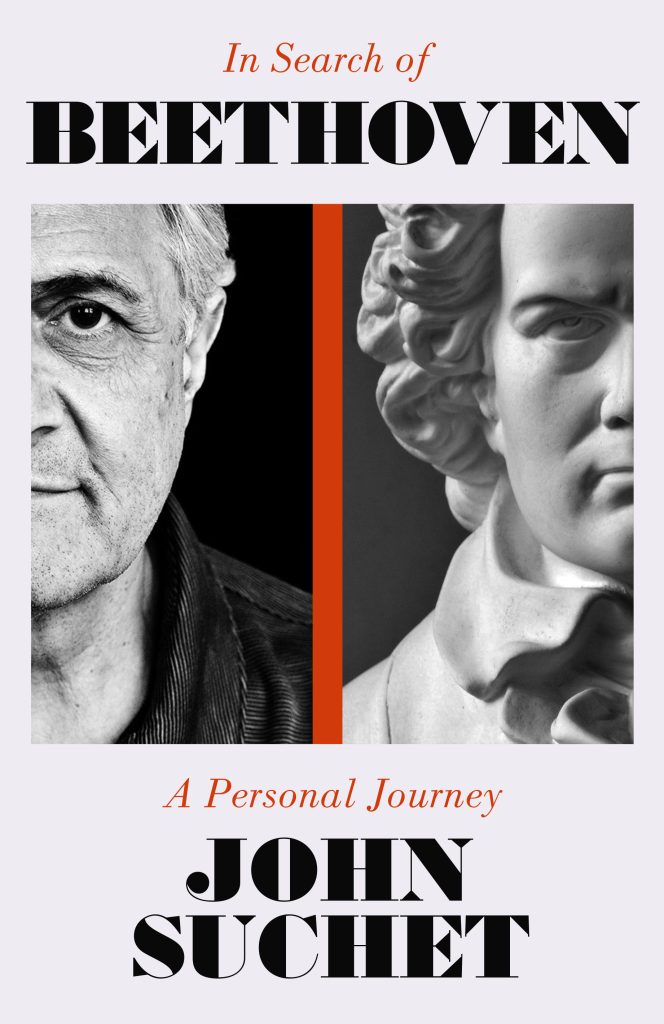
In Search of Beethoven with John Suchet 

Round & About

John Suchet chats to Liz Nicholls about Beethoven, and his deeply personal journey in the footsteps of his problematic hero, in his absorbing new book, ahead of Marlborough Lit Fest 

Life is full of cruel ironies. And one of the cruellest ironies in history remains: Ludvig van Beethoven, whose epic genius conjured worlds from silence, carved beauty into sound, lost his hearing. 

“So cruel, isn’t it?” says broadcaster and author John Suchet, whose latest book, In Search of Beethoven: A Personal Journey, explores the composer’s life and legacy. “There are many uncomfortable truths about Beethoven, and this is my hero I’m talking about. But he was a difficult man. He upset his friends, his patrons, his family. He dragged his nephew into a five-year custody battle. He made life hard for everyone around him. But he was also going deaf. Imagine being the greatest living composer and never hearing your own 9th Symphony.”  

In his intimate and absorbing new volume – his ninth on the composer – John traces both Beethoven’s footsteps, and his own. Part biography, part memoir, part travelogue, the book follows John from Bonn to Vienna to Beirut, and back to the very first Beethoven notes he heard as a teenager. It’s a journey of discovery, of affection, and, inevitably, of grief. 

Because, as John gently reminds us, hearing loss is coming for us all, if we’re lucky enough to get old. “Deafness is the one disability every person will experience,” he says. “And the heartbreaking thing is hearing loss is invisible, so people tend to be impatient, even patronising.” 

John, who is now in his 80s, speaks candidly about his own emerging hearing difficulties: trouble following conversations in crowded restaurants, struggling to catch softer voices… “My wife keeps telling me to get a hearing aid,” he says. “But it’s more than that. I’ve learned from Beethoven that hearing loss isolates you in a unique way. It puts up a wall between you and the world that no one else can see.” 

This book is dedicated to John’s wife Nula who encouraged him to write it after they visited Heiligenstadt, the village outside Vienna where Beethoven, aged 31, wrote a desperate letter contemplating suicide. “I get to the music through the man, not the other way round,” says John.
“Most writers on him – and there have been very many – want to know why the Eroica is in E flat. I’m more interested in what he was going through when he wrote it. Why did he scratch Napoleon’s name off the title page? Who had he just fallen in love with?”  

As John writes, learning about Beethoven is a joyful journey without end. So much mystery surrounds the composer to this day, including debate over his heritage, his possible autism. In his own endless journey, in every book John has mentioned the phone call he received 20 years ago from a woman in London with a shoebox containing letters from Ludvig to his famous Immortal Beloved…  “Who was she? We’ll probably never know. Or somebody out there might find something in their attic and then maybe we could unravel the mystery.” 

It’s something John would ask Beethoven if he could. Others earning a place on his dream dinner party guest list would be Napoleon and Picasso. “He is the Beethoven of art,” says John, “in that he was not a nice man, he treated his women appallingly. As did Charles Dickens! And Beethoven treated everyone around him appallingly. What is it about these great artists? And on that subject, a composer whose work I absolutely adore, Richard Wagner, was indefensibly vile… but he did things in music, no one had done before, and he admired Beethoven above all others.” 

Beethoven’s genius continues to shape our understanding of emotion, power, and beauty. But perhaps even more than that, it’s about how music can carry us through our lives. “Beethoven has been with me everywhere,” says John. “Through joy, through trauma, through love. He was with me when I was reporting from war zones, and he’s with me now, in this gentler chapter of life. Beethoven didn’t write to impress the elite. He wrote to speak to the soul. And I truly believe that if you sit with his music – even for just a few minutes a day – it will change you.” 

John Suchet will star at Marlborough Lit Fest on 25th September; marlboroughlitfest.org 

 Best Rose Wines For 2025

Round & About

Round & About’s resident wine columnist, Giles Luckett reveals his pick of the bunch summer rose wine

Days Of Wine And Rosés 

Summer’s here, and that means just one thing; no, not a hosepipe, it means it’s time to chill out with some rosé.  Over the last decade, rosé’s reputation has been resurrected.  Once upon a time, great rosés were as common as hen’s dentists.  Today, great wines abound, and being the selfless chap that I am, I tasted 50 (I’ve had tougher Tuesdays) to find my rosé recommendations for 2025. 

I’ve never had a wine named after a New York cabbie’s licence number, but if they’re as good as the Jean Leon 3055 (VINUM £14.35), then I’m onboard.  ‘Fulsome’ was a recurring word in my notes on this Spanish beauty.  From the fulsome cherry, strawberry jam, and nectarine nose to the, you guessed it, fulsome palate of apricot conserve, red pears, loganberries and crisp, mineral-tinted citric acidity, this is very easy to love and works brilliantly as a solo sipper. 

Next, one of Provence’s 18 Cotes de Provence Cru Classe properties, the Domaine de la Croix Cuvee Eloge Rosé 2023 (Perfect Cellar £18.72 down from £24.96).  Blending elegance with refreshment, this is a stunning wine.  Copper pink, the nose melds citrus and red berries while in the mouth it’s spicy, fresh and with spiced cherries, rhubarb and tangerine on the finish.  Perfect for summer salads, barbecued poultry or seafood, this has the fruit and structure to develop in the bottle. 

Highlighting rosé’s chameleon capacity, we have the Chateau Margui Coteaux Varois en Provence Rose 2023 (Perfect Cellar £19.96 down from £24.95).  Owned by George Lucas as part of his Skywalker Vineyards (nice hobby if you can get it), this is a mesmerising wine.  Ghostly pale and offering high-toned aromas of grapefruit, quince, pear and raspberry, I was expecting a tangy, reserved palate.  What I got was white Burgundy complexity with layers of red and white berries, savoury minerals, and a whiff of flint smoke.  A real showstopper, much as I love George’s films, I think I prefer his wines. 

When you think of rosés, you obviously think of Lebanon.  You don’t?  Oh, maybe it’s just me, then.  Anyway, you should because it’s home to the Musar Jeune Rosé (N D John Wines £16.95) from the iconic,Château Musar.  Musar’s wines are idiosyncratic, and this blend of Cinsault, Syrah, and Tempranillo was a new one to me.  Almost tawny in colour, aromas of beetroot, cherries and alpine strawberries rise from the glass, while in the mouth it’s full and ripe with raspberries, sweet and sour cherries, earthy herbs, spices and prunes.  One for food, pair this with charcuterie, pink fish, or creamy cheeses. 

Another left-field rosé wine nation is Germany.   Famous for their world-beating whites, including their peerless Rieslings and top-flight Pinot Gris, their rosé wines are rare but worth seeking out.  Take the Frederick Becker Petit Rosé (Cellar Door Wines £17.95).  The Becker’s are one of Germany’s finest Pinot Noir producers, scooping the Gault-Milau’s annual German wine guide award for the Best German Pinot Noir on numerous occasions.  This is an intriguing blend that includes Pinot and Dornfelder.  The nose is simultaneously fragrant and savoury, offering cherries and red stone fruits alongside sandy minerals and bread dough.  In the mouth there’s plenty of summer berries, cherries, plums and citrus, and while it’s only 11%, the gentle intensity would allow it to partner sheep’s cheeses, a minute steak, or smoky roasted veg with ease. 

Prosecco has been all the rage for some years now, but there’s been a quiet revolution running through its ranks as the focus moves from quantity to quality.  At the forefront of this has been Bottega Rose Gold (Majestic £22 or £20 on a mixed six).  So much more than pretty presentation, this vivid pink wine has cherries, raspberries, and pear drops on the nose, lifted by small, pink pearl bubbles.  These tones carry through to the dry, elegant palate where they’re joined by a touch of bramble fruit.  Joyous. 

South Africa seems to be able to do any style of wine brilliantly.  Their Cap Classique, like my house wine, the Graham Beck Rosé (Majestic £12 on a mixed 6, £12!), are amazing, their Cabernets are world-class, and they’re a dab hand at Chardonnay and Chenin Blanc.  The Warwick First Lady Rose (the Savana £12.90) is, despite being made from Pinotage, a grape whose reds you don’t so much drink as grapple with, is poised, stylish, and pretty.  Winter rose pale, scents of watermelon, raspberry, and strawberry offer the perfect entrée to a wine that is light and gently intense with flavours of raspberry and strawberry with an underlying cherry and cranberry bitterness, and a tantalising touch of redcurrant. 

The number of Australian rosés has grown quickly, albeit from a low base.  My experiences have been mixed.  Too many, especially when made from Shiraz or Cabernet, felt like light reds rather than rosés.  Some producers are nailing it, though, as shown by the delightful Rogers & Rufus Rosé (Drinks Direct, £14.98). Made from the thin-skinned Grenache, its coral colour and refined bouquet with subtle notes of strawberry, cherry, cherry sherbet, and melon suggest they’ve gone too far in the other direction.  In the mouth its fuller though, with nectarine, cherry, almond, strawberry, and apricot dominating play, before a zesty, yet textured, finish of juicy berries at the end.  Sophisticated and lithe, this is gem of a wine. 

Sancerre is one of the world’s great wines, and while it’s best known for its whites, its rosés can be majestic.  Joseph Mellot is my favourite Sancerre producer, and their Le Rabault Rosé (Vinum £20.90) is the work of a winemaker at the top of their game.  Pure Pinot Noir, this is a floral, beetroot and blackberry-tinted wine whose power comes from its concentration of red berry, red cherry, and spiced pink grapefruit. Underpinned by minerals, this is a serious rosé that’s a delight on its own, but which really shines with lamb, fish, or roasted game birds. 

I’ll finish with the phenomenon that is Chateau d’Esclans, they of Whispering Angel fame.  While I admire Whispering Angel, I’ve always found its big sister, the Rock Angel (Waitrose £27.50), even more satisfying.  Made from Grenache, Cinsault and Rolle, the latter giving it a dash of freshness, it builds on Whispering Angel’s foundations with oak ageing adding structure and richness.  Salmon pink, honey-coated strawberries lead the charge with cherries, almond blossom, grapefruit, lemon, and a quarry-full of minerals on the finish.  This is a serious wine that deserves pairing with fine dishes such as guinea fowl, scallops, monkfish or artichoke roulade. 

So, here’s to a summer in the pink.  Next time out, I’ll be looking at whites that delight. 

Cheers! 
Giles

Pathologist Dr Richard Shepherd reveals all 

Round & About

Dr Richard Shepherd tells us about his upcoming UK tour. He also stars in Body In the Water on TRUE CRIME 

We’re celebrating education in all its forms this month… And with this in mind, have you ever wondered what might lead a bright lad to end up working… with dead people? 

Growing up in Hertfordshire, Richard Shepherd’s interest in pathology was sparked at 13 by a forensic textbook. “When I was about 13 a school friend of mine [at Watford Boys Grammar School] bought a forensic textbook by the celebrated pathologist Keith Simpson into school, and it suddenly opened my eyes to this whole intriguing world of murders. I decided that that was what I wanted to do. I was not a stranger to death as my mum had died of heart disease when I was nine, so it was my dad who encouraged my interest in medicine. I only ever wanted to be a pathologist, but surprisingly, really enjoyed obstetrics and delivering babies but settled into a life of crime. I do appreciate how lucky I have been to have found a career that I enjoyed so much.” 

You don’t often find a forensic pathologist on the theatre circuit, but then, Dr Richard Shepherd isn’t your average doctor. After decades spent uncovering the truth behind some of the UK’s most complex deaths, he’s swapped the mortuary for the spotlight, touring the country with his new live show, Time of Death – More Unnatural Causes. 

For fans of true crime, or anyone curious about the real science behind it, this is a show not to miss. Following the success of his Unnatural Causes 2022/23 tour, Dr Shepherd returns this autumn with a deeper dive into one of forensic medicine’s most intriguing puzzles: time. 

“When I retired, I took up mending clocks,” he says. “I’d spent my career taking things apart without putting them back together. Fixing clocks helped me think about how important time is in forensics – when a crime occurred, how long someone survived, how old an injury is. These details are vital.” 

The show brings together gripping real-life cases with forensic insight and unexpected moments of reflection. Yes, there’s blood and science, but there’s also humanity. “People often assume what I do is destructive, even cold,” he says. “But my job has always been about finding the truth – and helping families understand it. Truth can be painful, but it’s far kinder than uncertainty.” 

Audiences have responded to that honesty. Although emotions sometimes run high – he recalls one person needing to leave midway – Dr Shepherd’s compassion always shines. “They spoke to me after the show,” he says. “It’s emotional, but I try to handle it with care.” 

Beyond the stage, Dr Shepherd is no stranger to the public eye. He stars in Channel 5’s Cause of Death and has worked on high-profile investigations, including the 7/7 bombings and the Bali attacks. And while the public’s appetite for true crime grows, he sees it as nothing new. “People have always been fascinated by crime, from the Penny Dreadfuls of the 18th century to today’s TV dramas. It’s the details that captivate us.” 

His family life is closely intertwined with his profession – his wife Linda is also a forensic doctor, and their daughter has followed in their footsteps. When not on stage or solving crimes, Dr Shepherd enjoys flying light aircraft and walking the couple’s two Jack Russells. 

You  toured with Unnatural Causes in 2022/3 and now you are going out on your second theatre tour this autumn, what is it that you like about touring? 

I have always enjoyed talking to people and explaining what I do and why. I  have spent a lot of time giving lectures to medical students, policemen, paramedics and the public and I’ve never found it difficult to speak to large groups so going on tour is just another way of trying to give people a little bit of an understanding about what we really do as so much of that work goes on in the background.   Many people think that what I do is just destructive, and some people may think it is an awful thing to do, but my focus is always on finding the truth and then trying to make sure that the relatives understand. The truth may be difficult hear – but that is ultimately far less distressing that not knowing or having unanswered questions about the death of someone you are close to. 

Body In The Water begins on TRUE CRIME on ITVX on 16th September. Dr Richard Shepherd’s new tour will visit theatres around the UK from 29th September. This includes The Theatre Royal, Winchester on 3rd October, Wycombe Swan on 15th October, Wyvern Theatre in Swindon & many more.  

Book your tickets & find out more at drrichardshepherd.com

Bracknell Learning’s course for you  

Round & About

Learning can open new doors at any age with a variety of courses available 

From health and safety to first aid, business studies to food safety and more, whatever your interests Bracknell Open Learning Centre can help you further your employability skills. 

Whatever stage you’re at in your work journey, the programme for the academic year starting this month can help with value skills and support. 

Starting out? There’s help with interview skills, communication and job searching as well as core skills on offer to boost your maths or English. 

Work skills courses are available in food safety, customer service, first aid and personal development, relevant to specific pathways and more general routes. 

Computing courses range from getting to know the basics to more advanced skills and those focusing on Excel and Powerpoint. They also offer a range of accredited BTEC courses alongside maths and English qualifications.  

The Community Learning Team invite you to check out the programme for wellbeing courses designed to help you restore body and mind, why not try watercolour painting, yoga, art journaling and there’s a host of mum and baby courses alongside parenting sessions too. 

The full listing and fee information where applicable can be found at bracknell-forest.gov.uk/community-learning

Bug’s Life book by Simon Mole 

Round & About

Maidenhead poet, author & dad Simon Mole brings beautiful insects to life in his newest poetry book for wildlife mad youngsters, offering workshops & a touring show, too 

Acclaimed children’s poet and National Poetry Day ambassador Simon Mole is enchanting young readers again with A First Book of Bugs, a vibrant follow-up to his hit A First Book of Dinosaurs.  

Published by Walker Books this month, the new collection transforms fascinating facts about creepy crawlies into playful, punchy poems full of humour, wonder, and heart. From beetles with explosive backsides to spiders with fangs as big as a cheetah’s claws, A First Book of Bugs invites readers aged between three and 11 years to explore the wild and tiny world beneath their feet. The poems are brilliantly brought to life by illustrator Adam Ming, whose colourful artwork ensures these miniature marvels leap off the page. 

To celebrate the book’s launch, Simon is teaming up once again with musician Gecko for a brand-new live show packed with poems, raps, and songs about bugs you know, and a few you don’t! The show follows the team’s successful tour for The Great Big Dinosaur Show, which thrilled audiences across more than 50 UK venues. 

Performances are planned at highlights including family events at the Natural History Museum and Cheltenham Literary Festival. 

Simon Mole is also known for his YouTube poetry workshops and previous books including I Love My Bike and I Love My Cat. To find out more please visit simonmole.com

Advice for deer on the road 

Round & About

Radnage expert James Darley offers advice on what to do if you hit a deer or find an injured animal 

There is a widespread increase in deer numbers throughout the country.  The various species are perhaps our most beautiful wild animals. But their very success and expansion has become recognised as a problem.   

Overpopulation leads to poor condition and lowered survival of fawns, particularly in winter. Damage to woodland ranges from the decline of the under-storey habitat and reduced regeneration of native hardwoods from grazing, to losses in commercial softwood plantations through browsing and fraying.  Standing crops are both eaten and trampled causing added losses for hard-pressed farmers, while a small risk of deer carrying bovine TB poses a much bigger risk to livestock farmers. 

These issues may not be noticeable to most of us, but there is growing awareness of the increasing risk of collisions with vehicles. More than a few local residents will have either injured a deer, or come across one when driving, a distressing sight. Most will not know what to do about it or to whom to report it.  This information is intended to fill that gap in knowledge, and maybe keep this article in the glove box of their car, in case of need. 

I have been a recreational deer hunter (“stalker”), and had responsibility for managing wild populations of deer, for well over half a century. For the last nine years I’ve also been an authorised Humane Animal Dispatcher (HAD) for Thames Valley Police. Neighbouring police forces are building teams of experienced deer controllers, specially trained and equipped volunteers, to deal with injured deer that can neither be successfully treated nor rehabilitated. Police force armed response units are a scarce resource and need to be available for their regular duties, not deployed to attend animal dispatch incidents. 

Such scenes could be in residential roads, motorways, parks and gardens; at night or in atrocious weather. I recently had a call-out at 4.30am for a roe doe hit by a motorbike. A compound fracture of a hind leg left no hope for her. In almost all situations, the first essential for a driver who has struck and injured a deer, or found one alive but immobile, is not to approach it. Its natural reaction will be to struggle into cover. Instead, call police. Ring 999: this is considered an emergency, and very likely a traffic hazard. To be clear, this is the correct approach – not a call to a vet or Tiggywinkles – to minimise suffering fast. 

The police call handler will ask some questions, notably the location, if possible by use of What3Words (a free app to download). They will then assign the nearest available HAD to attend and take control of the scene, with police already present, to dispatch the animal by the most appropriate means, depending on the situation. The HAD is given the legal authority, and insurance, to operate in these circumstances, probably involving the use of a suitable firearm which in the absence of police authorisation would not be permitted in a public place. HADs are available for this necessary task 24/7.