Facebook
 Instagram
 Twitter
 Linkedin
Susannah Steel traverses rooftops and rainforests with prize-winning author Katherine Rundell to explore children’s literature and her inspiration
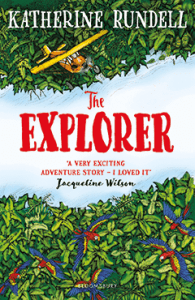
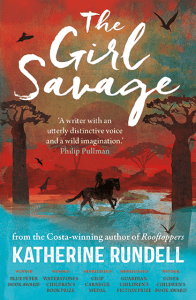
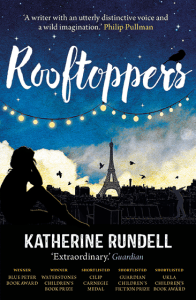
Children’s literature is that most imaginative, immersive, shape-shifting, character-building collection of written words. For many, it conjures images of wardrobes, wizarding schools and midnight gardens…
But what does it take to write? To create something so captivating, so fantastically unbelievable that your reader has no choice but to believe… So synonymous with them that they need only see a rabbit with a watch to know they’re in Wonderland?
Having lived in many countries, Katherine Rundell brings a wealth of experience and an original spirit of character and adventure to her books. Indeed, for her most recent novel, The Explorer (about four children whose plane crash-lands in the Amazon rainforest), she went on a research trip to South America. “I swam with pink wild river dolphins, captured tarantulas and fished for piranha, and then I put it all in the book,” she says.
This pursuit of authentic experience highlights the importance of storytelling in giving vicarious experience. Isy Mead, head of learning and participation at The Story Museum in Oxford agrees: “Children’s literature occupies a fundamental role in the formation of the imagination, as well as compassion, humour and perspective.” Katherine adds: “It’s true there are more alternatives to reading, but books still do something nothing else can – they give you another world you can know in an intimate, blood-deep, behind-the-eyes way.”
Whether writing about the African landscape, the strict corridors of a boarding school, Russian forests under inches of snow or the rooftops of Paris, Katherine brings a magical, poetic and vividly original flair to her characters. They include a refreshing collection of strong female protagonists. However, Katherine says, she did not set out to consciously redress this imbalance…
“They were the characters I had in my head; I loved them, and I wanted to see if I could make them fly. In fact my most recent book has a boy protagonist, Fred – but I fervently believe boys must be shown they can read books with girls in them as readily as girls read books with boys; it’s absurd that the old prejudice still has pincers in.”
Was writing always Katherine’s calling? “It was! I can’t remember a time when I didn’t want to be a writer. I wanted to be other things along the way – architect, archaeologist, acrobat, pilot… But writing was the one that stayed at the centre.”
I wonder whether Katherine has been influenced by past children’s classics and fairy tales and, if so, which? “I’m sure I must be – I loved the dream of finding Narnia, I loved Paddington’s kindness, I loved the dry wit of E Nesbit. I loved Cinderella; but the 500-year-old, pre-Disney versions, in which Cinderella murders the wicked stepmother by chopping off her head with the lid of a trunk!”
Katherine’s stories usually include a journey, physical or emotional. What is it about a “journey” that so appeals to readers? “We love transformation, whether it be of a person or a landscape,” she says. “And I do love a good packing scene!” And her stories are not without sadness…“My reckoning is life is as difficult as it is beautiful, and all books worth their salt will acknowledge this, one way or another.”
Her characters are often aided by strong friendships. I ask her; Is the loyalty of friendship something she’s keen to explore? “Yes! I think friendships in fiction, particularly boy-girl friendships, can get sidelined by romantic plots, and I was keen to look at what friendship is made of – at that particular blend of admiration, love, trust, exasperation, and shared jokes that can shape your entire childhood, if you’re lucky.”
As for Katherine’s other characters, Sophie (Rooftoppers) loves to climb, Feo (The Wolf Wilder) plays with wolves and Will runs barefoot in the African landscape (The Girl Savage). Does Katherine share any unusual hobbies with her characters? “I love to climb,” she replies. “I think climbing can be a superb way to see and know the world. I used to go clambering on the rooftops of my Oxford college [All Souls], for a sight of the gargoyles, and of the world spread out below.”
And, with Katherine’s ethereal, almost timeless application of language, her empathy with character and need for adventure, the future of the growing children’s lit genre seems to promise a vivid and enticing view. Nonetheless, as Katherine reminds us, there are growing obstacles too…“What worries me is poverty, and its effect on literacy,” she says. “Three quarters of a million children in the UK don’t own a single book, and I worry that, as more libraries close, we’ll create an apartheid, where some children are shut out from the world of books and the joy comes with them.”
After all, views of landscape, adventure and wonderlands were created without borders. Let’s make sure they need not be seen only by telescopes and keep the expanding horizons of children’s literature visible for all.

Share