Facebook
 Instagram
 Twitter
 Linkedin
Image: Ben Wright Photography

Liz Nicholls chats to Geoff Wickett, founder of Chiltern Venison, who helps protect local landscapes and is on a mission to encourage us to eat sustainable, ethical venison, year-round
Twilight is a magical time in the deep, dark woods. As the autumn mist rises and sunshine dapples the undergrowth at dawn and dusk, you’re most likely to catch a glimpse of the fallow deer, even if it’s only a twitch of its distinctive white tail.
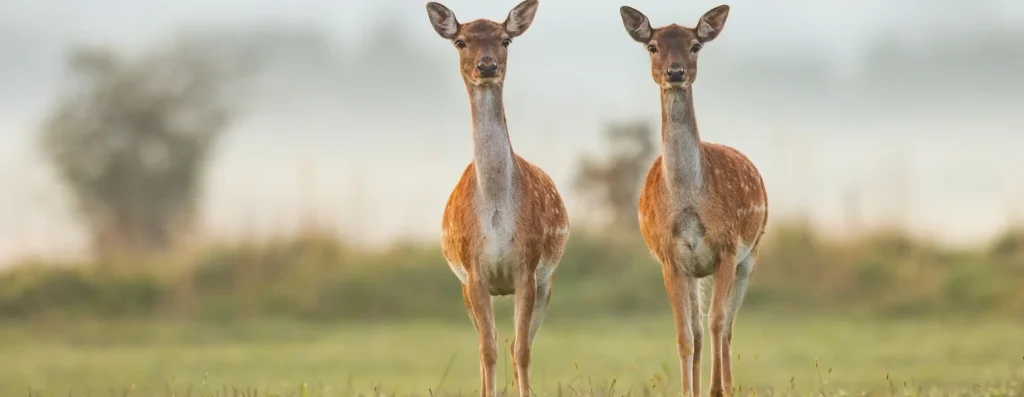
But, as Geoff Wickett knows all too well, this majestic, mystical creature is likely to have spied you first… “Deer are truly astonishing creatures,” he says. “They’re beautiful, sentient, and their hearing is exceptional: their ears operate independently, alerting them to any danger. Their ability to register visual changes around them is astonishing, it’s as if their eyes take a series of pictures, with the brain then overlaying them for any changes.
“When you’re sneaking up on a herd of fallow deer, say, and there are 100 pairs of ears and eyes, it doesn’t take much for them to notice you. And the wind swirls swiftly around these hills; one can sniff you out, and they’re off!”
Roe deer are a native species; they’ve roamed this land since the Ice Age. Fallow deer were introduced by the Romans, extirpated and reintroduced by the Normans for the chase. You’ll also find smaller, barking muntjac who ancestors escapees from the Duke Of Bedford’s herd at Woburn, and Chinese water deer, whose forefathers scarpered from Whipsnade.
So, the question is, why kill these beautiful animals? The wild truth is that deer have become the single biggest threat to woodland in the UK, which is why Geoff is employed by land-owners and conservation charities, including the National Trust & Woodland Trust, to help manage their population. Deer, who have no natural predators, reproduce at a startling rate. In fact, numbers have doubled since Covid. Left unchecked, they will destroy the landscape, its distinctive flora and fauna.
“This deeply layered habitat is being trashed by deer,” says Geoff, who moved to Hughenden Valley ten years ago, leaving a career in tech accessories. “The shrub layer of most local woodland has been entirely eaten by the deer. Unlike other deer, muntjac eat the bluebells which won’t return the following year. This woodland provides nesting habitat, shelter, nectar, berries and nuts for a whole range of birds, mammals and insects. With the shrub layer gone, all life suffers and if a wood can’t produce young trees, it eventually dies. In larger numbers, deer need to go further for food and cause great damage to local farmers’ crops, as well as causing up to 74,000 vehicle collisions every year on UK roads, some fatal.”
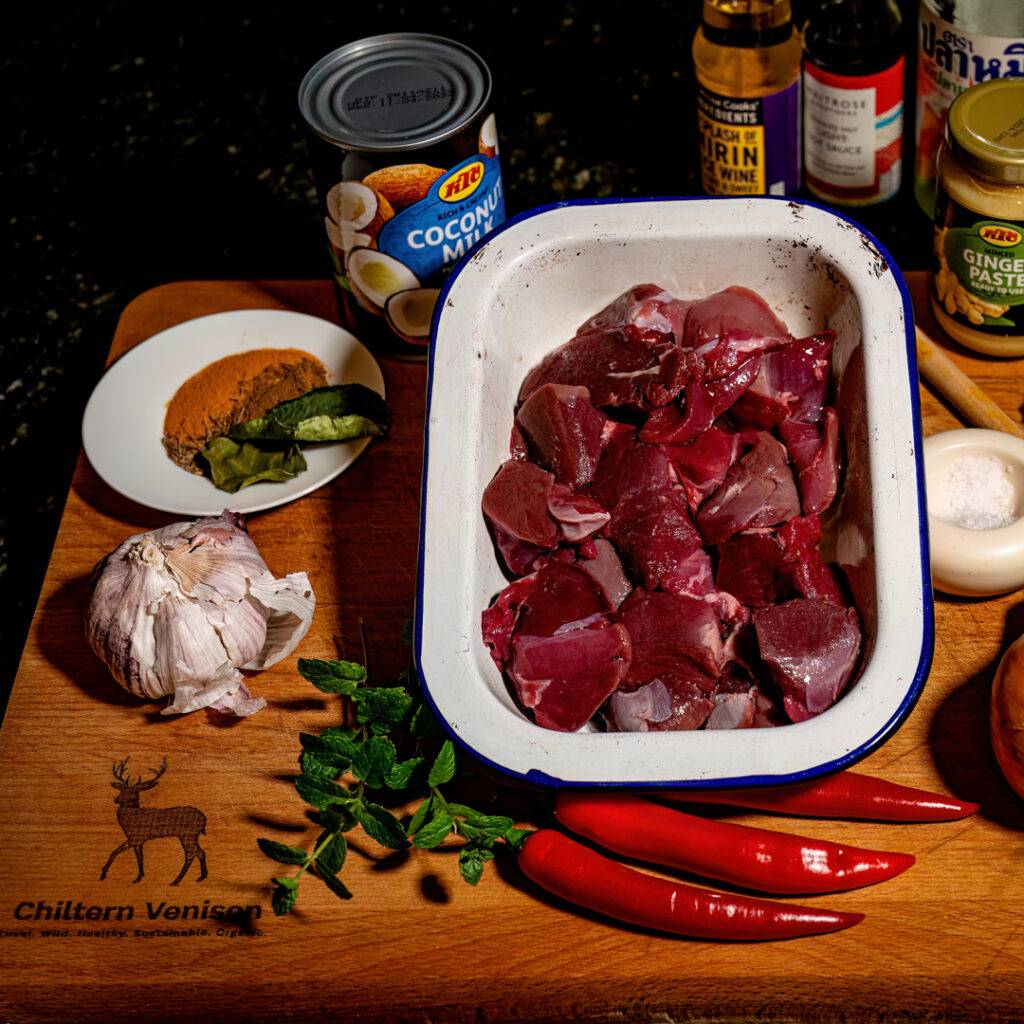
Image: Piers Photography
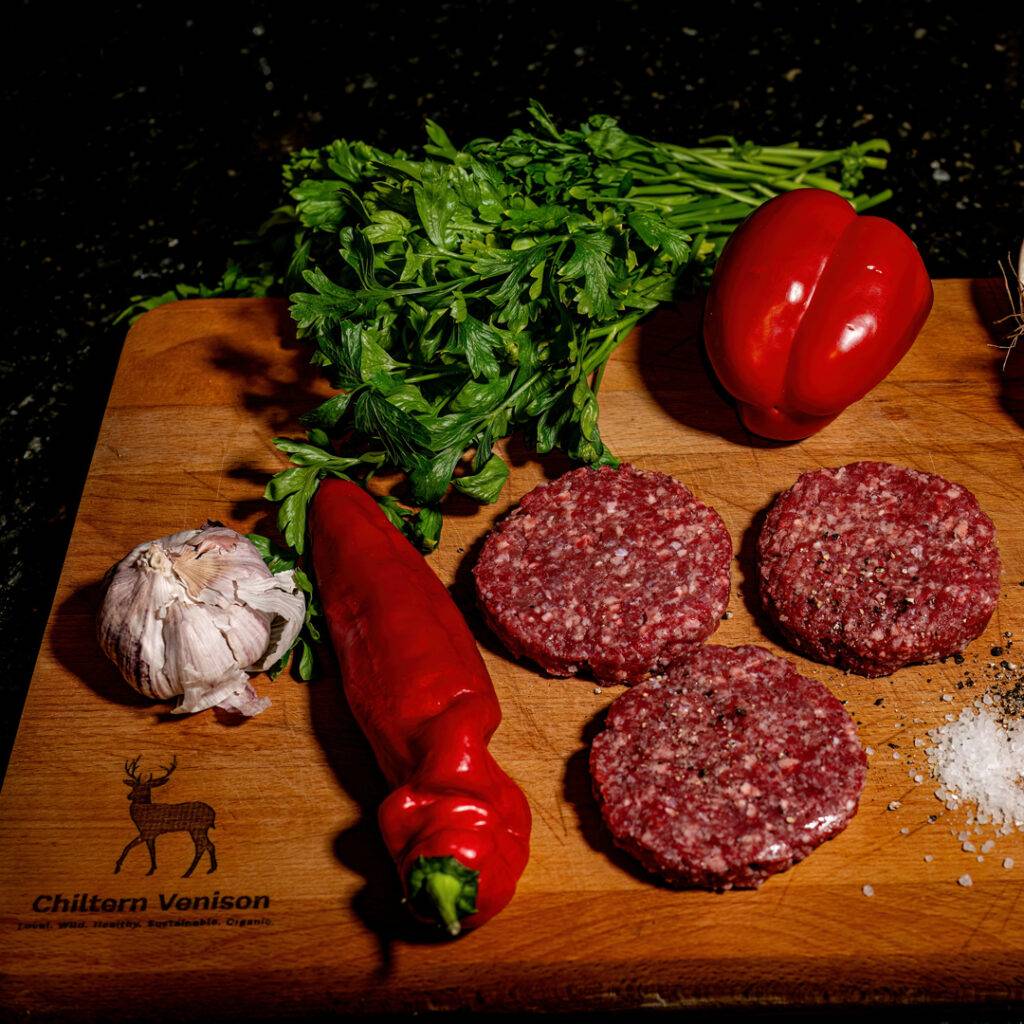
Image: Piers Photography
Geoff’s mission is to encourage us all to eat venison, year-round. This natural, ethical, sustainable meat is showcased on menus at restaurants including The Oarsman in Marlow (pictured), The Nags Head in Great Missenden, White Oak is Cookham Dean, The Griffin in Amersham, Three Oaks in Gerrards Cross and Peterley Manor Farm (where it’s also stocked in the shop). In addition to firearms and wildlife laws, stringent food handling laws apply, as soon as a deer hits the ground. Geoff has just invested in a walk-in larder and processing unit to meet demand and is happy to sell direct. “We have this idea venison’s ‘posh’,” he says. “In the past you might have been executed for poaching a deer by the king, but venison’s not just for high days. It’s a great, healthy everyday alternative to beef or lamb, with high zinc and protein. My wife and I love a rump or chump steak. I love to sell to foodies, which means minimal food miles, unlike meat shipped from New Zealand which is crazy!
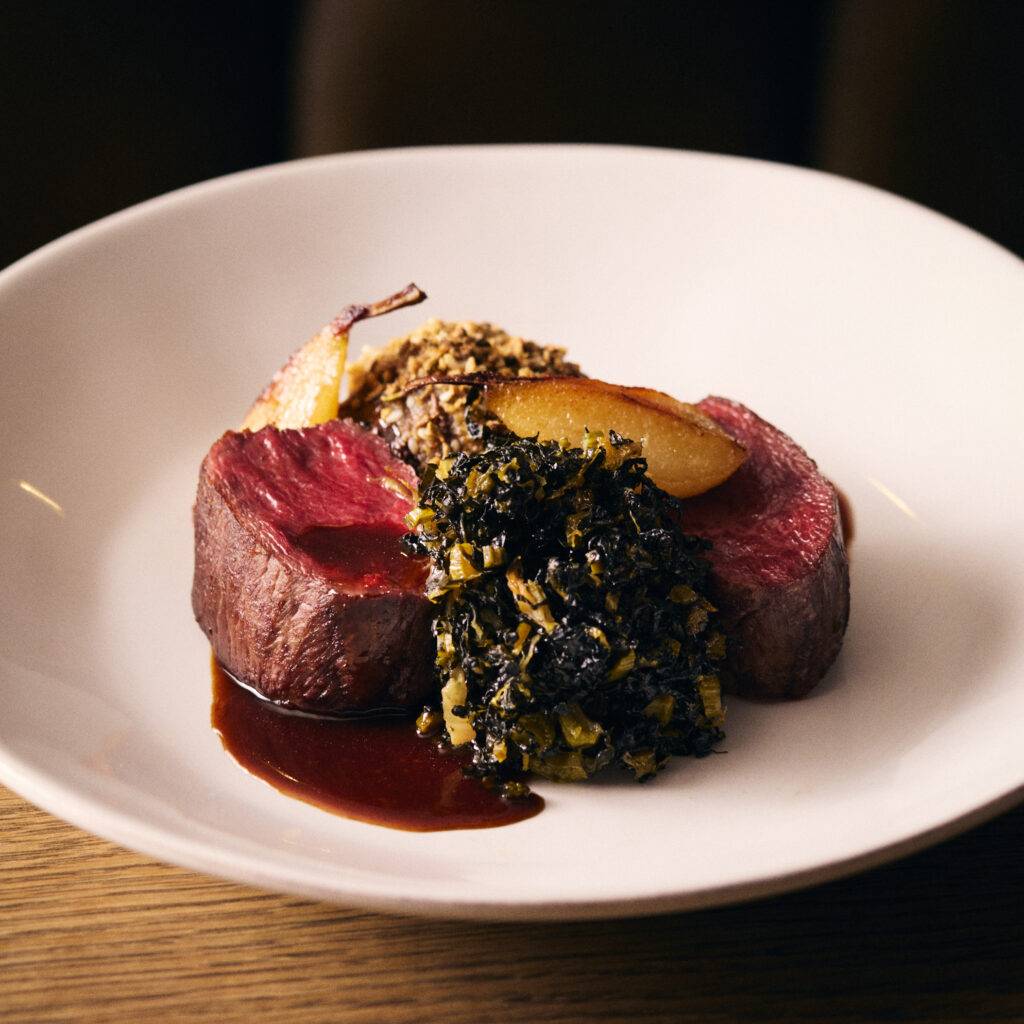
“I can trace every detail about the animal which is being enjoyed in a delicious meal instead of going to waste. Surprisingly, I’ve had one comment in a decade along the line of being a ‘bambi killer’. But people have been very supportive when they understand the bigger picture. I’ve even sold boxes to vegetarians who know that this is a food source that’s unprocessed, and that the animal has had a good life, unexposed to steroids or antibiotics.”
Importantly, each deer has also had a ‘good’ death, unlike the majority of animals reared for their meat and slaughtered in much more dystopian settings. Geoff is sometimes accompanied on his stalking trips by his cocker spaniel Artemis (pictured above) and he also has a young blue roan Skadi (named after the Norse goddess of the hunt). Both enjoy the odd bone (“nature’s toothbrush”) and Geoff takes his role and animal welfare very seriously. He learned to shoot at school and with the army is trained in “gralloching” as well as all the other handling processes which cost about £150 per carcass.
“I must be mad to do this as there’s not much money in it,” adds Geoff. “But I love this glorious countryside – I won’t go back to a desk job!”
Latest posts
- Could you cut your energy bills? Discover how at Henley Home Energy & Renewables Show 2026
- Amersham chemist Cicely Coops lands four-Dragon deal for sustainable haircare brand Selkie
- Banbury-based Hootenanny is championing Oxfordshire’s independent music scene
- Rod Stewart tribute fundraiser coming to Newbury this October
- Heat up your home for less this winter with InStil Design’s Winter Warmer deal
- Twyford Scarecrow Trail returns for a wildlife-themed half-term adventure
Share