Much-loved classic comedy comes to the Kenton Theatre, March 20th to 23rd
Eccentric phonetics expert, Henry Higgins, thinks he can pass off a poor flower girl in polite society with a few months of elocution lessons.
It turns out that spirited Eliza Doolittle has a mind and personality of her own and is not willing to lose them as easily as she sheds her cockney accent.
Strong characters and great wit animate this classic comedy, and the themes of social mobility and women’s empowerment are as relevant today as when Pygmalion was first performed, over a century ago. Whether you’re a lover of classic drama or a seeker of truth, this play promises an unforgettable evening.
Pygmalion spawned many adaptations for film and stage and was recently revived at the Old Vic.
The Henley Players’ Saturday matinee performance is once again ‘pay what you want’ with a minimum price of £5.
Album number nine finds the Canadian band dealing with grief in the best way possible
You’ve probably heard of Mother Mother without even knowing it. After their song Hayloftblew up on TikTok they became something of a viral hit – if the earworm “daddy’s got a gun” means anything to you, then you’ve definitely come across Mother Mother. Hayloft was in fact 12 years old before it discovered a new life as a trend, having appeared on the band’s second album, 2008’s O My Heart. Social media eh? A rabbit hole of wasted time scrolling it might be, but breathing life into old songs is one of its more positive aspects.
Life is at the heart of Grief Chapter, the band’s 9th or more specifically, contemplating the vagaries of life and the inevitable final chapter. It would appear that Mother Mother has reached something of a midlife/end of life crisis. Not that you would notice if you’re not paying attention, because they have a habit of wrapping up complex and disturbing ideas in finely crafted indie pop. Take for example The Matrix, on the surface it’s a booming, thunderous pop anthem, but at its heart, it’s a defiant and rebellious rejection of the status quo. It’s about making the most of this life because you only get one go around and as vocalist and principal songwriter Ryan Guldemond croons at the start of the song “…you’re going to die”. However, as the song progresses, it veers from nihilism to the spiritual as he starts to ponder the possibility of an afterlife. If all this sounds overly heavy, rest assured, it possesses a hook that is impossible to ignore and a deluge of profanity, which is a pretty fine combination.
Head back to the start of the album, and the basic premise behind most of these songs is laid out in stark fashion. Nobody Escapes, cuts to the chase from the off. You’re dead too. This daunting idea could be overwhelming in the hands of the darker souls out there, but Mother Mother can make heavy concepts feel like a party at the end of the world. If anything, it feels entirely positive. In part, this is down to the band’s capability of mixing tight, catchy rock riffs with dance inspired beats, and vocals that wouldn’t sound out of place on a kids show. This is at play on Explode, a song whose main refrain is the line “when I die, I’ll let go”, which in plain black and white looks like the kind of thing an Emo band would have no problem in over-emoting (the clue’s in the genre name). But with the twin vocals of Ryan and Molly Guldemond it’s all oddly celebratory. As the song reaches its conclusion, it becomes clear that this is an album not so much about shuffling off this mortal coil, as embracing every moment and making the most of the time we have here.
Pinning the band down to a specific style is quite tricky. They can veer from folk stomp to overblown pop ballad in a heartbeat. They throw in Pixies inspired guitar riffs and vocals (Monkey Gone To Heaven and Where Is My Mind? have definitely made an impression on them), strange off-kilter segues, choral flourishes, punk attitude, classical orchestration and occasional discord just for good measure. Somehow, they can deliver lines like “Innocence is just a bridge to pain” or “What if I just rip out her throat?” and make them sound entirely viable as a chart hit. Part of this is down to the smart vocal interplay between Ryan and his sister Molly, but essentially it points to intelligent and subversive songwriting.
Grief Chapter isn’t an exercise in navel gazing – despite its main subject matter. There are moments of social commentary (Normalize tackles gender and sexuality politics), amusing stoner concepts (God’s Plan ponders what the great creator must have been on whilst devising their Earth project), and self-aware in jokes. Anyone who can consider the end of their life and imagine that anyone attending their funeral will just shout for Hayloft has a keen sense of humour.
Ultimately, this is an album packed with pop songs that address the apparent pointlessness of life whilst simultaneously encouraging everyone to embrace their time here on this rock. Mother Mother might have just written a new chapter in the stages of grief, and it sounds pretty damn fine.
Mother Mother are currently touring the UK Grief Chapter is out now on Warner Music / Parlophone. Photo Credit: Mackenzie Walker
In the first of a series of helpful articles, Oxfordshire business hero Peter Mols offers his words of wisdom to help you employ the best people to help your business grow
300- 1: The #1 rule for hiring amazing people.
In the last month, a staggering 300 people have applied for jobs with our small business, and today, I’ll share my #1 rule for attracting the right people to you.
As a business coach, the facilitator of mastermind groups and the founder of a kick-ass networking group, I speak to lots of people who tell me that they scaled their business, only to find the challenge of “managing people” too hard, and decided to scale back down to being a “solopreneur”. It’s a sad story, which, to be honest, is completely avoidable if they’d just followed my #1 rule.
Decide on the “culture” you want for the business before you’re ready to grow.
In the past month, 300 people have applied for positions at Outside Ideas, and I put it all down to that rule. It’s not because we’re paying the most, it’s not because we’re doing groundbreaking stuff and not because we’re the #1 in our industry (watch this space:). It’s because we focussed on telling the story about the business, where were going and our culture.
“I speak to lots of people who tell me that they scaled their business, only to find the challenge of “managing people” too hard.”
I first learned about corporate culture more than 20 years ago during my business degree, when I read, Screw It, Let’s Do It by Richard Branson, Branson’s quote, “Train them so well that they could work anywhere, treat them so well they wouldn’t want to” sticks with me to this day.
The reality is, that most business owners are so focused on “making the furniture” that they never find the time to decide on the crucial first step to growth: deciding who you are, what you’re great at, where you’re going, and what you stand for; and WRITING IT DOWN.
By missing this first step, they set themselves up for a life of long weeks, short holidays, and spinning all the plates.
In “business coaching” speak, we call this process creating a Vision, Mission, and Values, and I start there with all 121 clients.
If you’re a business owner who’s thinking about growing, my challenge to you this month is simple, spend some time answering the following questions:
Where is the business heading, where do you see it in 10 years’ time? This is your Vision
What do you want to be “world-class” at? This is your Mission
What are your internal values as a human? These are your Business values
Next month, I can share my strategy for attracting the right kind of people to your business using the Oi Way of hiring great people, or I can discuss creating values for your business. You chose, and let me know at hello@outside-ideas.com
“Quentin Tarantino of comicbooks” gives online interview for the Soldiers Of Oxford Museum
Garth Ennis, the writer behind The Boys and Preacher, is to give online interview and live audience Q&A for Soldiers of Oxfordshire Museum. The interview will be streamed on Saturday 9th March from 7pm, followed by a live Q&A session where the audience will be invited to put forward their own questions. Watchable via the museum’s website, the event is the latest in a series of popular online events the museum has been running over the past three years.
The interview ties into one of the museum’s most recent exhibitions, Into Battle! The Art of British War Comics, which runs until the end of April 2024. The exhibition and this accompanying event are a collaboration with Oxford-based publisher Rebellion, best known for 2000AD and Judge Dredd, alongside their recent revival of several classic British war comics.
In the interview, Garth discusses how his childhood enthusiasm for comics led to a career writing for 2000 AD, Marvel and DC Comics. He will also discuss the landscape of British War comics in the seventies and their decline in the eighties and describe how writers re-invigorate classic characters for contemporary audiences.
This event will offer a chance to hear from one of the leading comic book writers, whose literary achievements have recently been translated into successful television series.
The interview and Q&A will be free to view and participate in, with donations encouraged throughout the stream in support of the museum. Soldiers of Oxfordshire Trust aims to preserve the county’s military heritage for future generations in its archives and museum, and a diverse range of stories through its exhibitions and events like these. Shortly after the live event ends, a recording will be made available to watch on-demand, from the same page, for those that wish to catch-up later.
The Soldiers of Oxfordshire (SOFO) Museum opened during the summer of 2014. A new take on the classic military museum, SOFO shares stories of heroism, combat and peace from across the globe and throughout time and explores how conflict has affected the county and its people, from soldiers serving on the front lines to ordinary people living on the Home Front.
As well as a range of ever-changing displays and events, the permanent exhibits explore topics that are surprising and moving in equal measure, such as raw accounts of the liberation of Bergen-Belsen from both camp survivors and Oxfordshire soldiers.
Battles of the Oxfordshire and Buckinghamshire Light Infantry puts you on-board a Horsa Glider as it prepares to land in Normandy in the early hours of D-Day 1944, while Secret Agents, Secret Armies explores the world of spies and espionage through the lens of Ian Fleming and his creation, James Bond.
SOFO holds a collection of over 3,500 objects and 7,500 archive items from two county regiments, the Queens Own Oxfordshire Hussars (QOOH) and the Oxfordshire and Buckinghamshire Light Infantry.
The annual rugby tournament is something to look forward to in this grim month
Shortest day of the year, done. Christmas, hecho. All that’s left is to traverse these next couple of drizzly months before we welcome Wimbledon, Glastonbury and ‘might be too hot’ season. For now, though, we need a vehicle to steer us towards those better days. How about the best sporting tournament on Earth? Oh, go on then. Six Nations time.
Nothing brought my family together quite like the Six Nations growing up. We’d all flood over to my grandparents early enough to be fully caught up with each other in time for the build up to start with John Inverdale or Gabby Logan. You can’t fault our dedication to the pre-match interviews.
As a family resonating from Scotland, we’d sit around the telly, fire crackling, daring to ponder whether today maybe, just maybe would be different. Might Scotland pull a performance out of the bag and pick up their seemingly biennial win? Oh, that renewed hope, always a killer. The game would very rarely be different, and Scotland would very rarely win. But that was never the point (thankfully, or we’d crumble); it was just a nice event to be a part of. So why is the Six Nations the best?
For starters, it’s a simple easy-to-follow format that works. Six teams. Five rounds. Every home nation plays each other, and you never really know who’s going to win any of the three games that take place each weekend. Jeopardy also plays a huge part. So few games equals very few (if any) dead rubbers.
It’s tribal, without being tribal. It always amazes me how these players knocking chunks out of each other manage to channel their aggression so skilfully, but the same goes for those watching on. You’d think you’d need segregation, but oh no. Tens of thousands of fans packed into some of the best sporting arenas in the world, all mixing. A healthy attitude, and an element of perspective seems to be a common supporter denominator. Well let’s hope we win but if we don’t then that’ll be a shame, but this is a fun way to spend a Saturday anyway.
It’s also a spectacle, and it’s dangerous. Thirty people doing things you wouldn’t dream of doing. The players on the pitch become fictional, putting their bodies on the line, running and catching under pressure which feels so far removed from anything we do day to day; unless you are reading this and are some form of medical professional.
The tournament that’s a little under a quarter of a century old in its current format has geography to thank for its success too. London, Cardiff, Edinburgh, Dublin, Paris and Rome. All varied and popular cities, close enough together that a large number of away supporters will make the trip, but just far enough away that you need to make a weekend of it and populate the local pubs for the weekend.
Rugby is still faced with huge challenges. It has to find a way to navigate its way through a sea of safety concerns that need to be taken seriously and fend off the red trousers and brogues stereotype; something Full Contact on Netflix has made a brilliant start in debugging (just watch Finn Russell and Ellis Genge in the first two episodes). Though through the evolving sporting landscape, emerging new tournaments, investors and formats, the Six Nations is something we’re very lucky to live with, and I really hope it never gets taken away from us.
Oxford charity provides mental health support for young adults
Last year 65 people in Oxon took their own life – most of them young adults with suicide now the biggest cause of death for people under 35. Each death is heart-breaking – a tragedy, a terrible loss and a dreadful waste of potential. A death that changes the family they leave behind forever.
There is a fantastic charity Nai’s House. Set up in 2019 by Nai’s Mum – Gem after Nai sadly took her own life in 2017 aged just 22 , Nai’s House is a place of sanctuary, safety and support. It is a place that gives young people in crisis the safe space of a ‘home from home, a place where they can get the specialist help, they need, an environment that can help them hopefully turn a corner and move through crisis to more stability.
Since 2019 they have helped over 600 young people, but they are at a crossroads. The truth is they can’t meet the demand they are now facing. More and more young people are getting in touch asking for help with over 200 young people on their waiting list, many of them who can’t get the support they need through the NHS given the pressures there.
It’s an emergency for sure but it is an emergency we can help address and help tackle together. If Nai’s House can grow and expand its services it can offer help to the 200 plus people on the waiting lists.
Your support could make a massive difference and offer a genuine lifeline. Just £20 could help give a young person in need a fighting chance. It costs £800 a year to help one young person with professional therapy to. £520 over 13 weeks to train a volunteer. But the reality is that every penny counts.
Nai’s House didn’t exist when Nai needed it. Please help us make sure it can be there for other young people who do now so, together, we can help prevent this tragic loss of young life.
BBOWT wildlife charity launches new commemorative display
To mark Valentine’s Day, a local wildlife charity has opened two new butterfly memory walls to celebrate special occasions, declare your love for nature – or your sweetheart!
The ‘Your Wild Memories’ displays have been installed by Berkshire, Buckinghamshire & Oxfordshire Wildlife Trust (BBOWT) at two of its visitor centres. They feature specially-designed butterfly plaques which can be personalised with messages to remember precious moments, people or wild times.
The butterflies are made of brushed stainless steel and fly above an eye-catching wildlife border. They have been put up at the Nature Discovery Centre near Thatcham and College Lake visitor centre near Tring.
Laura Pepper, BBOWT’s Head of Philanthropy, said: “If your Valentine sets your heart a-flutter or you’ve just got engaged or married, why not celebrate your love with a specially engraved butterfly? Or you might like to commemorate a special birthday, a retirement, a favourite family walk or perhaps remember a loved one.
“Butterflies hold all sorts of different meanings for people, as well as being beautiful to behold. Our new ‘Your Wild Memories’ wall is a lovely way to celebrate your special memories and help the vital work of BBOWT at the same time.”
The Your Wild Memories walls have got off to a flying start, with butterfly messages added by local MPs, writers and nature champions.
Estelle Bailey, BBOWT’s Chief Executive, wrote: This special place, with nature at its heart. Here for every community.
Laura Farris, MP for Newbury, left this message on her butterfly at the Nature Discovery Centre: Delighted to support the NDC, bringing the wild into the heart of Thatcham.
Buckingham MP Greg Smith’s butterfly at College Lake reads: Thank you BBOWT, our nature champions. Proud to support you and work with you.
Writer and butterfly lover Patrick Barkham left this beautiful message: Breathe in green, Breathe in blue, Soar soul! Thanks, nature.
Priced at £250 (inclusive of VAT), each butterfly can be engraved to order with the wording of your choice. Funds raised from the sale of the commemorative butterfly plaques will go towards BBOWT’s work creating more nature everywhere for everyone, to benefit wildlife, climate and people.
To order your personalised butterfly visit: www.bbowt.org.uk/support-us/your-wild-memories Order forms are also available from College Lake or the Nature Discovery Centre. For more information call 01865 775476 (Monday-Friday 9am to 5pm) and ask to speak to the Membership Team.
In this, the month of love, our wine columnist Giles Luckett picks out his current top ten passions.
It’s February and love is in the air. Well, it’s in the card shops, the supermarkets, and, somewhat incongruously, my milkman’s van. It’s amazing what you can have delivered with your silver top these days! Anyway, what’s definitely in the air, in my house at least, is the love of wine, and here are my current top ten passions.
I’ve often struggled with New Zealand Chardonnay. Far too often they seem to have taken an oak-first, last, and always approach to winemaking, so you end up with a glassful of ghee. This isn’t the case with The King’s Legacy Chardonnay (Majestic £12.99). Wine, like life, is all about balance and this walks the tightrope between under and over-oaked brilliantly. Mid gold, the nose has plenty of vanilla and honey, but the apple, peach, and melon fruits also shine through. It’s the same story on the palate, which is generous, and plump and balances spicy oak with clean white and green fruits.
“Wine, like life, is all about balance.”
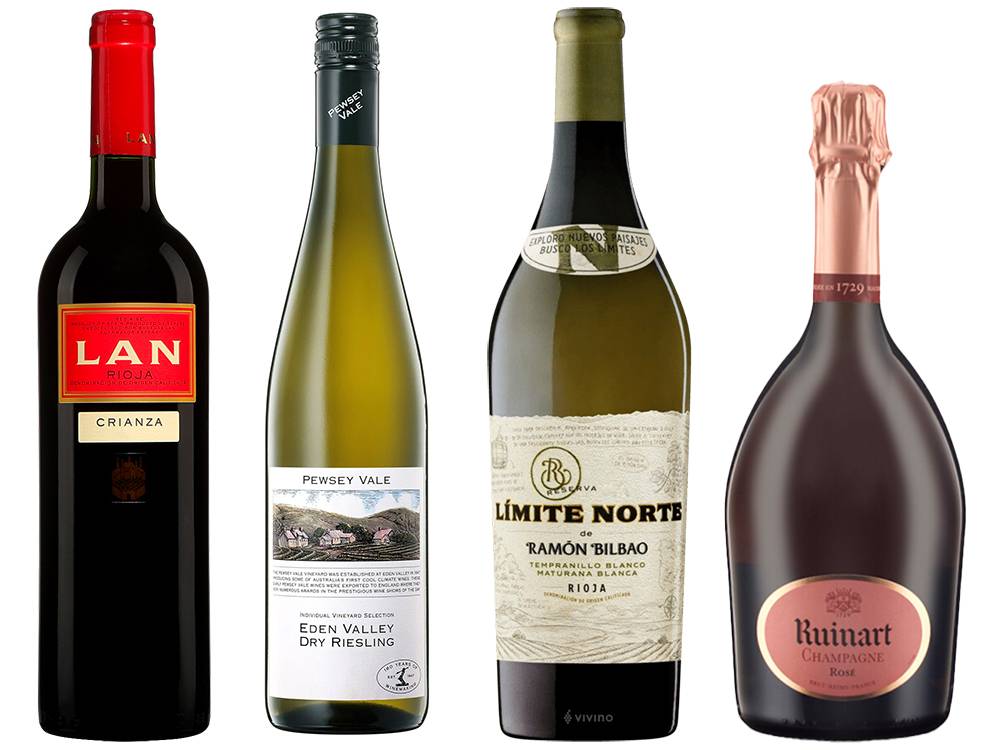
Riesling is arguably the greatest of all white grapes. “Born” in Germany in 1435 (13th March if you fancy sending it a card) it’s capable of creating breath-taking wines, some of which are breathtakingly expensive – Egon Muller’s Trockenbeerenauslese 2003 will set you back just under £23,000 a bottle. Back in the real world, sensational dry Rieslings are also available such as the Pewsey Vale Eden Valley Riesling (Ocado £18.95). This Australian Riesling hails from the cool Eden Valley and is simply stunning. Ghostly pale, the nose is an arresting blend of grapefruit, peach stones, apple blossom, and honey. It’s taut, precise, mineral-soaked, and complex in the mouth. Green and red apples, grapefruit, stone fruit, pears, and citrus come together in a wonderfully refreshing way. This is perfect with food – we had it with salmon pesto and spinach roulade – but it will be delicious with white meats and green vegetables and will age well over the next few years.
Mention Rioja, and most wine lovers will think of red wines. This is fair as the reds are more famous, and black grapes account for about 90% of plantings. The whites, though, can be just as splendid, especially when made by top producers like C.V.N.E. – their Contino Blanco (Noble Grape £23.99) is an absolutely lovely wine. The one that I keep coming back to at the moment, however, is the Ramon Bilbao Limite Norte Rioja Blanca. Produced from an unusual blend of late-picked Maturana Blanca and Tempranillo Blanco, this is a wine of freshness and depth. Golden yellow, the nose is soft and fresh with lemon and lime notes backed by honey. On the palate its tangy and immediate, offering quince, white peach, and green grape flavours, with something deeper, smokier, and fatter toward the finish. Idiosyncratic and utterly unlike any white Rioja I’ve tasted before, this is well worth trying, especially when partnered with creamy cheeses, white fish, or seafood.
And to so the reds, and I’ll start in South Africa with the excellent Spier Creative Block 3 2018 (Slurp £21.95). Being a blend of 94% Shiraz, 5% Mourvèdre, and 1% Viognier, this is very much in the mould of the Rhône Valley’s famed Cote Rotie wines, but this is no wannabe homage; it’s much better than that. Inky black, the bouquet melds heady spices with crushed plums, black cherries, and brambles. In the mouth, the Shiraz leads the way with intense, fresh blackberry and blackcurrant tones. Then there are subtler, earthier tones of tobacco and smoke from the Mourvèdre and a peachy lift from the Viognier before chocolate and cloves come in at the end. This is a great (big) wine that’s fantastic with red meats, strong cheeses, and tomato-based dishes.
Stepping back into Rioja we have the LAN Crianza 2019 (Hay Wines £15.49). 2019 was a stunning vintage for Rioja, but even taken in that context, the LAN is a little bit special. Very dark, with plenty of spicy vanilla, blackberries, prunes, and earthy spices to the nose. This medium-full-bodied beauty has an arrestingly rich texture that reflects the excellent levels of extraction. A complex composite of black fruits, cherry kirsch, black figs, raspberries, and charred wood, this is an awful lot of wine for the money. Buy a case and enjoy this over the next five to seven years.
When I was learning the ways of wine, I was given to believe that Beaujolais was a light, nothing to get excited about wine. Indeed, only Beaujolais Nouveau seemed to attract anyone’s attention, and not always for good reasons. Fast forward and Beaujolais is once again an exciting, dynamic region that’s producing some of France’s best-value fine wines. Take the Chateau des Jacques Moulin-A-Vent 2021 (Ocado £19). Moulin-A-Vent is one of Beaujolais ten “Cru” villages, and as this is owned by Burgundy’s great Louis Jadot, it’s not surprising that it’s excellent. Deep purple with a crimson rim, the nose is a classic mix of black cherries, strawberries, and raspberries with a background of crushed rocks. Generous on the palate, cherries and fruits of the forest are kept in check by a dry, savoury loganberry acidity.
If you fancy taking on something truly mountainous, then get a team of sherpas/some good friends, whichever you have to hand, and try the Amarone Tedeschi Marne 180 2019 (London End Wines £36.99). Amarone is one of Italy’s greatest reds and is produced using dried grapes. Drying the grapes increases the concentration of the juice and allows wines like this to attain great power (it’s 16.5%), depth, and complexity. Open and let it breathe for a couple of hours and you’ll be rewarded with a fragrant nose of vanilla-tinted dried cherries, cranberries, and blueberries. Despite its heady power, it’s sophisticated and nuanced. Red and black cherries, damsons, toasted almonds, roasted meat, and chestnuts come together to make a mighty mouthful. Try this with full-flavoured dishes such as lamb shanks, blue cheese tarts, or slow roast pork belly.
And so, to the fizz. Regular readers of this column will know I have a bit of a weakness for sparkling wines. A weakness that’s about the size of the San Andreas Fault, truth be told, but as I get to try things like the Graham Beck Cuvee Clive 2017 (Frontier Wines £44.95), is my weakness to be wondered at? All of Graham Beck’s sparkling wines are exceptional, but the Cuvee Clive is in a different class. 60% Chardonnay, 40% Pinot Noir from premium cool sites in Napier, Robertson, and Durbanville, fermented in champagne barrels and stainless steel before ageing in bottle for over four years, this wine gets regal treatment. Mid-gold, the nose is a joyously complex blend of ripe autumnal fruits, red berries, yeast, and citrus. In the mouth its mellow, succulent, and packed with flavour and diversion. Peaches, apricots, honey-drizzled melon, dried pears, a tangy, saline-tinted green apple acidity, and a hint of liquorice spice make for a glorious wine that offers something different with every sip.
Champagne remains the greatest sparkling wine in the world, and recently, I’ve been lucky enough to enjoy two brilliant but very different examples. The Gosset Grand Blanc de Blancs (The Champagne Company £55.50) is made from 100% Chardonnay and is as beautiful as the bottle it’s presented in. White gold with amber highlights, there’s richness behind the fresh white fruit and pear nose, with notes of apricots and creamy yeast coming through, thanks to the four years it spent resting in Gosset’s cellars before release. The palate has some of Gosset’s customary intensity but is far more delicate. Citrus – especially grapefruit and lemon – are present alongside quince, green apple, and custard apple. This is sublime wine that, for me at least, is best enjoyed as a soloist.
I’ll finish with a rosé Champagne, the Dom Ruinart Rosé (Majestic £79.99). The Dom Ruinart Blanc de Blancs Extra Brut 2010 (The Finest Bubble £220) was my wine of 2023, and this is a contender for 2024’s crown. Deep pink, the bouquet is suffused with fresh red cherries and black and red berries, with a vibrant, slightly perfumed note. Give this some time to breathe or even better decant it, and you’re in for a treat as fruits of the forest, cherries, cherry sherbet, orange zest, and plump plum notes assail the palate. This is a wine that I’ve had on its own and with dishes such as rack of lamb and pheasant, and I think it’s even better with food. It has the weight and intensity to cut through, and the food brings out the deeper, darker tones of this great wine.
Right, well that’s enough love for one day. Next time out some new season wines to put a spring in your step.
There are activities and fun for all the family with Petworth House’s Spring Festival
The grounds at Petworth House are a fine way to spend the day, particularly during the Spring. With its large grounds, deer park, and historical rooms, there’s always something to pique the interest.
This year’s Spring Festival runs from Saturday 23rd March to 14th April and include talks, demonstrations, a community art installation, art and craft workshops, and family activities.
The garden team have been busy planting 4000 additional bulbs across the garden and 90 new containers to create an enhanced display that will carpet the gardens with a sea of daffodils. As a symbol of Springtime, the daffodil has been embraced elsewhere on site. The local community and volunteers have been busy hand crafting daffodils to create a spectacular display in the Battery House.
On Saturday 23rd and Sunday 24th March there will be a two-day Makers Market, held in partnership with Petworth Pop-Up.
A highlight of the festival will be a series of talks and demonstrations from 23rd – 29th March held at the Garden theatre in the Glade. Join experts and specialists including author Robyn Booth, and Curator of Munstead Wood, Caroline Ikin as they share tips on Spring gardening, and discuss the ‘artist-gardener’ Gertrude Jekyll. These talks are free and there is no booking required.
Throughout the festival, families can pick up a free trail to explore the Pleasure Garden. You can explore the buggy friendly paths to discover six sculptures inspired by nature whilst enjoying fun games and activities along the way.
Between the 3rd and 10th of April, families can enjoy the Easter holidays with Spring themed crafts. Wreath making runs from the 3rd to the 6th whilst the chance to design your own Cherry Blossom greeting card or bookmark takes place from the 7th to the 10th. These activities take place in the Battery House studio from 10.30-3.30 at a cost of £3 per child.
A host of other events are happening at Petworth over the Spring period, including a foraging walk and willow weaving.
The Spring Festival and Spring Family Trail are free events, however, normal admission to Petworth applies. For further information, including times, dates, and paid events, please visit the website.
Diana Martin tells us more about Matthew Taylor, the man behind Farnham Sinfonia
There really couldn’t be a better time to write an article on local composer and conductor Matthew Taylor, for the Oscar nominated Leonard Bernstein biopic Maestro is due to show at Farnham Maltings in February…Matthew was one of Bernstein’s protégées!
Bernstein, who is known for composing one of the most successful musicals ever, West Side Story, had an inspired conducting style which led to his big break conducting the New York Philharmonic in 1943. He was one of the first American-born conductors to lead world-class orchestras and achieve success globally. Maestro tells the audience of Bernstein’s complex life, his musical fame and his marriage.
During his twenties Matthew was selected by Bernstein as one of three conductors to attend the Schleswig Holstein Musik Festival – when young musicians from all over the world are given the opportunity to study and perform great works from the orchestral literature with famous conductors. During the summer Matthew continued to conduct concerts with Bernstein in Northern Germany. Matthew was a friend of Bernstein’s until his death in 1990. He recalls with amusement Bernstein’s ability to put young musicians at ease by reciting limericks, some of which were quite risqué.
Matthew felt a passion for music at a very young age when his father would play Beethoven to keep him amused rather than playing nursery rhymes. This led to his lifelong enthusiasm with music as he became both a conductor and composer. He says, ‘Beethoven has always been central to all my thought processes as a composer. I still find more life force in his work than in any living composer.’
Over the years, Matthew has appeared as Guest Conductor with many renowned orchestras both at home and abroad and which included many first performance pieces by Robert Simpson, Vagn Holmboe, David Matthews and James Francis Brown. Matthew has also held significant roles such as Artistic Directorships, Composer in Residence and Lecturer in Composition at the Royal Academy of Music. He currently works at the Yehudi Menuhin School, supporting the development of his students.
Matthew’s recent work includes his 6th Symphony which was commissioned by the family of Malcom Arnold for the composer’s centenary celebrations. Matthew has long been an advocate for Malcolm Arnold’s music. This work will be broadcast later this year with Matthew conducting the BBC National Orchestra of Wales.
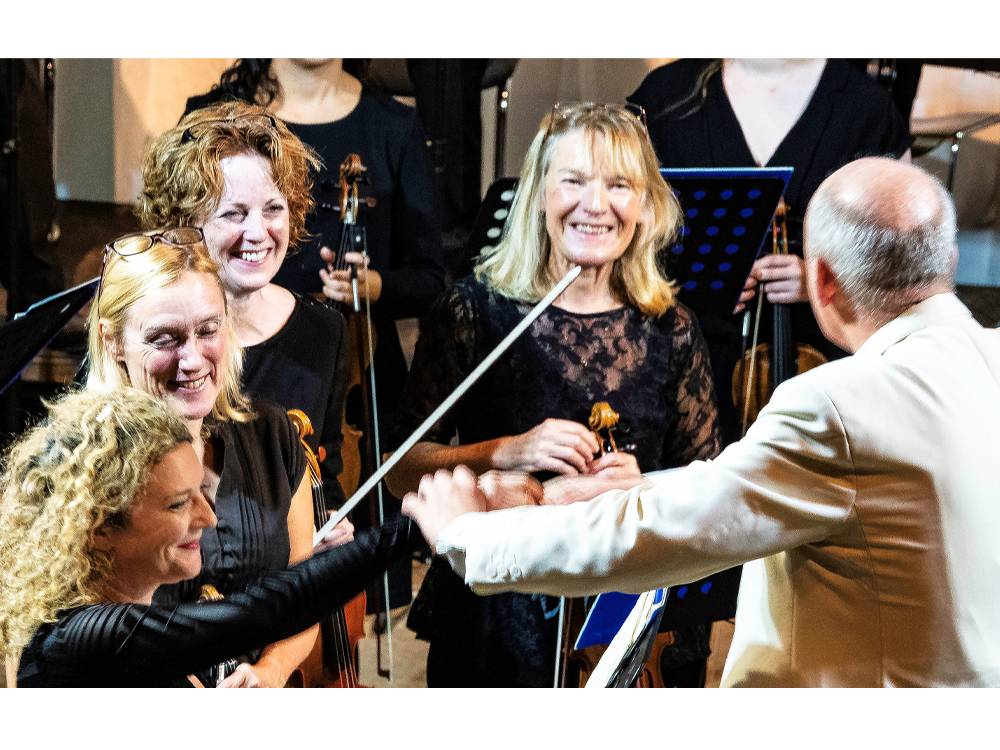
Having moved to Farnham in 2010, a town that he considered home to many artistic people, Matthew decided to form an orchestra and the Farnham Sinfonia was born. Over time, his vision became a reality, and the orchestra nurtures the next generation of musical talent by inviting young aspiring musicians to perform solo with a professional orchestra. This is a unique proposition for the students and graduates alike and underlines Matthew’s enthusiasm to promote young talent.
Sinfonia’s Outreach programme includes Matthew and Lead Violinist Elizabeth Cooney visiting local schools and colleges to fill the gaps in musical education. Matthew is keen to impart his musical abilities with the rising stars of the future as well as nurturing the orchestra to its full potential.
The next concert is on Saturday, 23 March at 7.30pm at St Andrew’s Farnham.
Mahler – (theme from Death in Venice)
Beethoven – Piano Concerto No. 2 and Two Romances
Schumann – Fairytale (for Viola)
Hindemith – Trauermusik
Piazzolla – Spring
For further information on Farnham Sinfonia (CIO), please go to their website