Dr Scott Miller on unconditional love, lifelong care and why pets make us better humans

Round & About

Mental Health

For the Round & About pets special, we sit down with Australian-born, British veterinary surgeon Dr Scott Miller, widely recognised for his appearances on This Morning, to talk about the extraordinary role animals play in our lives.

Pets rarely make a grand entrance, but they make real and lasting impressions. They sit with us in silence, celebrate us like heroes and love us without conditions or questions.

For Dr Scott Miller, one of the UK’s best-known veterinary surgeons, it’s this quiet constancy that sets animals apart from humans.

“Unconditional love,” he says simply. “Whether you are in a good or bad mood, looking dishevelled or a million dollars, our pets don’t judge us; they love us for our flaws and make us feel special and loved.”

That bond often begins early. Scott’s own childhood was shaped by an intense fascination with animals of all kinds.

“I always was obsessed by animals,” he recalls. “Caring for local wildlife as well as neighbourhood cats and dogs – whether they needed it or not.”

From those early instincts came clarity: animals weren’t just an interest, they were a vocation. “From a very early age I realised that I wanted to work with them as a life’s calling.”

Today, Scott is a passionate advocate for the role that pets play in supporting our mental and physical health, particularly as we age.

Companionship, he explains, is only part of the picture. “Feeling responsible for something is incredibly important to keeping people active, sociable and vibrant,” he says.

“Pets give structure to our days and meaning to routines as well as good reasons to get up, get out, and keep connected.”

They also help us connect outwardly. “A pet not only provides us with company, but they help us bridge the gap with others,” Scott explains, opening up conversations with neighbours, friends and even strangers. Whether it’s chatting on a dog walk, swapping stories at the vet, or sharing photos while a pet is away in kennels, animals quietly strengthen our social fabric.

While dogs tend to dominate the pet conversation, Scott is keen to broaden the picture. “Absolutely,” he says, when asked whether smaller or less traditional pets can be just as rewarding.

Cats, he notes, are wonderful indoor companions, rats are “super intelligent” and birds are “nature’s comedians”, offering entertainment, companionship and even the ability to learn tricks and speech. The key is not prestige or popularity, but fit.

“Overwhelmingly, pets are proven to improve quality of life – but only when they suit the owner’s lifestyle.”

That honesty underpins Scott’s advice for prospective pet owners. “Do your research,” he stresses. The real cost of a pet extends far beyond the initial purchase, encompassing feeding, healthcare, maintenance and, crucially, care during holidays or working life, including kennels, catteries or trusted sitters.

Understanding the long-term commitment, and each species’ specific needs, is essential to offering what Scott calls “a home for life”.

As pets age alongside us, these responsibilities deepen. Like humans, animals slow down, developing joint issues, hearing loss or vision problems. One common mistake, Scott says, is reducing vet visits to avoid stress.

“Actually it’s when pets need us most. Regular checks help catch subtle changes early, improving comfort and preserving dignity in later years.”

Loss, inevitably, is part of loving animals – and often a child’s first experience of grief. Scott speaks openly about bereavement, urging owners not to minimise their pain.

“The loss of a beloved pet can have a profound impact,” he says.

His advice is compassionate and practical: don’t be ashamed of how you feel, talk to fellow animal-lovers and don’t rush into welcoming another pet. When the time’s right, he suggests, it’s not about replacement, but giving love – and a home – to another animal who needs one.

Scott’s career has spanned everything from family pets to truly extraordinary cases.

He has treated flat-faced dogs with life-changing BOAS surgery, repaired the fractured leg of a four-week-old kitten named Delilah, performed conscious surgery on a chicken – complete with a bespoke “chicken bra” – and worked with wildlife across the globe, from elephants in Kenya to koalas injured in bushfires.

Horses, too, hold a special place. “Powerful, graceful, beautiful and gentle,” he says. While equine vets typically specialise exclusively, Scott is always happy to help when a local pony or retired racehorse needs care.

Looking to the future, Scott hopes to establish veterinary hospitals to reduce costs for rescue charities, a reflection of his belief that humans are custodians of all species.

“Animals are a gift to the world,” he says, “and caring for them, in all their forms, remains one of the most meaningful responsibilities we can take on.”

Supporting young people’s mental health  

Round & About

Mental Health

What’s in your kid’s emotional backpack? Occupational psychologist & coach Dr Amy Redmond & hypnotherapist & NLP practitioner Ami Ford give parents some prompts inspired by their Aha Journals 

If you’re a parent, you’ve probably felt it: the joy of watching your child grow, mixed with the quiet worry of knowing life, especially school life, can be hard. 

Yes, school is about learning the traditional lessons – maths, science and English. But it’s also where kids face tougher, less visible lessons: friendship fallouts, social comparison, pressure to perform, and the painful tension between wanting to stand out and needing to fit in. 

So how can we tell when our kids are struggling? 

The backpack they carry isn’t always visible 

Imagine your child’s emotions like a backpack. Each morning, they fill it, maybe with excitement, curiosity, and confidence. But sometimes, hidden inside, are heavier loads: anxiety, loneliness, fear, stress. When the emotional backpack gets too full, it can weigh them down in ways they may not know how to express. 

Younger children might become clingier, avoid school, or overreact to small frustrations. Tweens and teens may withdraw, become fixated on achievements, take more risks, or seem unusually low or irritable. These signs don’t always signal a crisis,  but they’re worth paying attention to. 

How to support them 

Help them connect with their emotions  

As our kids grow, their emotional needs shift. Comfort evolves from distraction (a cuddle or new toy) to connection. What they need most is to feel seen and heard; not corrected or rushed toward a solution. 

Start by listening without judgement. Resist the urge to say, “You’ll be fine,” or “It’s no big deal.” Instead, try: “That sounds really hard. I’m glad you told me.” Simple words of validation go a long way toward building emotional safety. 

Encouraging children to name the weight they are carrying and having important conversations around their emotions can make it easier for them to understand , talk about and generally work through. 

Helping children to learn how to reframe their challenges can be powerful in teaching them that the way we speak to ourselves shapes how we feel. As well as the above phrases, introduce them to phrases like: “It feels tricky now, but I’m building courage everyday,” or “Every time I try something new, my brain gets stronger”. This can help your child rewrite their inner dialogue in supportive ways.  

Let conversations flow naturally 

Remember that the best conversations are rarely forced. They flow naturally,  side-by-side –  while walking, driving, or doing something together. Create those quiet, low-pressure moments where kids feel free to talk, or not talk, on their own terms. 

Teach them the power of anchoring 

A lovely NLP (Neuro Linguistic Programming) technique that is simple to use and can help children, and adults too, to access positive emotional states quickly when they need it the most, is ‘Anchoring’.  

You could introduce your child to an emotional ‘anchor’ where they can use small gestures or phrases that they can link to feelings of calm or confidence. An example is, gently pressing their index finger and thumb together while saying “I’ve got this” while thinking of a time where they felt these positive emotions in the past. This can become a great grounding tool during stressful moments. All children, even teens and adults, love this one, especially how no one will know they are doing it – it’s like a “secret button of power!” 

Journaling can help kids make sense of their feelings 

Writing can be a powerful outlet for kids, especially tweens and teens. A journal helps them give shape to their emotions, understand their triggers, and build habits that support emotional resilience. 

Guided tools such as The Aha Journal are especially helpful; designed to meet kids where they are, in a language and structure they can relate to. 

Encouraging children to do sensory journaling using NLP Principles, such as: what colour is this feeling? Where do I feel it in my body? If this feeling had a sound, what would it be? Can prompt children to gain a deeper emotional awareness of themselves and describe their experience more vividly.   

Trust your instincts 

You know your child better than anyone. If something feels off, don’t wait. Talk to their teacher or school counsellor. Seek professional support if needed. 

The earlier we step in, the more gently we can guide them through. 

Day to day, the most powerful thing we can offer isn’t perfect advice – it’s presence. To become the person our child feels safe turning to, no matter what’s in their emotional backpack. 

Feel Better at Lindengate Mental Health Garden

Round & About

Mental Health

Soak up some sun & defrazzle at the Rest & Refresh Pop-Up Café at Lindengate Gardens

Experience Peace and Purpose at Lindengate Mental Health Garden

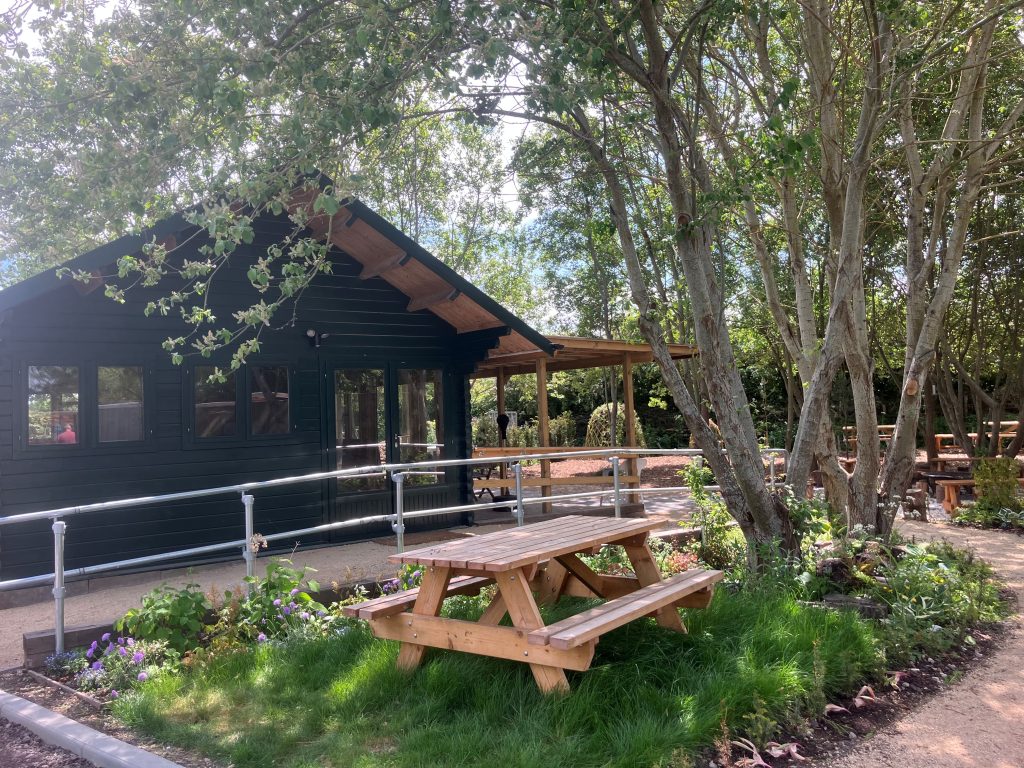
The Lindengate mental health garden in Wendover offers a calming and restorative escape for people of all ages. Nestled beside the Blue Diamond Garden Centre, this six-acre haven is nurtured by over 130 passionate volunteers aged between 13 and 90. The garden is more than just a peaceful space — it’s a place of community, care, and connection.

Rest & Refresh: Music, Culture and Nature

From June to September, Lindengate invites you to its monthly Rest & Refresh café — an open event combining free garden access, light refreshments, and local live entertainment. On 19th July, enjoy bluegrass and folk with the Old Time Pickers. On 16th August, delight in the tradition of Cracklewick Morris Dancers, followed by the melodic Star Fluters on 20th September.

Supporting Mental Wellbeing Through Nature

Lindengate specialises in social therapeutic horticulture, helping individuals manage anxiety, stress, depression, and grief through nature-based support. Weekly group sessions are small and welcoming, offering a safe and structured setting to relax and heal.

For those living with dementia or memory loss, the Memory Pathways programme runs every Friday morning. This inclusive initiative also supports carers, giving everyone involved a gentle, grounding experience.

Whether you visit for a wellbeing programme, a community event, or a quiet walk among the trees, Lindengate mental health garden is a space for everyone. Here, nature nurtures — and visitors leave feeling restored.

For full info about these, and volunteering, please click here.

If you like what you are reading, carry on with something similar and click here.

Ruby Wax MBE on tour

Liz Nicholls

Mental Health

Liz Nicholls chats to author, comedian & mental health campaigner Ruby Wax whose I’m Not As Well As I Thought I Was UK tour has been extended by popular demand

Q. Hello Ruby. I loved your book, I’m Not As Well As I Thought I Was – it helped me a lot. Do you think it’s your best?
“Oh thank you, that means a lot. Well, I’m not sure but being on tour with this book has been the most fun, so that’s a clue. And I love it when people talk to me afterwards to say they feel less alone. So there is a reward for me ending up in a mental institution, after all.”

Q. One thing I loved was that you discovered your love for your husband Ed, your ‘rock’…?
“Yes, we never say stuff like that. Eddie’s sitting in front of me now, and he’s thrilled. No, we’re not a lovey-dovey couple at all, that’s why it’s lasted so long. That and distance.”

Q. Did you enjoy studying for your master’s [in mindfulness-based cognitive therapy] at Oxford Uni?
“Oh yeah! My favourite expression now is ‘I went to Oxford’. I was in Summertown so it wasn’t quite the cloistered, beautiful Oxford that everybody pictures but I was so entranced by the subject, the mind, the neuroscience of it. I said to them: if you don’t let me in I’m going to study it anyway.”

Q. How important is ritual in your life?
“Really important. I don’t have enough because I don’t have religion – I wish I did. I have to do mindfulness every day. It’s a work-out for the mind otherwise I’m all over the place.

Q. You were so honest with Louis Theroux on his Grounded podcast and it led to you being on TV more again. How do you feel about him now?
“I think what a decent human being he is. I didn’t do that interview so I could get back on TV. But it was a sweet thing he did. And, really, the man knows how to interview. So that’s fine: I can see the attraction now.”

Q. You made your name interviewing people, and doing it well. How do you feel about Donald Trump now?
“Let’s not discuss it: it’s too upsetting.”

Q. Is there anyone you’d like to interview?
“Not really. The people who I’d really like to speak too are vary of a camera. In politics now you couldn’t get to anybody or get any answers out of them, so what’s the point?”

Q. Do you watch much telly?
“Only Netflix and Amazon. No terrestrial or news; too many weapons of mass distraction, it creates a sense of terror we don’t need. But Married At First Sight Australia is a masterpiece. I’ve got a fan group and won’t have anything said against it.”

Q. What’s your favourite book?
“Too hard but A Fine Balance by Rohinton Mistry and Falling Upward by Richard Rorh are both brilliant.”

Q. Who would you choose as your dream parents, as obsessed to the parents you had?
“Hmm. Maybe Barack and Michelle Obama? They’d be great”

Q. Would you have liked to have a sibling to help you feel less alone as a child?
“It would have been nice but I’ll never know. You might want a brother or sister but what if they just spent their life beating you up?”

Q. If you had a magic wand what would you wish for?
“That people would be less savage. But that’s not going to happen.”

Q. Do you enjoy being on tour?
“I’m happier being on tour than doing anything else. I love being on trains, in a different hotel every night, and I love exploring the town I’m in and chatting to people after the show. I’m curious and I like to investigate each town. Coping with real life, that’s the tricky bit, but never touring.”

Visit rubywax.net for tour dates & more.


The FA’s ‘The Greater Game’

Round & About

Mental Health

Following last year’s successful pilot programme, The FA’s ‘The Greater Game’ is being rolled out nationwide.

The FA’s announcement of ‘The Greater Game’ campaign is a commendable initiative aimed at improving the health and wellbeing of 12-16 year-olds across the UK. By partnering with organizations like Nuffield Health and M&S Food, they’re addressing crucial aspects of physical and mental health.

The focus on grassroots programs is especially promising, as it allows for widespread participation and engagement. The positive impact observed during the pilot phase underscores the potential for significant change on a national scale.

Addressing the concerning statistics regarding young people’s attitudes toward exercise, diet, and sleep is vital. The introduction of initiatives like ‘DROPS’ and featuring well-known football stars adds excitement and relatability, making it more likely for young people to get involved.

Given the staggering number of youth experiencing mental health issues, promoting physical activity as a means of improving mental wellbeing is crucial. Providing practical tips and techniques across various health elements is a comprehensive approach to supporting healthier choices.

The statistics concerning sleep and diet habits among young people highlight the urgency of such campaigns. Encouraging adequate sleep and nutritious eating habits is essential for their overall development and wellbeing.

Overall, ‘The Greater Game’ campaign has the potential to make a meaningful difference in the lives of young people, promoting healthier lifestyles and fostering positive habits that can last a lifetime.

The Greater Game ambassador and former England international, Jill Scott, said: “I’m a huge believer in the importance of being active, not just through football, but throughout your everyday life. What’s important about The FA’s Greater Game campaign is that it educates young people on the benefits of a healthier lifestyle, whilst providing them with the tips and tools to go out and put that into practice. I’m looking forward to seeing grassroots clubs across the country start to introduce The Greater Game programme, allowing us to make a real difference. I also can’t wait to have a go at playing DROPS myself!”

View The Greater Game content on the newly launched YouTube channel here.

Can you support Nai’s House?

Round & About

Mental Health

Oxford charity provides mental health support for young adults

Last year 65 people in Oxon took their own life – most of them young adults with suicide now the biggest cause of death for people under 35. Each death is heart-breaking – a tragedy, a terrible loss and a dreadful waste of potential. A death that changes the family they leave behind forever. 

There is a fantastic charity Nai’s House.  Set up in 2019 by Nai’s Mum – Gem after Nai sadly took her own life in 2017 aged just 22 , Nai’s House is a place of sanctuary, safety and support. It is a place that gives young people in crisis the safe space of a ‘home from home, a place where they can get the specialist help, they need, an environment that can help them hopefully turn a corner and move through crisis to more stability. 

Since 2019 they have helped over 600 young people, but they are at a crossroads. The truth is they can’t meet the demand they are now facing. More and more young people are getting in touch asking for help with over 200 young people on their waiting list, many of them who can’t get the support they need through the NHS given the pressures there. 

It’s an emergency for sure but it is an emergency we can help address and help tackle together. If Nai’s House can grow and expand its services it can offer help to the 200 plus people on the waiting lists. 

Your support could make a massive difference and offer a genuine lifeline. Just £20 could help give a young person in need a fighting chance. It costs £800 a year to help one young person with professional therapy to. £520 over 13 weeks to train a volunteer. But the reality is that every penny counts. 

Nai’s House didn’t exist when Nai needed it.  Please help us make sure it can be there for other young people who do now so, together, we can help prevent this tragic loss of young life. 

Please watch this video to see how you can help….

Don’t be afraid to cry

Round & About

Mental Health

Columnist Robbie James says: ” I have an inability to cry but that doesn’t stop me from feeling sad”

I cannot cry to save my life. Up until a few weeks ago, I hadn’t cried for a good few years. Then one evening after a couple of wines I heard Sunshine on Leith by The Proclaimers (one of the greatest love songs of all time) and I sobbed for the next 20 minutes. I couldn’t believe it. I wasn’t crying for any particular reason, my body just fancied a change, and I’m relieved because I missed the feeling you get after you cry – it’s so cathartic and calming. Almost like it’s a natural thing to do, who knew!?

We love to be sorry for crying don’t we. How often do we hear ‘’I’m so sorry I don’t know why I’m crying at such a silly little thing’’. It actually bothers me that I don’t cry more. Sometimes my family or pals think I don’t care as much as them about things. Of course I do, I absolutely do, I just cannot squeeze tears out of my eyes no matter how many times my beloved Scotland get knocked out of the Rugby World Cup.

I substitute crying for running until I can’t run anymore. If I’m feeling good that day, I’ll listen to music that encourages those feelings. But if I’m feeling a bit sad, I’ll absolutely run to Adele. I go and see a therapist every month regardless of how I’m feeling, but I’m there for the same reason every time I go. To learn about my brain (and by the way, it’s a task we’ll never actually fully complete, that’s important to remember).

It’s great to see so many people advocating looking after our brains on Instagram, and the intention is a good one. But we love to encourage each other to try and feel better instantly. It’s a natural instinct to avoid feeling sad, but to my completely untrained brain it doesn’t feel particularly healthy. 

We see people saying ‘’I haven’t been feeling great recently but I’m through it by doing this and that, and if you do these things you will be too. Come on. Do them. Hurry up. Feel better, do it now. SADNESS IS BAD’’. Surely this invasion tactic ultimately teaches us nothing. There will always be periods of sadness or low mood, and if we don’t bother to try and understand them when it’s happening, we’ll be in no better place to cope with it when it comes back around again. 

At the same time, when things are going well and we’re feeling good – we never really stop and think – ‘’why is it that things are good? What’s making me feel this way about stuff?’’. If we understand and notice the triggers then maybe that might come in handy one day when we’re feeling awful about everything. To use the classic ‘’treat your mental health like your physical health’’ analogy – most of us hygienic lot don’t only go to the dentist when we’ve lost a molar, we go every six months to check all is ok – if it is, great, at least we’ve checked up.

So in short, let’s embrace every feeling, we don’t have to run away from sadness. If you take time to understand rather than fight your brain, you’ll probably be in a better place in the long run. Oh, and if you cry at anything and everything, keep doing it. I’m jealous.

Budgie Smuggler Run for mental health

Round & About

Mental Health

Well done to the 20 brave men who have bared (almost) all for an outdoor winter fundraiser in Virginia Water raising more than £2,500 (so far) for the Mental Health Foundation.

We’ve all been feeling the cold in recent weeks. So praise is due to the local runners who braved the chilly trails of Virginia Water Lake togged up in just a pair of running shoes and “budgie smuggler” briefs.

The Budgie Smuggler Run 2023 event was founded by Brian Turner, Josh Lappin, Paul Dash and Jordan McDowell from Hampshire and Surrey in 2021 when they wanted to raise money and awareness for charity.

Since then, others have joined in the January spectacle, with 20 runners taking on the 7km route last Sunday (29th January) raising more than £2,500 for the Mental Health Foundation.

Brian said: “It started off as a bit of a laugh, but with a serious aim to raise money and awareness for charities that are close to our hearts. It certainly does turn heads, and after the first run I was surprised to find more people than just me willing to strip down and run the 7km route in the middle of winter.”

The Budgie Smuggler Run is now set to become an annual mass participation event in aid of raising money and awareness for men’s mental health.

World record holder Darren Hardy, a charity fundraiser and former British Army officer who was medically discharged from the army with PTSD in 2017, joined this year’s event. “It’s such a great event and certainly turned heads,” he said. “Despite the frosty January start we all rose to the occasion and drew quite a crowd at the finish line. I’d absolutely recommend it to anyone wanting to do something a bit different for charity.”

“It certainly does turn heads”

Over the last two years, runners have raised £2.5k for BulliesOut, an anti-bullying charity, and £1.3k for Cancer Research UK.

To find out more and donate please visit 7k Budgie Smuggler Run 2023 (gofundme.com).

What is solution-focused hypnotherapy

Ellie Cox

Mental Health

Woodley-based hypnotherapist Sophie Price explains how this approach can help a frazzled mind

Solution Focused Hypnotherapy is a relatively modern approach, combining various forms of talking and brief therapies. With similarities to cognitive behavioural therapy (CBT), solution focused brief therapy (SFBT) and other humanistic approaches, solution focused hypnotherapy combines the very best practice of other talking therapies with the added benefit of hypnosis.

The primary focus of this style of therapy is the importance of staying in the present. When we go over our problems in our mind, we’re reliving them and, because our brain can’t tell the difference between imagination and reality, we find ourselves right back there – in the problem. When we allow ourselves to focus on how we want things to be, instead of how we don’t want them to be, we’re giving our brain positive images which allows it to believe that we can achieve those things.

When we suffer with anxiety, depression, OCD, and other related issues, were spending too much time in the fight/flight part of our brain. This part of our brain is there for our survival and, while we absolutely need to have access to this mind, we don’t need to use it every day. When we just want to get to work without feeling angry in a traffic jam; or we just want to get a good night’s sleep without worrying about tomorrow’s meeting/appointment; or we just want to enjoy time with our children without feeling worried about the finances, we can sometimes find ourselves thinking of all the worst-case scenarios and therefore missing out on the present. The more anxious we are, the more we are encouraged to be anxious.

“The more anxious we are, the more we are encouraged to be anxious”

This is how hypnotherapy can help. It helps to create new neuropathways in the mind which can break old habits and help us to move forward with a new, positive attitude towards life.

The Importance of Sleep

One of the first things people recognise when they seek my help is that their sleep is affected by the issue they’re suffering with. Sleep deprivation will increase our anxiety and stress levels. It has been said that just a few minor reductions in your sleep pattern for just a week, can disrupt your blood sugar levels enough to classify you as a pre-diabetic. There are many, many health complications which can be brought on or worsened by a lack of sleep and we often find that when our mental health is suffering, we can’t get enough sleep.

The recommended 7-9 hours per night is something that we should all strive for – for the sake of our physical and mental health.

Hypnotherapy helps to regulate sleep and once your stress levels come down, your sleep will improve.

Please do get in touch to find out more about how hypnotherapy can help you.

www.sophiepricehypnotherapy.co.uk

info@sophiepricehypnotherapy.co.uk

07835 302 794

Shooting stars in wildlife photo competition

Round & About

Mental Health

Well done to all the wildlife lovers who took part in the Berkshire, Buckinghamshire & Oxfordshire Wildlife Trust (BBOWT) competition who snapped some beautiful sights at local nature reserves and green spaces and showed how nature can help our mental health

Winning entries include this stunning shot of a buzzard in flight, this pin-sharp picture of a tiny shield bug emerging from a garden flower and a portrait of a pensive kingfisher.

The winner of this year’s children’s category was eight-year-old Roly Lewis from Oxford. The North Hinksey Primary School pupil took his fantastic photo of a shield bug, poking its head out of a flower in his own front garden.

Roly said: “I wanted to enter the competition, so I took lots of wildlife pictures all spring and summer. I thought this photo was my best one because the blossom was a nice background, and the shield bug had an amazing colour and pattern. This made me look closely at shield bugs which are really amazing. My mum told me I had won when I came out of school, and I was so excited I jumped up and down. I really wanted to win but I thought there would be so many good photos that I wouldn’t.”

Children Winner – Roly Lewis (8) (Sheildbug)
Children Runner Up – Hayden Denham (7) (Hummingbird Hawkmoth)

The Wildlife Trust restarted its popular photo competition this summer after a three-year break because of the pandemic. The charity, which manages more than 80 nature reserves across Berkshire, Buckinghamshire and Oxfordshire, challenged everyone aged six and over to take fantastic photos of plants, animals and fungi at its sites, or to capture action for wildlife in their local area.

Roy McDonald took first place with his crystal-clear shot of a buzzard in mid-air at the Trust’s College Lake reserve near Tring. The 45-year-old former courier driver from Berkhamstead revealed after winning the contest that he has struggled with his mental health for some years, and that wildlife photography had helped. He said: “Nature helps me so much, it’s honest and calming and it doesn’t judge you, and just sometimes, if you are calm and patient, it will allow you to get up close into their world. I always take great pleasure when a creature trusts you enough to not scurry or fly away. But you don’t have to take photos: just being in nature and observing it can give you something to focus on.

“I had my encounter with a majestic buzzard on a cold and beautiful winter day. I had seconds to react once I spotted it, and just as my focus locked on, it spotted me and flew directly across my path. So close to me. I chose the first image of the sequence because it had the most amount of action and sense of place. It is by far and away the best shot of a buzzard I have ever managed. They have eluded me for years. I’m quite stunned and delighted to have won.”

Flora and fauna Winner (and overall winner) – Ray McDonald (buzzard in flight) taken at College Lake
Flora and fauna Runner Up – Adrianna Bielobradek (Poppy seedhead) taken at Buckleberry Common)

As overall winner, Mr McDonald won a top-of-the-range Panasonic Lumix digital camera and a wildlife photography masterclass. As well as receiving a printed canvas of his picture and having it appear in BBOWT’s 2023 calendar.

This year’s contest had six new categories: flora and fauna; nature reserve landscapes; people in nature; children’s category (ages 6-12), teenagers (ages 13-19) and Team Wilder, for shots of action for nature in the community. Helen Touchard-Paxton, a mum who lives Buckinghamshire, won the Team Wilder category with a snap of a frog in a garden pond that she and her family dug during the coronavirus lockdown.

She said: “I believe this photo shows that you don’t need acres of land to create a successful wildlife area: if you are interested – no matter how small your space – just have a go and see what works. I don’t have high-end expensive equipment, and I have no idea how to use photo editing software – the photo is very much ‘as taken’. I was absolutely amazed to have won the Team Wilder category.”

Team Wilder Winner – Helen Touchard-Paxton (frog)
Team Wilder Runner Up – Peter Massam (bug hotel)

The Trust received hundreds of entries, creating an extremely difficult job for this year’s judges. BBOWT communications officer Kate Titford, Trust magazine editor Ben Vanheems and professional photographer Steve Gozdz, who runs local nature safaris in Berkshire through his business GG Wildlife Experiences.

Teenagers Winner – Zachary Osbourne (14) Kingfisher
Teenagers Runner Up – Lucy Colston (17) (marbled white on scabious)

Mr Vanheems said: “It’s been a really laborious process with lots of debate going on because we want to get it right, but the competition entrants haven’t exactly made it easy for us.”

People in Nature Winner – Petra Mohr (girl on decking) taken at Weston Turville Reservior
People in Nature Runner Up – Lorraine Clarke (man in hide) taken at College Lake

Mr Gozdz added: “What I was looking for was composition, good use of light – an action shot would have been fantastic. What we’ve found is something quite stunning. A real in-the-moment shot with perfect angles and perfect light, and actually something I would have been very happy to have taken myself. In fact, when I first saw it I was quite jealous.”

Landscape Winner – Charlotte Day (sunrise landscape) taken at Cholsey Marsh
Landscape Runner Up – John Kearns (Warburg trees) taken at Warburg
The trust is grateful to GG Wildlife Experiences, Panasonic and Chroma for sponsoring this year’s competition.