Our lucky winner can enjoy a Bloom garden planner and Tomato Vine recipe journal worth £19.99 each from this design-led independent brand.
Beautiful stationery has the power to transform everyday moments, and that’s exactly the philosophy behind Yop & Tom.
The brand creates thoughtfully designed planners, notebooks and journals that combine style with purpose – helping people organise their thoughts, nurture creativity and enjoy the simple pleasure of putting pen to paper.
With a love of beautiful design, attention to detail and a commitment to making products with care for the planet, every piece is designed to be both practical and a joy to use.
We’ve teamed up with Yop & Tom to offer one lucky reader a gorgeous stationery bundle. The prize includes the Garden Planner – Bloom, a charming A5 hardback journal for recording planting plans, seasonal notes and gardening inspiration, plus the Recipe Journal – Tomato Vine, a beautifully illustrated kitchen companion for preserving treasured family recipes and creating new favourites.
Both are printed on premium 100g pages offering ample space for capturing your thoughts, helping organise your world and passing tips on to your family.
Whether you’re a green-fingered gardener, an enthusiastic cook or simply someone who appreciates thoughtful design, this is a prize that will inspire creativity all year round.
How to enter
To enter our prize draw, fill in the form below before 12pm on Friday, 30th July 2026.
Discover the joy of veg & company with Twyford Growers, as the group invites over-50s to get involved this spring.
Do you have green fingers? Would you like to, but don’t know where to start? Join Twyford Growers – a local gardening group that brings people together to enjoy gardening in the great outdoors.
Twyford Growers meets weekly to grow fruit, flowers and vegetables in a friendly, sociable setting. Whether you already love gardening or want to try it for the first time, the group welcomes you.
The group meets on Thursday mornings at Hurst Road Allotments in Twyford. You’ll find the site near the train station, with parking, seating and toilets available.
At the end of each session, everyone comes together for a well-deserved tea break. The group welcomes older people from the local area, supports those living with dementia, and encourages carers to join in too. To find out more, email twyfordgrowers@gmail.com or call 07718 882792.
Twyford Growers forms part of the wide range of activities that Age UK Berkshire runs to help older people stay socially connected. Developing interests matters at any age, especially as we grow older.
If you’re over 50 and live locally, you can enjoy a full calendar of events through Age UK Berkshire. The organisation runs social groups, seated yoga classes, choirs and much more.
Emily Lowson says: “Alongside activities, Age UK Berkshire delivers a range of support services. We provide free information and advice, a home help plus service, a handyperson service, and Home from Hospital, which helps you settle back at home after a hospital stay. We also offer a fully qualified one-to-one dementia support service, giving care to people living with dementia and vital respite to their carers and loved ones.”
Give your garden a new lease of life this season, whether you’re taking care of your lawn, planting, or completely redesigning your oasis.
As the days grow longer and temperatures begin to rise, now is the perfect time to step outside and start preparing your garden for the months ahead.
Whether you’re refreshing your lawn, rethinking your planting scheme, or transforming your space into an outdoor retreat, a little planning and care can make all the difference. From practical maintenance to inspired design ideas, here’s how to get your garden looking its best for the season.
Lawn care
As we welcome the warmer weather, it’s a good idea to give your lawn some extra TLC through regular maintenance – such as more frequent mowing. This keeps your green space healthy and thriving, while helping to deter weeds.
Whatever the size of your garden, Marlborough’s Baydon Mowers supplies a complete range of products from ride-on and pedestrian lawnmowers, to chainsaws, hedge-cutters – with the option to hire machinery, too. More info at baydonmowers.co.uk
If you’re looking to encourage wildflowers to flourish – and provide shelter for insects and wildlife – consider leaving sections of your lawn unmown. These areas can provide pollen, nectar and a host of other essential benefits for the ecosystem.
And if you need help nurturing your outdoor space, the skilled horticulturists and groundsmen of Garden Vista – operating across Hampshire, West Sussex and Surrey – are available for ongoing contracts or one-off visits to make your garden more manageable. Find out more at gardenvista.co.uk
Outdoor living
Once your lawn and borders are back in shape, attention can turn to how you enjoy the space.
After a wet and windy winter, many of us are eager to get outside and transform our gardens into a natural extension of the home. From comfortable seating areas and fire pits to atmospheric lighting and pergolas, there are plenty of ways to make the most of your outdoor space from dawn until dusk.
If you have ideas ready to go – or need expert guidance – Southern Counties Landscapes, based in Wokingham, can help bring your vision to life. From decking and water features to bespoke paving and planting, the team has created hundreds of designs over the years, always keeping practicality and budget in mind. For further information, visit southerncountieslandscapes.com
As gardens come into full use, attention naturally shifts beyond planting and maintenance to how the space is experienced. A garden room could be the perfect addition, helping you create your own outdoor retreat.
Alongside the potential to increase property value, this versatile space can be tailored to your needs – whether that’s a light-filled home office, a dedicated hobby room, a cosy reading nook, or a spot to sip a glass of wine while watching the sunset. It offers a seamless bridges between indoors and out.
Locally, there are some excellent options. Garden Rooms by Drumbeat, working across Hampshire and Surrey, offers a personalised service, whether you choose a pre-designed structure or opt for something more bespoke, complete with free consultation and digital drawings. Discover more at gardenroomsbydrumbeat.co.uk
Based in Hampshire, Ambassador Projects also designs, manufactures, and installs outdoor living structures. Blending traditional oak features with sleek, contemporary aesthetics, the team offers signature, classic and heritage designs. More at ambassador-projects.com
Planting and potting
With the structure of your garden in place, planting is where you can really bring it to life with colour and texture.
If you’ve admired the beautiful bedding displays at Ascott House and Gardens, Waddesdon Park or Hughenden Park in Buckinghamshire, you can recreate that same sense of seasonal colour and year-round interest at home with a thoughtful mix of flowering plants and evergreen foliage.
For those who’d prefer a helping hand with the planning, raking, The Big Plant Nursery in Twyford offers expert advice and consultancy, as well as delivery and planting services.
The nursery boasts an impressive selection of quality plants, shrubs and trees – including tender exotics and specimen varieties – to help you create your ideal garden.
From ground preparation to precise planting and staking, you’ll receive comprehensive aftercare advice and planting warranties for peace of mind, allowing you to transform your garden instantly with minimal effort. Check out the full range at thebigplantnursery.com
Watering and irrigation
Even the best-kept lawns and newly planted borders can struggle without sufficient water as temperatures rise.
From newly laid turf to established planting schemes, consistent watering is key to keeping your garden healthy and vibrant throughout the warmer months.
While a hose or watering can may be sufficient for smaller spaces, larger gardens can benefit from sprinklers or automated irrigation systems, which take the guesswork out of when and how much to water. Timed systems are particularly useful during dry spells or holidays, ensuring your garden continues to thrive even when you’re away.
For a more environmentally conscious approach, water butts allow you to collect and reuse rainwater, while drip irrigation systems deliver water directly to plant roots, reducing waste and improving efficiency.
If you’re unsure which solution is right for your space, expert advice can help you strike the perfect balance between convenience, cost and sustainability.
Looking after gardens across North Berkshire and South Oxfordshire for more than 30 years, Ian Kendrick Ltd offers a wide range of maintenance services, with weekly, fortnightly or monthly visits tailored to suit your budget. Find out more at iankendrickltd.co.uk
Concrete cleanup
It’s not just lawns and borders that need attention. Over time, stone patios and pathways can develop stubborn black staining that even pressure washing won’t remove.
These marks are caused by microscopic lichen spores carried by wind and rain from surrounding trees.
Patio Black Spot Remover offers an effective solution with a biodegradable, acid-free product that cleans stone surfaces without causing damage or harming nearby plants.
Based in Farnham, the company offers both products for home use and a professional call-out service, depending on your needs. Visit patioblackspotremoval.com for further details.
Karen Sutton tells how Root & Branch in Watchfield helps people on their road to recovery towards mental and emotional wellbeing, using nature and a safe space.
Spring unfolds gently at Root & Branch, and with it comes something more than blossom and longer days.
Based at Westmill Farm near Watchfield, this much-loved charity marks its 25th year supporting adults living with complex mental health challenges – and there is no season more symbolic of its work than spring.
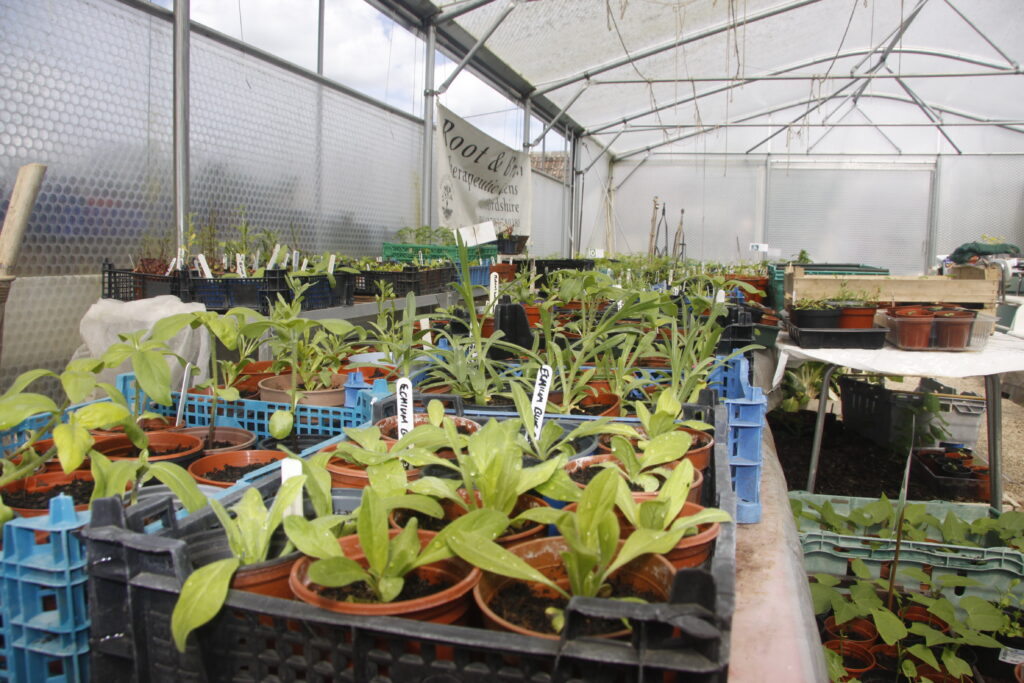
As seedlings push through in the polytunnel and colour returns to the beds, participants arrive each week to tend the land and, in many ways, themselves. Root & Branch offers therapeutic gardening alongside pottery, rural crafts, woodworking and cookery, all within a safe, welcoming, non-clinical environment.
Many plants are grown from seed as part of each individual’s recovery journey, offering purpose, routine and the quiet satisfaction of nurturing something into life.
“Being outdoors, working with nature and seeing things grow plays a powerful role in supporting wellbeing,” says Karen Sutton of Root & Branch.
“Spring is especially rewarding – there’s fresh planting, new growth and a real sense of possibility across the site.”
Gardening tasks are carefully adapted so everyone can take part, whatever their confidence or ability. The emphasis is not on perfection but participation – building confidence, connection and practical skills at a steady, supportive pace. Even Luna, the charity’s therapeutic dog, plays her part, offering comfort and companionship to those who would like it.
This year, as part of its 25th anniversary, Root & Branch continues to develop its therapeutic spaces to make them even more accessible. Improvements to pathways and the creation of quiet reflection areas are being delivered in phases, with ongoing fundraising needed to complete the full project.
The charity’s annual plant fayre takes place from 1.30pm to 4.30pm on Sunday 17th May and will be a highlight of the spring calendar.
Visitors can browse plants grown with care by participants, alongside handmade crafts created in workshops. Every purchase directly supports the charity’s work – and it’s a joyful opportunity for the wider community to step inside the garden and see its impact first-hand.
“What we most value here is the strong sense of community and access to countryside,” adds Karen. “If I could make one wish, it would be that mental health support is accessible, stigma-free and community-based, so everyone can find belonging when they need it.”
After 25 years, Root & Branch continues to prove that with patience, care and the right environment, growth is always possible.
Since we last interviewed Anya Lautenbach, AKA “The Garden Fairy”, she has been appointed a National Garden Scheme ambassador – now, she’s just published her third book.
For gardeners of all levels, there’s nothing quite like the satisfaction of watching plants thrive under your care. Now local gardening expert and bestselling author Anya Lautenbach – known to her many followers as “Anya the Garden Fairy” – has distilled that joy and know-how into her latest book, The Money-Saving Gardener Containers.
The new guide shows how anyone can create a beautiful container garden all year-round without spending a fortune.
Whether you have a windowsill, balcony, courtyard or patio, Anya demonstrates how pots can become “little gardens that anyone can own,” bringing nature closer even in the smallest spaces.
Packed with practical advice, the book explores everything from choosing containers and repurposing everyday household items as planters to growing plants from seed, cuttings and free propagation.
Seasonal projects offer inspiration throughout the year – from cheerful spring bulbs to winter paperwhites – alongside tips on saving money on essentials like compost and water.
For Anya, gardening has always been about more than plants. Growing up in Poland, she remembers her family cultivating flowers and crops in pots on their balcony, learning to waste nothing and find happiness in simple things. After moving to the UK, container plants became a portable way of creating a sense of home wherever she lived.
Now based in Buckinghamshire, her own garden has flourished through years of propagation and thrifty techniques; knowledge she shares with more than a million followers online. Her work also highlights the wellbeing benefits of gardening, something she advocates through her writing and social media.
With inspiring displays for every season and practical guidance, The Money-Saving Gardener Containers proves that creating a thriving garden doesn’t have to cost the earth – just a little creativity, patience and love of growing.
Liz Nicholls chats to gardener and author David Domoney, who will star at the Ideal Home Show from Friday 10 to Sunday 19 April 2026 at London’s Olympia.
Hi David, how are you?
Good, thanks, Liz! Sun’s out, the days are getting longer, birds are singing… Hold on tight, we’re nearly there!
You’re at the Ideal Home Show, as well as Martin Lewis, Annie Sloan, George Clarke and more stars, aren’t you?
Yes, the show is so feel-good, I love it! Our gardens are where we relax. But horticulture isn’t just about gardens. Plants are part of everyday life: the air we breathe, the food we eat. We only get old on the outside – we’re all young on the inside!
Think of using a dandelion as a child to tell the time. Plants connect us to memory and emotion. Mint can make us feel cold, chillies hot. This will be a fun celebration of plants’ superpowers! On the cookery stage, I’ll look at plants to keep us feeling younger and healthier
Your RHS Chelsea Ace of Diamonds Garden was a real bobby dazzler!
Yes, at Chelsea I try to stretch people’s imaginations; we had £20 million worth of diamonds for that one! The Ace of Spades had a tattoo artist on the side. But your real perfect garden is your own taste, gnomes, whatever!
I love your social media channels, no wonder they’re so popular! What’s a good food to grow as a newbie like me?
Start with cress; it’s the fastest crop from seed to eating. Growing seeds activates positive neurotransmitters in the brain.
When you spot those tiny green shoots, you’ve created life! Cress has more calcium than milk, more vitamin C than broccoli, more folate than a banana. Herbs are easy too – you can even grow potatoes in a bin!
I’m also a fan of your fantastic bestselling book, My Houseplant Changed My Life! Are you proud of it?
Yes, it came after Chelsea in 2021 when we were very fortunate to win gold. House plants look good, pump out fresh oxygen and clean the air… love ‘em!
What’s your favourite plant?
Lemon-scented verbena. You can add your Pimm’s and flavour the ice cream with it. It smells of happiness.
You’re clearly enjoying your 40+ year career in gardening, David. What’s next!?
I love to engage more people with plants and use technology that’s taking us away from nature to reintroduce us to it.
I’ve got a million followers now on my YouTube channel, and I love to offer free step-by-step guides to share the magic. Look out for more ideas!
The Ideal Home Show returns to London’s Olympia for its 118th year, unveiling new and evolved features including The Bark Yard, The Edible Garden, DIY Live, The Smart Home, The BBQ Academy & The Design Studio.
Wander the walled garden and vineyard at Bridewell Gardens in West Oxfordshire, enjoy homegrown produce, and discover the mental health recovery work happening behind its ancient walls during its Open Days in 2026.
Tucked away in a peaceful corner of West Oxfordshire, behind ancient walls and rolling vineyard rows, Bridewell Gardens is preparing to welcome visitors once again for its Open Days in 2026.
Taking place from 11am to 4pm on Sunday 19 April, 17 May, 14 June and 6 September, these special days offer a rare chance to explore a beautiful working garden and vineyard while learning about the life-changing work that happens within its walls.
Bridewell Gardens is a mental health recovery service supporting people in West Oxfordshire who have experienced serious mental ill health. Set within a walled garden and vineyard at Wilcote, Bridewell provides a creative, compassionate environment where recovery is nurtured through gardening and working with nature.
As one former gardener puts it, Bridewell is “a small mental-health charity with muddy paths, patient people, growing things — and absolutely no pressure to pretend everything’s fine when it isn’t.”
Open Days invite visitors to wander freely through the walled garden, vineyard and surrounding spaces, discovering fruit, vegetables, flowers and vines grown as part of Bridewell’s day-to-day work.
Plants propagated on site will be available to buy, alongside home-produced jams and chutneys and Bridewell’s acclaimed organic sparkling wine, made from grapes grown right there in the vineyard.
A pop-up café will be serving tea and cake, while those keen to linger are encouraged to bring a picnic blanket and relax among the vines. Families and children are welcome to explore, spot dragonflies by the pond, and count the chickens roaming the vineyard, while dogs on leads are also very welcome.
Open Days are not just about enjoying a beautiful place. They offer an opportunity to meet Bridewell staff and volunteers, hear about the recovery service, and understand how working outdoors can help people rebuild confidence, develop skills and reconnect with their community.
For many, Bridewell provides structure, kindness and hope at a time when it is most needed. As one participant reflects: “Bridewell has been my parachute. It got me out of the house, gave me routine, and helped me find confidence again.”
Entrance is by suggested donation of £5 per person, with no booking required.
At last it’s June and that officially means no more frosts and the seasonal summer bedding can be planted out in abundance!
I like to add these flowers to existing planting and pots for a bit of colour and variety but my favourites are wild flowers and hardy annuals.
What is summer bedding?
Keukenhof Gardens in Spring
The term summer bedding originates from Victorian times and many still traditionally plant beds of organised summer flowering plants. You can see this type of planting in parks, gardens, roundabouts and outside stately homes and botanic gardens. It has become less popular in gardens as we move towards a more wildlife friendly type of gardening. These plants are great when filling gaps in borders, and adorning the patio in pots and baskets. Then we get to enjoy them all summer long!
Pink & Red Pelargonium
Should I have tender perennials or annuals?
This always causes confusion as Pelargoniums and Petunias are tender perennials sold as annuals. Meaning they are not frost hardy and need to be over wintered inside or bought new each year. Cosmos and Tagetes are half-hardy annuals. These need to start growing in the greenhouse and will die at the end of the season. Most summer bedding plants need feeding, watering and dead-heading to maintain flowering. Take particular care with the hanging baskets which may need plunging into a bucket of water to rehydrate!
Pink CosmosMarigold flower/Tagetes erecta
Pink & Purple Fuchsia
Fuchsias: perfect for summer bedding
These deserve a special mention as they are one of many shrubs people use for summer bedding. They can be hardy – Fuchsia magellanica which can stay out all winter. Or tender – most of the summer bedding ones with cultivar names like ‘Dancing Flame’ and ‘Lady Thumb’. The tender need winter protection. It’s all about where they grow in their native habitat. They flower non-stop all summer and are well worth investing in.
Spider Plants
Can my houseplants be put outside in summer?
Often spider plants and other houseplants can be put outside in containers during the summer. But be careful to acclimatise them as, like us, they can get sunburnt!
Willow can make an eye-catching addition to your garden as gardening expert Cathie Welch tell us
I have woven dried willow into baskets and animals. I have made living willow trellises, arches and tunnels but this year I have taken it to a whole new level sculpting the actual plants. I was inspired by a walk around Wisley lake to see these incredible works of art.
Growing Willow
There are many types of willow from the wild pussy willows to the colourful stems, similar to dogwoods, that we plant for winter colour. They are particularly successful in damp conditions in bog gardens and sound waterways. People are often put off because they grow so big but there are ways around that. It needs a little knowledge and some artistic licence!
Propagating Willow
Willow root readily from hardwood cuttings taken from autumn through to early spring when they are dormant. My propagation classes will be doing this. Take a section of stem ideally from the current season’s growth and cut just below a bud at the base and just above a bud at the top. It’s possible to root them from long willow rods and these are excellent if you want to make a walkway.
Pruning Willows
Often the trees are pollarded to the top of the trunk and you can do this with a smaller one in the garden. Don’t be afraid to cut it back to a stump every spring. Once the new growth has dropped all its leaves and looks amazing, it is ready to sculpt.
How to learn with CGS
Drop me a line, book a visit or check the website. Join in the learning fun!
Let’s face it January is depressing post Christmas and gloomy weather, but it can also be a most joyful time in the garden says Cathie Welch
Look around at the array of stem colours, berries and scented flowers being visited by bees when the sun does show. It really is magical so let’s focus on the positive!
Colourful stems: Many plants have colourful stems but the most stunning are the dogwoods. Cornus sanguinea ‘Midwinter Fire’ looks like flames on gloomy days and Cornus alba ‘Sibirica’ is bright red. There are many others to grace your gardens in shades of lime green, yellow, orange, red and black. Bamboo can be trimmed to show the beautiful stem colour and the best one for this is Phyllostachys aurea which is pure gold. Many trees come into their own too like Betula jacquemontii and other silver birches, Prunus cerrula has shiny burgundy stems and there are many more.
Evergreens and berries: Trees and shrubs that keep their leaves over winter are the backbone structure to a garden in winter and many carry colourful berries. Two winter classics are holly and ivy but there are also an array of Skimmias with red and green buds and others with bright red berries. Sarcococca has red and black berries following gorgeous scented flowers.
Deciduous winter interest: One of the plants that causes a stir at this time of the year is Callicarpa bodinieri and it’s many cultivars. Bright purple berries (above). My students have to identify it at other times too but winter is when it is at it’s best. Birds are not generally attracted to the berries although I’ve seen one or two blackbirds and thrushes tucking in! There is also Edgeworthia chrysantha which has a gorgeous structure and scented yellow or red flowers.
Scent and perfume: Boxing Day we head up Battleson Hill at RHS garden Wisley to drink in the perfume of Daphne, Edgeworthia, Camellia, Hamamellis, Chimonanthus, Lonicera and Sarcococca. A true delight on a dull winter’s day recommended to all readers.