Windsor Photographic Society’s upcoming exhibition

Round & About

Windsor Photographic Society Exhibition will run from Tuesday 1st to Thursday 31st October

The Windsor Photographic Society (WPS) annual exhibition showcases the variety of photographs taken by its members and is also an opportunity for them to see their work exhibited. Some photographs may be available to purchase.

Members are holding a special opening night on Tuesday, 1st October, and hope you can join them in The Old Court licensed bar and upper areas.

You can view their photographs and meet members who would love to tell you more about their club!

WPS meet at The Old Court at 7.45pm on Monday evenings and fully welcome new members. They offer a full and varied programme that includes presentations, practical workshops, photo walks and competitions. There are members at every level of expertise (from beginners through to professionals), using all kinds of cameras and phones, willing to share a wealth of experience.


Latest posts

Pond Contemplation

Round & About

My pond gives an added dimension to the garden and an opportunity to encourage diverse wildlife and a whole new range of plants. Someone once said to me “A garden without a pond is like a theatre without a stage”

Where to start

It is not as simple as digging a hole but that’s a good place to start! Find a suitable spot in the garden and plan one in scale with the rest of the site. Ideally avoid a rigid liner and instead go for a flexible liner which will mould to the hole you have dug. It’s important to have a deep area and a shallow beach area and place it where you can enjoy it.

Sculpt the pond

Ensure there is a deep area in the middle or at one side. When we did ours the patio flanks the deep area, this should be around three feet for deep water aquatics and over wintering plants, fish and wildlife. From the deep area there is a gentle slope in case our residential hedgehogs fall in and a shelf around the edge for marginal plants. It’s important to do all this before you fill your pond with water.

Line the pond

Use and underlay, carpet, newspaper and anything else to prevent the butyl or pvc liner getting damaged. Also ensure the size of the liner allows for the depth of the pond too. Spread over and fold as you fill with water, it helps to get in a this point. The water will pull the liner into place and make sure there is an overlap.

Plant your pond

After adding a product to neutralise all the nasties in tapwater you can plant. It’s important to edge the pond with stones, cobbles, gravel and plant amongst these. Here you can use perennials, ferns and small woody plants. Place your oxygenators into water, plant deep water aquatics like water lilies in the deepest part and add marginals on the shelf around the edge. You can also add floating aquatics like water soldiers and frogbit. It’s essential to have the range of plants for example without marginals the dragonfly larvae can’t get out of the water and shading of the surface is essential from the deep water aquatics and floaters.

Fish and Wildlife

You have to decide whether you want fish and the wildlife will come. Often newt eggs and snails come with the plants. Flying insects are drawn to the water like pond skaters, damselflies and dragonflies. Try to let the pond balance itself. If you have a range of plants to cover the surface this will happen and don’t be put off by the water going green or murky it’s a natural process.

Enjoy your pond

There is lots of learn so read up about it or visit my gardening school for some inspiration. As well as looking after the pond it’s important just to sit, gaze and contemplate.


Latest posts

Trust your instincts on open days

Round & About

Choosing a school is one of the most important decisions a parent can make for their child. It is also one of the most difficult. Tom Dawson, Headmaster of Sunningdale School, has some tips and advice

How can you possibly judge what will suit your children when so many schools, on the outside at least, appear so similar and so good? It is just like buying a house, you might get one or possibly two chances to visit and then you have to take the plunge. These visits are so important and parents need to make sure that they approach them in the right way so that they can have real faith in the decisions that they ultimately make.

A lot of schools offer the choice between an open day and an individual visit and there are advantages to both. It is perfectly reasonable to ask to do both. This is a huge decision and schools should be bending over backwards to make it as easy as possible to get to know the school. The advantage of open days is that for many, they are a way of getting an initial feel for a school without being put under too much pressure. A one to one tour with the head or the director of admissions can, for some, be a little intimidating and at least at an open morning there is safety in numbers. Many parents attend an open day and, if they like what they see, then ask for an individual tour to really get under the skin of a particular school and to get know the key people.

It is important to remember that schools spend significant time planning open days and you need to know what to look for to see beyond the various activities that may have been planned.

The day is likely to start with a welcome coffee, which can always feel a little awkward as different groups of parents congregate in various corners of the room making small talk. This can actually be a good opportunity to see which schools other parents have looked at and what they might already know about the school. It is also a chance to chat to senior members of staff who might be present.

Many schools get the pupils to do the tours for their open mornings. This can be very hit and miss. Get a good tour guide and they can be brilliant and really give you an insight into what it is like to be a pupil at that particular school. Whatever the situation, you need to make the most of the tour.

Ask the right questions

Try to put your guide at ease and get to know them. If you show that you are interested in them, you are much more likely to have a positive experience. It is useful to think of some questions in advance. Do some research in advance of the day. What do you really want to know? Try to avoid asking question to which the answer can be yes or no; give the tour guide a chance. You know the facilities are good so no need to ask them whether there is a climbing wall or if the floor of the swimming pool goes up and down. Try to seek their opinion. What subjects do you particularly enjoy? What are the most popular subjects at GCSE, A-Level or IB? What do you think of the teachers? What do you like most about your boarding house? Which sports do you take part in? What do you think of the food? What is the best thing about the school? Why did you choose this school? You should also ask other key questions about school life: What is the policy on mobile phones? What do you do if you are having difficulty with your homework? What do pipuls tend to do during their free time? What happens when you are ill?

You should get the opportunity to meet some staff on your tour. You should try to get a feel for what they are like. Can you see them teaching your child? Do they seem approachable and normal or are they a little bit please with the fact that they are teaching at this particular school. How do they interact with the pupils that are giving you the tour? Do they seem to know the pupils well? If you have your children with you, do the staff seem interested in them?

The most important thing about any visit to a school is how it makes you feel. Can you see your child being happy at this school? This is, after all, the most important thing. Just like buying a house, if it feels right, it probably is. Hopefully you will visit at least three schools and the best piece of advice for any parent is to trust your instincts. Don’t be swayed by facilities or the choices your friends are making; you know your child and you know what will work for them. Trust yourself!

Tom Dawson
Headmaster
Sunningdale School
August 2024

Tom Dawson has been Headmaster of Sunningdale, an all boys prep school, since 2005. Prior to that, he taught French and Spanish at Harrow School. He has been a governor of two independent prep schools, one of which was co-ed and one an all girls school. He is also a co-director of Heritage Summer Camps, a co-ed summer school aimed at preparing children for senior school assessments and the ISEB Common Pre-test.


Latest posts

The end of The (Grand) Tour

Round & About

Robbie James laments the demise of Top Gear and love them or loathe them, Jeremy, Richard and James

Jeremy Clarkson, Richard Hammond and James May take to our screens for one final time this month. Together with their various crew and production team, they’ve created some of the most entertaining television of the last couples of decades, whether we like them or not.

At the turn of the century, in a Top Gearless world, if you’d told a television controller that a car review show as going to be on BBC Two every Sunday at 8pm, they would tell you that you don’t know what you’re talking about, and they’d be right. There was no way a niche like this would even get to take BBC Two out for a drink. It had to have an additional entertainment factor, and a cast that drove (oh dear) that entertainment.

Whether you like any of Jeremy, Richard or James (not that many of us know them), there’s no denying that they are extremely talented at what they do. They have such clarity as to what their role within the show is. Jeremy knows he’s the anchor (you thought it, not me). Richard knows he’s the slow, sensible grandad.

While they all possess an understanding of how our attention, how to make us laugh, and how to bring out the best (or in most cases, worst) in each other, there’s an underlying knowledge of the car world that is far less glamourous and takes fewer headlines, but is equally important to the success of the show.

I always enjoy things that can bring multiple together, and it’s harder than ever to succeed in doing so. The simple, Pythonesque humour that they’ve so often adopted over the years doesn’t discriminate; people falling over will never not be funny.

The success of Top Gear and The Grand Tour provides us with a few reminders. Firstly, the concept of a show may sound plausible, but it’s the case that turn a one series fling into a sustainable, nation capturing television show that runs for the next 22 years. You can’t fake a friendship for 22 years. You can’t fake your humour or your enthusiasm for that long.

Oh and also, television is expensive. Like, really expensive, especially if you’re planning on giving your audience an opportunity for a ‘cwoaaaar’ or a ‘no no no no no OH’ as another vehicle descends off a cliff into the English channel. Explosions to pay for. Travel to pay for. Oh, and it’s a car show isn’t it, so lots of cars.

The relevance of cars to the show itself tells you everything you need to know about what has made the show the mainstream success that it’s become. While the BBC’s Top Gear, the show was featured based. Any time they were actually doing the car review bit, that was scrolling time. I don’t care about the new Audi’s A7 torque, I want to see Paul McKenna try and get a Suzuki Liana around a wet Dunsfold Aerodrome, or watch James test sail the car he’s converted into a boat.

They’ve had their controversies and won’t be for everyone, but no one is. There’ll be a gap in the car-based-television-show-market, but no doubt in 22 years’ time, they’ll still be on the newly named U&Dave. I can’t think of many shows that have remained so consistent when it comes to format and personnel over such a prolonged period of time, and I think they deserve credit for that.


Latest posts

Star Q&A with Craig Revel Horwood

Round & About

Director & choreographer of NOW That’s What I Call A Musical gives us an insight into the stage show

Q. What sort of night are audiences in for when they come to see NOW That’s What I Call A Musical?
“They can expect some fantastic tunes, a blast from the past, some amazing dancing, some great singing and a great story. It’s a little bit like Stephen Sondheim’s Follies in the fact that it’s set at a reunion and there are flashbacks. The main characters flash back to how they were as teenagers, the music they listened to back in the 80s and the things that led them to live their lives the way they have. It explores all of that and we also have a twist towards the end where we go ahead in time too. It goes through various time zones [laughs] so it’s a little bit like Back To The Future.

Q. How does it tie in with the NOW brand?
“The flashbacks are all about the time when the NOW albums were so famous and so beloved, and the story is about two girls exploring how they’ve lived their lives through music. So those albums and that music were a big part of the leading characters’ teenage years.

Q. The show is written by Pippa Evans. How is it collaborating with her?
“She’s fun and she’s funny. She’s got a really great sense of humour and she’s a fantastic writer, not to mention a fantastic comic writer. She’s come up with some great twists in the tale and she’s quite sensitive as a writer towards teenage girls and their relationship with their parents – whilst they’re growing up.

Q. It’s a brand new musical. That must be an exciting thing to be a part of?
“It’s really exciting because with a brand new musical there’s nothing to really base it on, so when you get into the rehearsal room you can be really creative and you have an open mind. That’s what I love about doing new work. With this it’s about weaving all the great songs through the story. That’s one the challenges, as well as making sure the story is strong. Comedy is a huge element in the show as well as a lot of heartfelt moments, and we’re using songs from the 80s to help push the story forward. There are so many creative opportunities with a new show and when I’m directing I really let everyone have a bit of a say, We all create the show together in the room and I think that’s really important. The actors can bring their creativity and their thoughts and ideas for the characters, then it’s about structuring it.

Q. How are the guest artists like Sinitta, Sonia, Carol Decker and Jay Osmond weaved in the story?
“[Laughs] It’s sort of a moment of madness really, where the musical goes into a little bit of fantasy. The singers the girls idolised and were totally in love with come to life to offer them wisdom and advice. It’s a bit like Beauty School Dropout from Grease only the advice they give is much kinder!”

Q. Why do you think pop music is so important to everyone’s lives?
“The 80s was a great time for pop and music in general helps people through lots of emotional journeys in their lives, especially with teenagers because their hormones are running riot. As an older person you look back to those moments that made you happy and music is a huge part of that. This show taps into nostalgia but it will also appeal to younger audiences because a lot of the 80s tunes are coming back or they’ve been covered by other artists. There’s something in it for absolutely everyone and I think teenagers will associate with the two girls – how they’re living their lives, their hopes and their dreams, and their aspirations – as much as adults will. Those are themes that are universal.

Q. NOW That’s What I Call Music is celebrating its 40th anniversary. Why do you think it’s such an iconic brand?
“Again it’s because music is so important to people’s lives and also the NOW albums first came along at a time when people would make compilations for friends and lovers. They were like ready-made mixtapes, where you’d ger so many amazing hits on one album, cassette tape or on CD whereas before you’d have to buy individual singles or albums. I think a lot of teenagers now will be shocked and surprised that we had tape decks back in the day! Before the NOW albums you’d wait for a song to come on the radio, then record it onto a cassette, and you’d never manage to get the full version of it.

Q. What was the first single and the first album you ever bought?
“The first single I ever bought was Monster Mash, bizarrely, when I was growing up in Australia. And I think the first album I totally fell in love with was Dare by the Human League. I loved all the songs on that album, the tone of it and the freedom of it. It was like a whole new experience because it was so modern.

Q. Which pop pin-ups did you have on your wall during the 80s?
“Coming after ABBA and going into the 80s it was Whitney Houston because I thought ‘How can someone sing like that and look like that?’ She was like a supermodel with this incredible voice. I loved Annie Lennox and the Eurythmics as well, plus Duran Duran.

Q. What were your 80s fashion choices?
“I used to have headbands and I had a long side parting, sort of like curtains. Looking back, my fashion was pretty bad actually but of course at the time I thought was cool. I used to tie rags around my feet as well, around my calves, over my boots. It was a bit weird. I never got completely punky with it but I used to love that trendy headband and long hair combination. That and baggy jeans.

Q. Have you ever met any of your popstar idols? And who would you most like to meet?
“I’ve met Boy George, who was a real inspiration to me growing up. I just loved how outspoken he was and how he dressed. I’ve met him a few times actually and he’s great company. I got to meet Whitney Houston before she died, which was amazing, and Olivia Newton-John. I’ve also met Liza Minnelli, Bette Midler, Annie Lennox… quite a few people, in fact. I haven’t met Barbra Streisand yet but I’d really like to because I’ve been listening to her music my entire life.”

Q. You work a lot of TV but what do you most love about the theatre?
“I grew up with theatre and the first show I saw was Jesus Christ Superstar. Then I became a professional dancer and my first musical was West Side Story. I’ve been in the theatre all my life really and I’ve never, ever given it up. I’ve either been directing, choreographing, dancing performing or whatever. My favourite thing is directing and choreographing. I only started performing for panto, then in 2015 I was asked to do Annie and this year I’m doing The Wizard Of Oz as the Wicked Witch. I love performing but, as I say, directing and choreographing is what I enjoy the most.

Q. What do you hope people take away from seeing NOW That’s What I Call A Musical?
“I think people will learn something about themselves. The story will prompt them to reflect on their lives to date and how it’s all worked out for them – what their hopes and aspirations were and how that fuelled whatever passion they had to help them because who they are today. People will see themselves in the show and that’s one of the many things that’s really great about it, along with the story, the costumes, the dancing, the comedy and all that fantastic music.


Latest posts

South African White Wines: Journey’s End

Round & About

Round & About’s resident wine columnist Giles Luckett looks at South Africa’s changing white wine scene by talking to Mike Dawson of Journey’s End

Now and again, you come across a producer that epitomises a region’s or even an entire country’s winemaking. Be it mastery of a certain grape variety, like Australia’s Yalumba and Viognier, innovation and Errazurriz in Chile, or a style, such as Nyetimber and sparkling wine in England, they encapsulates what’s best in their industry.

I recently discovered such a producer in the shape of South Africa’s Journey’s End Vineyards. I’ve been a fan of their wines for years, particularly their brilliantly bonkers Honey Drop Chardonnay (Majestic £9.99), but it was only recently that I got the chance to take a deep dive into their impressive range of white wines. These range from fun and fruit-filled to some serious, age-worthy wines that possess a strong European accent.

To find out more and to get an insight into the South African wine scene, I caught up with winemaker, Mike Dawson. Critics often say that the best wines are a reflection of their maker, and that’s certainly the case here, Mike being as generous, interesting and young (though at my age I look at everyone under 30 and wonder why they aren’t in school) as his excellent wines.

Q. How would you sum up your winemaking philosophy? Are you an interventionist or do you prefer to be hands-off where possible?
“Overall, I am a non-interventionist. I see myself as more of a caretaker than a manipulator. When you’re blessed with grapes as good as we have in South Africa I believe it’s best to work with what nature gives you.”

Q. So fancy fermentation vessels, artificial regulation of acidity or cultured yeasts aren’t for you?
“No, keep it simple. No matter which grape I’m working with, be it Chenin Blanc, Chardonnay, Semillon or Sauvignon, I want a taste of place to come through. Journey’s End isn’t in the business of masking or manufacturing flavours. Natural fermentations, treat what you’ve been given with respect and focus on creating great wines.”

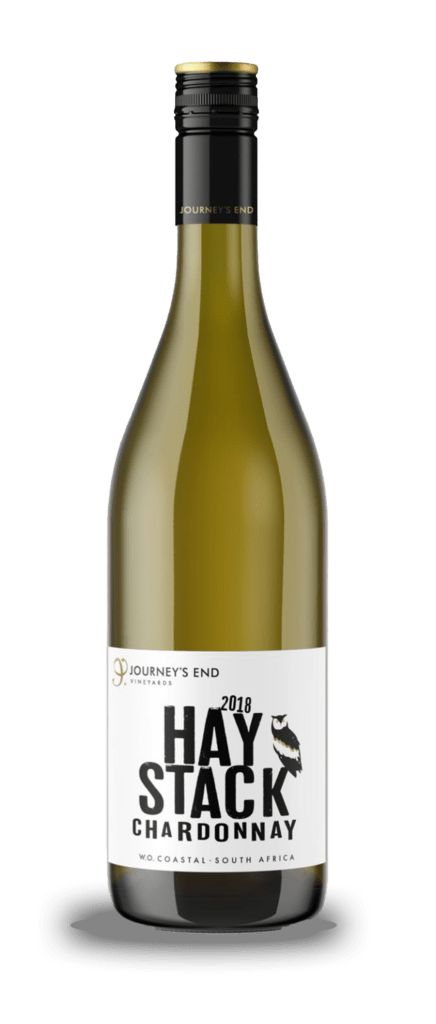
Journey’s End Haystack Chardonnay (Tanners £13.90). Inviting mid-gold hue with a lively, yet rich, bouquet that blends citrus fruits with honey. Ripe and mouth-filling, there’s an impressive breadth of flavours on show here everything from red apples and melon to tropical fruit and butter. A crisp grapefruit acidity keeps everything balanced and makes it an ideal partner for poultry or game birds.

Q. Journey’s End wines’ have quite a European feel to them, is that a winemaking decision, a product of site and vine, or a little bit of both?
“Both. Our grapes are planted in ocean-cooled areas and many of our vineyards are on south-facing slopes which helps to keep temperatures down and gives us longer growing season. For white wines, this is ideal. Sugars and flavouring compounds develop slowly and evenly while maintaining good acidity. There’s a good diurnal (day to night) temperature range that promotes fragrance and balance as it does in many European regions. We’re also big fans of oak and French oak is used in many of our wines as it adds complexity and nuance.”

Destination Chardonnay 2022 (Vinum £31.50) is a hugely impressive glassful. Golden with green-gold highlights, the powerful, profound nose is picked with green and yellow fruits, smoky vanilla and citrus. Big but not brash, it’s one of the biggest Chardonnays I’ve tasted in some time, but it doesn’t feel flabby or overpowering. The firm acidity, clever use of oak and abundance of fruit means it maintains its balance and, remarkably, it feels precise and focused. Still young, at the moment it needs partnering with fine food – monkfish, mushroom risotto, guinea fowl – but in a few years it will be a sensational solo sipper.

Q. Climate change is obviously a huge issue for winemakers worldwide, how is it affecting you and what steps are you taking to deal with it?
“It’s taking effect here. We started seeing changes in 2015/2016. Everything is getting more extreme. We’ve had five or six years of drought and we’ve seen winds of 120 kilometres an hour which have ravaged wines. Our winters are getting wetter – we’re collecting rain in dams for the summers – and harvests are getting earlier. In the last seven years, we’ve seen vintages come forward by an average of 10 days. It’s challenging. We’re learning something new every year, and while we have a lot of old vines that are more resistant, you have to adapt.

“We’re fortunate in that we’re part of a community of winemakers who are happy to collaborate. We share knowledge and ideas and muck in when someone needs assistance. It’s one of the best things about making wine here.

“In terms of what we’re doing to combat further climate change, we’re using a lot of organic and environmentally friendly practices. We re-use of grape waste on the vines, water waste is recycled, and Journey’s End was the second winery in South Africa to install solar power generation.

“Our business is built on sustainability, community projects – such as hiring and training local people – and making sure there’s a proper trade-off between money and sustainability. We want to create great wines that won’t cost the earth.”

Q. Many countries and regions – I’m thinking of places like McLaren Vale and Bordeaux – are changing their plantings to deal with climate change, is that something you’re considering? Personally, I’d love to see a Fiano or an Assyrtiko from Journey’s End – any chance?
“In Durban they are looking at mildew (a form of mould) resistant grapes. It’s a massive undertaking. You need to wait three years to get any fruit and it takes time to see if the wine you can make from it is up to standard. For the time being, we’re sticking with what we have. We’re looking at different rootstocks, cultivars and clones. Our focus remains on Chardonnay and we’re very excited about white Bordeaux grapes such as Sauvignon and Semillon. Our Ad Infinitum is a blend of 87% Sauvignon and 13% Semillon from small blocks planted at 250m above sea level. It’s a passion project of ours and we think it’s got exceptional potential.”

The Ad Infinitum 2022 (£28 from Noble Green Wines) is ghostly pale with a shimmering, green-gold hue. The nose is fresh, zesty has piercing notes of gooseberries and rhubarb with a smoky tone and savour, mineral edge. The fruit-savoury tension continues on the palate, where mouth-watering citrus, red pears, and white peach are balanced by a steely minerality, a curt touch of peel and a hint of creamy honey. Youthful and intense, in another year or two this will be outstanding.

Q. I’m a huge fan of South African Chenin – especially when it’s oaked. Do you think it enjoys as good a reputation as it might? Many UK consumers don’t see it as a serious wine, they certainly don’t see it in the same light as a Vouvray or one of the other great Loire Chenin.
“It’s an education thing. South Africa is still seen as a bulk producer of Chenin and a lot of it goes for distillation. We love it, especially when it’s oaked.”

Q. South African white wines have come an awfully long way over the last twenty years or so. Do you think they have further to go and if so how/what does that look like? Is it a case of greater site/varietal/clone selection to create small batch ultra-premium wines in the way Australia and California have?
“We can do everything, and we can do everything well, but there needs to be a balance between premiumisation and affordability. There will always be a need for bulk/cheaper wines, but the small batch production is an exciting space, one we’re happy to work in.”

Journey’s End Spekboom Sauvignon Blanc (Sainsbury’s £11) shows how well and how distinctive South African Sauvignon can be. Grown in the cool of the Coastal Region there’s freshness without aggression. The bouquet is fresh but gentle, favouring lemons, nettles and grass over gooseberries and green peppers. On the palate, it’s generously fruited, but there’s a softness and plumpness of cooked rhubarb and grapefruit where you often find lemons and limes. The finish is long, firm and savoury making it the perfect foil to white meats, stir-fries and fresh seafood.

Q. What’s your fantasy South African wine? If you could choose any site, any vine, and any production techniques, what would you produce?
“The Ad Infinitum!”

Thanks, Mike, and keep up the great work.

Next time, I’ll be talking Champagne.

Cheers,
Giles


Latest posts

Illuminated Boat Parade on the Thames

Round & About

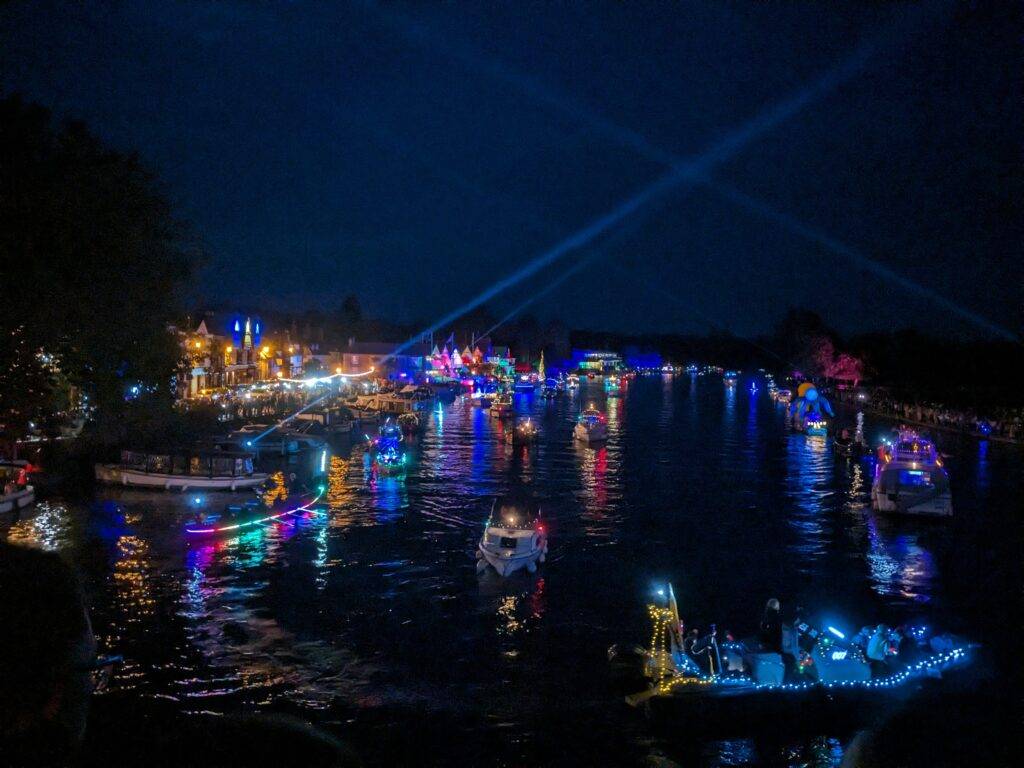
The annual Illuminated Boat Parade is set to light up the Thames on Saturday, 14th September, bringing the community together, Claire Knott invites us all along

The Illuminated Boat Parade is an annual event for any boat, any size, any age providing a fun evening for the community.

Last year around 50 boats, powered and unpowered, participated watched by over 3,000 spectators. There were all kinds of themes including the Mamma Mia Abba all singing all dancing crew, a 15ft illuminated octopus for the Under the Sea theme, butterflies, pirates, and even a 7ft penguin accompanied by many other penguins, some singing and dancing overlooked by an enormous polar bear (ok, that was the crew). Many boat owners were so impressed they said they were going to ‘up their game’ this year.

A panel of judges will decide on the trophy winners. This year we have introduced an award for the Funniest Theme and there’s even a prize for the Best Lit Spectator! So, start planning now – get your thinking caps on and come up with a great idea for your boat. Everyone who takes part says it’s a magical evening, participants and spectators, so come on down and enjoy the magic.

The exclusive, historic Leander Club will open its doors to the public for one night, so everyone can come in and see the prize-giving. There will also be bars and food trucks with refreshments, truly a full evening of entertainment for the whole family.

For more on the event and how to enter, please visit Illuminatedparade, Facebook: Henley Parade, Instagram: @thehenleyparade and email: lights@illuminatedparade.com


Latest posts

A real quacker in Godalming

Round & About

The great Godalming duck race and fair takes place along the river Wey on Saturday, 7th September, one of the traditional ways the Rotary clubs in Godalming raise funds for Rotary causes

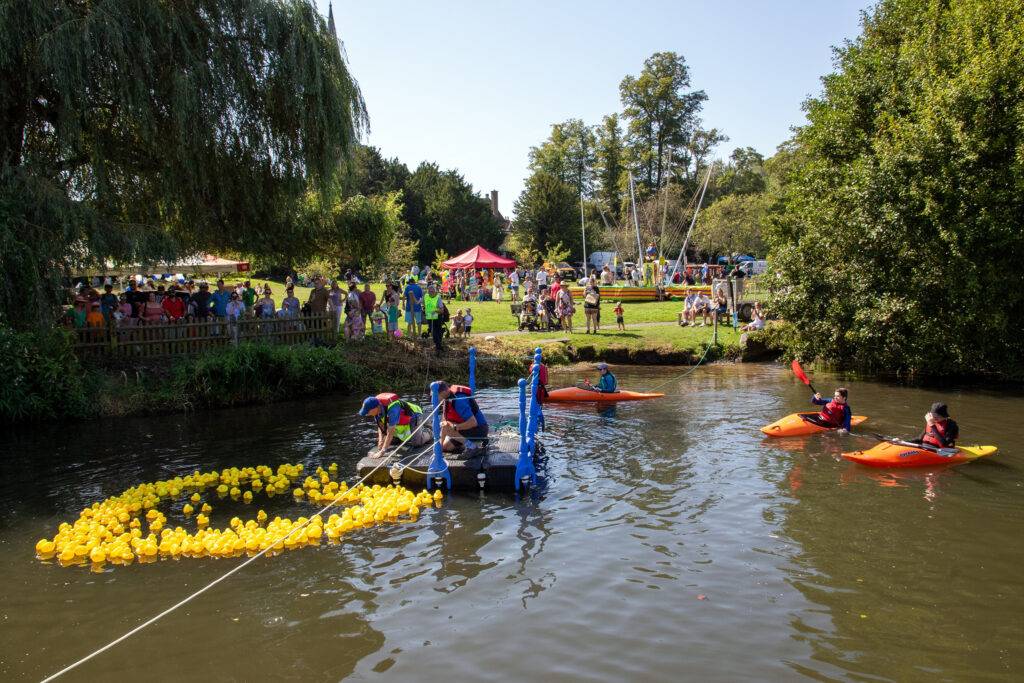
Don’t worry, your eyes aren’t deceiving you if you see 300 yellow plastic ducks floating along the Wey, it’s just the annual Rotary duck race down the river.

Each ticket sold buys a duck for one race, provides entertainment for the ticket folder, money for charity and may even win you some money!

Rotary members are selling tickets in local pubs now and they will also be available at the Richmond Arms and the Sun Inn in Godalming town centre and at Daisy Sandwiches at Godalming Station.

There will be a fun fair, a bar and stalls and food outlets from 11am until 3.30pm and the first duck race will start at noon, with heats every 20 minutes from then until the Grand Final for all the heat winners. Heat winners will win £20 with prizes of £250, £100 and £50 for the first three places in the Grand Final.

Following the Duck Races, there is a musical evening of Proms In The Park between 5pm and 7pm. The fun fair together with the bar and many of the stalls and food outlets will remain onsite until the end of the Proms In The Park.

We are very grateful to the directors of Seymours estate agents for their continued support of Rotary’s events this year.

Rotary has flourished in Godalming for more than 80 years and the community work of the Rotary Clubs is an integral part of life in the town. Rotary in Godalming welcome men and women who share the same common desire to do something worthwhile in the community, with a priority being community service and the support of local charities.

During the past few years Rotary in Godalming have raised and donated over £125,000 / £150,000 most notable locally to Godalming foodbank; the Godalming Community store; Phyllis Tuckwell; Skillway; ShelterBox and Broadwater Youth Centre’s wellbeing garden project.

More recently, Rotary clubs across Surrey and Sussex have partnered with Royal Surrey hospital to transform cancer care across Surrey, Sussex and beyond. The Cut Out Cancer campaign aims to raise funds for crucial high-tech equipment to allow more accurate surgeries to take place and improve recovery times for patients.

Rotary in Godalming also supports vital humanitarian work including Rotary’s End Polio Now campaign. Thanks to Rotary’s eradication work there are only 34 new cases of Polio reported this year, and we are ‘this close’ to total eradication.

For more information on the above and other Rotary activities, please visit their website Rotary Club of Godalming – welcome. (rotary-ribi.org)


Latest posts

Hogs Back’s 10 years of hop farming

Round & About

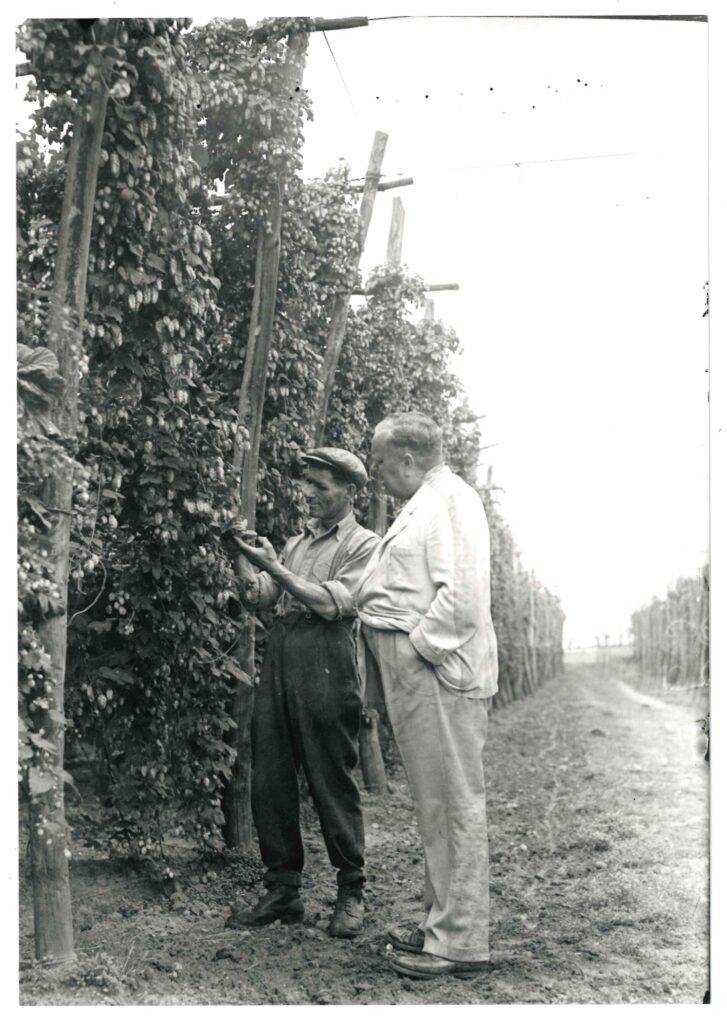
Image: Local hop farmer Mr Tice inspects hop bines, recreated by Hogs Back Brewery owner Rupert Thompson (right) and estate manager Matthew King

Historic images recreated for Farnham brewery milestone as it looks ahead to Hop Harvest celebrations in September

As Surrey-based Hogs Back Brewery approaches its 10th hop harvest, it has recreated historic hop farming photographs lining the walls of its Tap room, with local residents helping to update the images during a Hop Garden Open Evening.

Two original images were recreated, one showing a group of hop pickers reading the local newspaper, while in the other, Matthew King, Hogs Back’s estate manager, is shown with brewery owner Rupert Thompson inspecting the ripening hop plants, replace Mr Tice, a member of a renowned local hop growing family, in the original photograph.

The Hop Garden Open Evening drew 120 guests, who enjoyed a tour of the hop garden next to the brewery, followed by a pint or two in the Brewery Tap. Guests made a £5 donation to British Heart Foundation, Hogs Back’s chosen charity this year.

Image: Museum of Farnham

Rupert said: “We’re immensely proud to mark 10 years of hop growing. We planted our first hop garden, across the road from the brewery, to help us become a more sustainable brewery, to bring hop farming back to the Farnham region, and to build ties with the local community.

“A decade on, we have relocated to a larger hop garden even closer to the brewery, meaning the hops travel ‘from field to firkin in a furlong’ as we say! We capture them at optimum freshness and create a carbon footprint that’s close to zero! We are producing around 60% of our hop requirement and growing three varieties; Fuggles, English Cascade and Farnham White Bine.”

He added: “Hop growing is not for the faint hearted! Hops are a delicate, high-maintenance crop, much impacted by climate; this year’s heavy rain has delayed growth and therefore our harvest.

“However, it has been enormously rewarding, not least because of the support from the local community, in particular our loyal band of volunteers. Not only do they help us tend our hops during the growing season and bring in the harvest in September, but some of them are now immortalised in our recreations of classic hop farming photographs.”

This year’s hop harvest will culminate in the traditional Hop Harvest celebrations, from 13th-15th September. This year, Hogs Back is expecting more than 3,500 people to join the festivities, which include:

Roots Festival, Friday 13th from 6pm: featuring original music, headlined by Newton Faulkner.

Hop Harvest Festival, Saturday 14th, 2pm-11pm: Beer, street food and music, this year including indie folk to electropop and headlined by Britpop tribute band Blurasis.

TEA party, Sunday 15th, midday-5pm: family-friendly day with children’s entertainment including dray rides around the Hop Garden, face painting, magic show, and music including a Taylor Swift tribute act.

For full line ups of musicians and other entertainment, https://hogsback.co.uk/pages/festival-beer-and-music-party

Hop growing and Farnham are inextricably linked. At its peak in the late 19th century, hop fields covered around 40% of all available farmland in the area, and hops from Farnham were highly-prized for their quality. Although hop cultivation dwindled over the next 100 years, it still takes place in pockets across the region.

Hogs Back planted its first hop garden in 2014, relocating in 2019 to the current 8.5-acre site next to the brewery. The current garden contains 6,000 hop plants supported by 100 large posts and 10 miles of high tensile steel wire, strung 18ft above the plants. A small number of bines are crafted into hop garlands for local weddings and parties, and petals from the hop flowers are also being sold this year as aromatic, 100% biodegradable confetti.


Latest posts

Education Guide Autumn 2024

Round & About

Read more articles in our 2024 Education Guide

View the Interactive Education Map

There are many questions to ask when considering which school is right for your child. Headmaster Tom Dawson examines the options to help you make an informed decision

As independent schools face ever increasing challenges; a fall in birth rate, higher cost of living, increase in mortgage rates and now VAT on school fees; the necessity to evolve and adapt has never been greater.

Schools must listen to the needs and desires of parents in order to survive and thrive. They should also, however, be very clear about what they offer and maintain an individuality that provides choice for parents. Some schools, faced with this existential question have chosen to extend down or up, to adapt their boarding model or in the case of a number of independent schools recently, go from single-sex to co-ed. This is a huge shift in policy for some schools with a very long history of educating just boys or girls. These changes have not been made on the spur of the moment but after long consideration of the advantages of both models; so what exactly are they?

Looking at the latest Independent Schools Council (ISC) census, 18% of schools are now single-sex (not including nursery), with more girls being educated in single-sex schools than boys. Interestingly, between years 7 and 10 (ages 11 to 14) 30% of ISC schools have year groups of either all boys or all girls.

Learning styles

Single-sex schools will argue that boys and girls learn in very different ways. This is certainly a generalisation but it does have a strong element of truth in it. This is particularly when the pupils are younger. Girls mature more quickly and approach learning in a more disciplined and determined way than the majority of boys. You only have to look at two pieces of work side by side and more often than not, it will be obvious which was produced by a boy and which by a girl. In order, therefore, to get the most out of the different learning styles, the teaching needs to be adapted to suit. Personalised teaching is a mark of a good independent school and that can be easier in a single sex environment.

It is also true that in single-sex settings, boys and girls can feel more able to be themselves and involve themselves in activities they might otherwise not. Children often feel pressure to conform to traditional gender roles, and this can be a barrier to learning. In single-sex schools, pupils are free to express themselves without fear of judgement or ridicule. This can lead to increased confidence and self-esteem, which can have a positive impact on academic performance and in participation in other activities. It is sometimes precisely because there are no girls that some boys will be happier to sing in the choir or play a female role in a play. The same can be said of girls who might have interests that may be seen by the more traditionally minded (some might say ignorant!) as more male pursuits.

The flip side is that co-ed schools can be seen as much more representative of the society that all school leavers will emerge into. Why separate children when that is not what the future holds for them? Many will say that children need to be in co-educational environments in order to learn that everybody is equal regardless of gender or any of the other protected characteristics. The need for mutual respect and understanding of both sexes is of paramount importance and a co-educational environment can facilitate this in a natural way.

All single-sex schools create situations with other schools where boys and girls are able to mix with each other but these events are often excruciating in their awkwardness. Thankfully, they are often more imaginative than the discos with boys on one side and girls on the other but it is rarely natural and it is always fleeting. There is the rush at the end of the event with a frantic swapping of numbers or ‘snaps’ but this can lead to all sorts of problems if the children are not properly guided in how to use these appropriately. Co-education can improve these social skills and help boys and girls to be more natural in each other’s company.

Whatever your view, the key element is choice. It is ultimately for parents to decide which route is better for their children and, providing that these options remain, there are so many good schools out there providing an outstanding education in a range of different settings.

Tom Dawson
Headmaster, Sunningdale School


Latest posts